Which Is Scarier, Bungee Jumping Or Skydiving?
An honest comparison of fear: what a Queenstown tandem skydive feels like versus a bungee jump, covering control, freefall time and time commitment.
Ask ten people in Queenstown which scares them more, the cord or the plane, and you will get ten different answers, because fear is not a property of the activity. It is a property of the person doing it. What can be compared honestly is the shape of the fear: when it starts, how long it lasts, how much control you have, and what happens if the day goes wrong. On those measures the two activities behave very differently, and the verified facts about the skydive side of the question are unusually detailed.
If you are weighing the two against each other for a full decision breakdown, the companion piece on skydiving versus bungee in Queenstown covers cost and logistics in more depth. This article stays on the fear question itself.
| Question | Skydive answer (operator verified) | Bungy answer |
|---|---|---|
| Who is in control? | A Tandem Master harnessed to you on every jump covered here | Not stated |
| Scary moment | The aircraft door and the exit | The platform edge, by common account |
| Duration of the drop | Freefall up to 25, 45 or 60 seconds by altitude; at NZONE, 3 to 4 minutes under canopy | Not stated |
| Total time commitment | About 3.5 hours with NZONE; about 3 hours in Wanaka; up to 6 hours with transfers | Not stated |
| If weather intervenes | Operator rebooks, full refund if no other date works | Not stated |
| Entry price covered here | From USD 215.27 with NZONE; from USD 210.16 in Wanaka | Not stated |
There is no honest universal answer. A bungee jump concentrates the fear into a few seconds of standing at the edge and choosing to step off, while a tandem skydive spreads it across a longer build, the flight to altitude, the door, and the exit, then dissolves it the moment you leave the aircraft because a Tandem Master harnessed to you owns every decision after that.
The mechanics of the two fears are genuinely different. On a bungee jump the whole event is yours: you walk to the edge, you look down, and you decide, alone, in real time, to step into space from a static platform. The scary part is the decision itself, compressed into seconds, with the ground close enough to feel personal. On a tandem skydive the decision is made weeks or days in advance when you book, and by the time you are at the door of the aircraft there is very little left to decide. The exit happens with the Tandem Master, not because of you.
That difference matters more than most first timers expect. A large share of skydive fear is anticipatory, the drive to the drop zone, the paperwork, the fitting of the harness, the 15 to 20 minute climb to altitude that NZONE's own prices page describes. Once the door opens and you are out, the anticipatory fear has nothing left to feed on. At NZONE, the freefall is over in up to 60 seconds at the top altitude and the canopy ride that follows lasts 3 to 4 minutes.
For readers who already know they want the plane, the three Queenstown and Wanaka options compared here are:
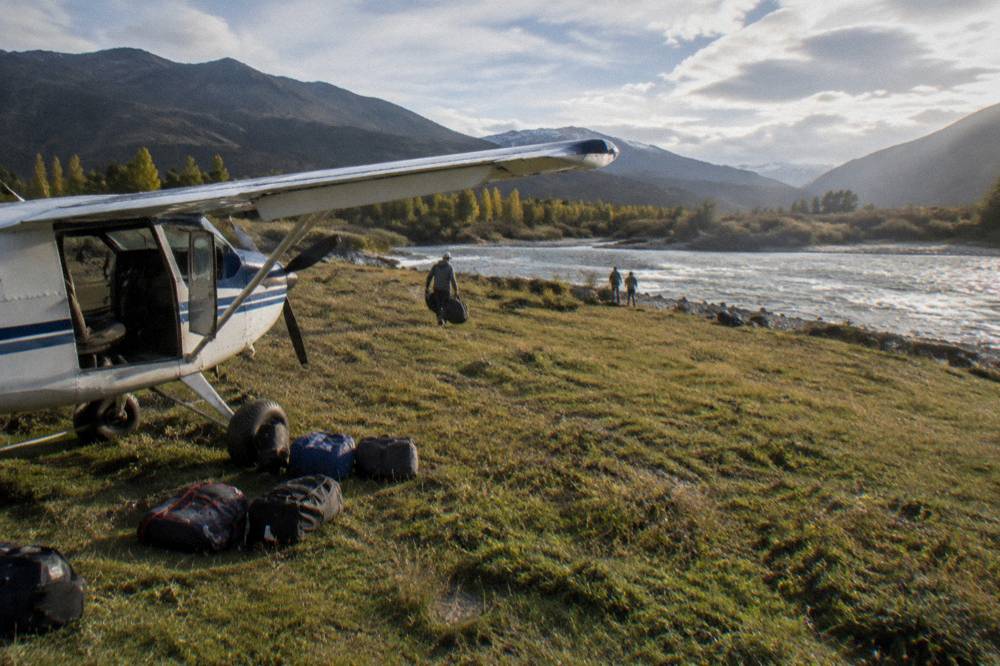
NZONE Skydive, the Queenstown option, is the most reviewed tour on this site at 4.7 from 1,479 reviews, and it runs from the NZONE Skydive Centre at 35 Shotover Street with a courtesy coach to the drop zone at Drift Bay on Lake Wakatipu included in the price. The 3-Hour Wanaka Skydive alternative is rated 4.8 from 295 reviews and jumps from Wanaka Airport with a landing at a private farm nearby. The third option, Wanaka Skydive, Transfers Included, adds a return transfer from Queenstown on select days for a full experience of up to 6 hours.
What Actually Makes A Jump Feel Scary?
Fear on any jump comes from three things: loss of control, the irreversibility of the moment, and how much time your brain has to think about it. A bungee jump maximizes all three at once, you alone at the edge, alone with the decision, with the consequence visible below you. A tandem skydive strips the first one away almost entirely, because you are harnessed to a professional who makes every decision so you do not have to.
A bungee jump is a long approach to a short, solitary decision. That is the bungee shape. The skydive shape is closer to a ride: long preparation, a moment of intensity you share with somebody else, then a long, quiet descent under a canopy. Neither shape is painless. But the fear of getting it wrong, of freezing at the door, of having to perform, is largely absent from a tandem because the performance is not yours.
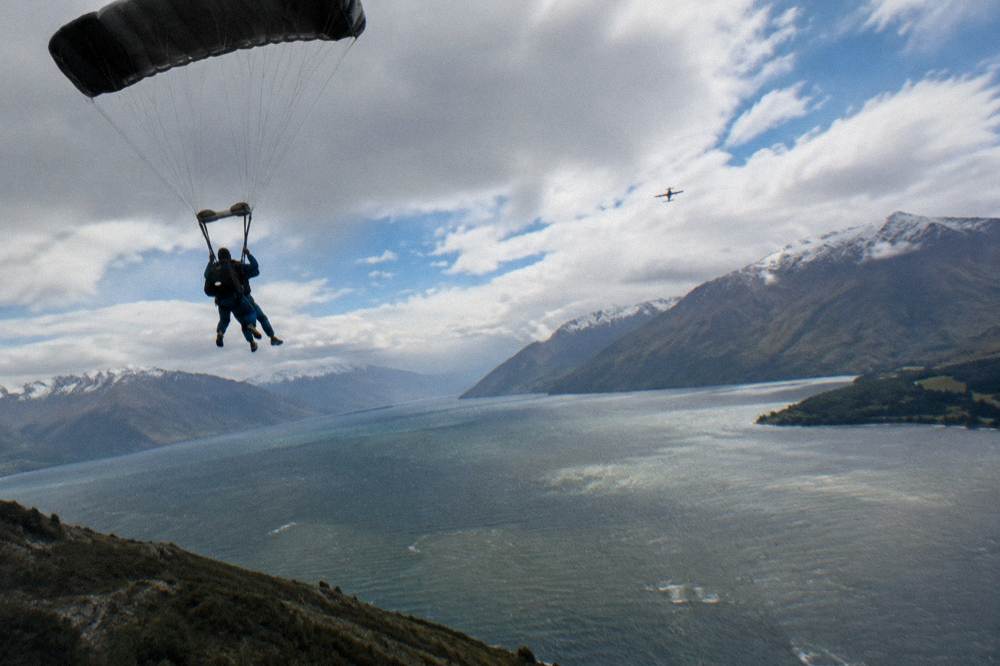
Consider what you are actually asked to do on a tandem skydive day covered here. You arrive at a check-in time, not a jump time, as both operators' terms point out. You are fitted with a harness, briefed, and paired with a Tandem Master, who is present on every jump both NZONE and Skydive Wanaka operate. You board, you climb to altitude, and the Tandem Master positions you at the door and takes you out. Your tasks are: show up sober, follow the brief, and arch when told. That is the whole job.
The comparison also fails people who expect skydiving to feel like falling. In freefall at the 200 km/h speed NZONE describes, you are not dropping in the way a bungee jumper drops; you are resting on a cushion of air, which is why the stomach-lurch sensation people remember from rollercoasters mostly does not happen. The question how scary is first time skydiving gets this in more detail.
How Much Control Do You Have On A Tandem Skydive?
On every tour covered here, all of the meaningful control belongs to the Tandem Master: they are harnessed to you, they exit the aircraft with you, they deploy the canopy, and they steer the landing. You keep two small responsibilities, holding the briefed body position and lifting your legs at touchdown. For fear purposes this is the single biggest difference from a solo bungee jump, where you alone choose the moment and the manner of the step.
NZONE and Skydive Wanaka both state that a tandem master accompanies every jump, and their shared booking terms describe the customer's obligations as turning up on time, fit and sober, with government photo ID. The operators even restrict the small things you might want control over: personal cameras and smart glasses are not allowed on the jump, a rule both operators attribute to the New Zealand Parachute Industry Association's safety requirements.
There are gates, and they are worth knowing because they shape who is allowed on the plane at all. Minimum age is 6 at both operators, set by New Zealand law. Minimum weight differs and must not be generalized: NZONE requires 40 kg and a minimum height of 1.2 m, while Skydive Wanaka requires 30 kg and the same 1.2 m height minimum. At 95 kg and over, both operators apply a Tandem Master assessment at the drop zone; Skydive Wanaka adds surcharges of NZD 50 for 95 to 104.9 kg, NZD 75 for 105 to 114.9 kg and NZD 100 for 115 kg and over, payable at check-in. NZONE states no surcharge amounts.
So if you want to book the Queenstown jump, take it from there.
Children 12 and under jump from a maximum of 9,000 ft at both operators, and every child is assessed on the day. There is no upper age limit at either operator; NZONE notes passengers up to 94 years and Skydive Wanaka notes a 92 year old jumper. Under 18s need written parental or guardian consent, and a parent or guardian generally needs to be at the drop zone or arrange consent documents in advance. Free cancellation applies up to 24 hours before departure on the tours covered here, which softens the commitment side of the fear equation: the money is recoverable, even if the nerve is not.
How Long Does The Scary Part Last On A Queenstown Skydive?
The intense part, freefall, lasts up to 25 seconds from 9,000 ft, up to 45 seconds from 12,000 ft, or up to 60 seconds from 15,000 ft, at both operators. According to NZONE, the anticipatory part is far longer, around 15 to 20 minutes of climbing to altitude after check-in and briefing, followed by 3 to 4 minutes under canopy. Fear on a skydive is mostly front-loaded; fear on a bungee is concentrated at the edge.
Both operators price three altitudes, and the altitude choice is really a choice about how long you want the famous part to last. NZONE's prices run from NZD 379 at 9,000 ft to NZD 575 at 15,000 ft; Skydive Wanaka's own prices page shows the same NZD 379, 469 and 575 ladder, with 399, 489 and 595 when the Queenstown return transfer is included. In the USD figures used on this site, that is from USD 215.27 for NZONE at 9,000 ft, from USD 210.16 for the 3-Hour Wanaka Skydive, and from USD 221.25 for Wanaka Skydive, Transfers Included, each at the entry altitude.
| Altitude | Freefall (up to) | NZONE NZD | Skydive Wanaka NZD | With Queenstown transfer NZD |
|---|---|---|---|---|
| 9,000 ft | 25 seconds | 379 | 379 | 399 |
| 12,000 ft | 45 seconds | 469 | 469 | 489 |
| 15,000 ft | 60 seconds | 575 | 575 | 595 |
A reader afraid of the duration should notice something counterintuitive: longer freefall is often reported as less scary per second, because the first few seconds after exit are the shock and the remainder is the part people pay for. The "up to" wording is the operators' own and is not a guarantee; conditions on the day affect everything. Skydive Wanaka also notes that it does not jump from above 15,000 ft above ground level, which at Wanaka is 16,100 ft above sea level, citing NZPIA rules that cap tandem altitude at 16,500 ft above sea level, so the ladder stops at 15,000.
If you are curious about how the timing breaks down minute by minute, the guide to freefall time by altitude walks through it.
How Much Time Does Each Option Take Up?
A Queenstown skydive with NZONE takes about 3.5 hours from check-in to return, the 3-Hour Wanaka Skydive takes about 3 hours, and Wanaka Skydive, Transfers Included runs up to 6 hours including roughly 1.5 hours of coach travel each way. Time matters for fear because a longer day means a longer wait, and waiting is where anticipation does its work.
A bungee jump, typically a short walk-in event, gives fear less runway but hits harder at the moment itself. NZONE's FAQ describes the about 3.5 hour figure from check-in to return, and its terms advise planning for a whole day, because a booking carries a check-in time rather than a jump time and weather can move slots. Skydive Wanaka's FAQ says around three hours in Wanaka, and its booking information says to allow up to 6 hours for the version with the Queenstown transfer.
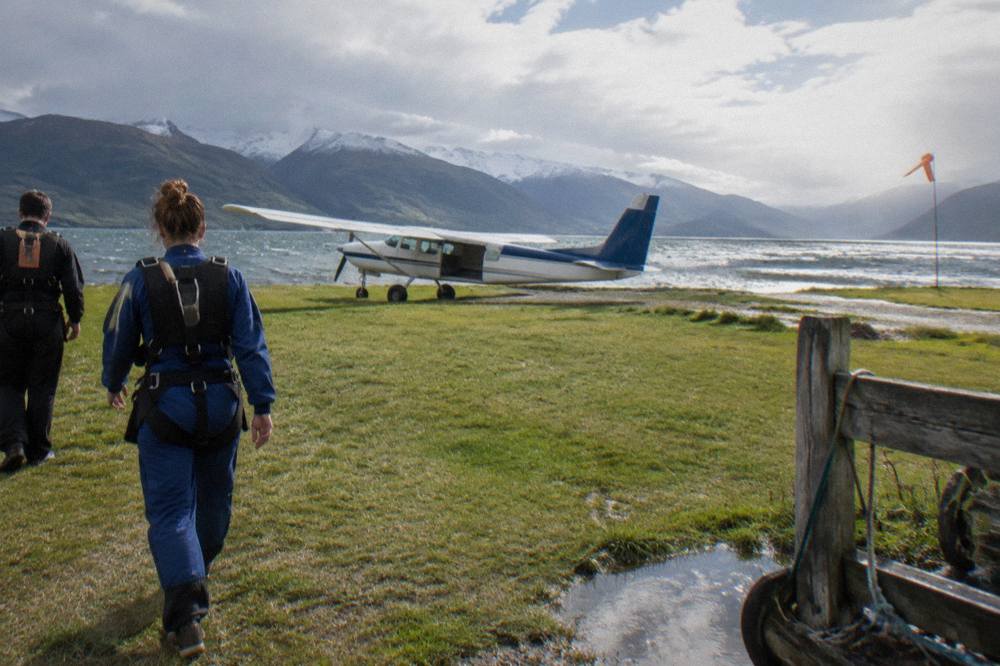
The transfer detail is a real decision point. NZONE includes a courtesy coach from its Skydive Centre at 35 Shotover Street out to the drop zone at Drift Bay and back, but no hotel pickup. The 3-Hour Wanaka Skydive picks up at the Wanaka i-SITE shuttle point at 103 Ardmore Street only, selected at booking, with no Queenstown transfer at all. Wanaka Skydive, Transfers Included adds a return coach from 35 Shotover Street in Queenstown, about 1.5 hours each way, running Monday, Wednesday, Friday and Sunday. Where you are staying, and how much waiting you can stomach, may decide this as much as fear does.
Here is how the Wanaka base option looks.
That said, the rating story differs sharply between the three. NZONE's 4.7 rests on 1,479 reviews and the 3-Hour Wanaka Skydive's 4.8 on 295, while Wanaka Skydive, Transfers Included shows 4.7 from only 3 reviews, too small a base to read anything into. Review counts, not fear, should be what you take from those numbers.
Does The Height Of The Jump Make It Scarier?
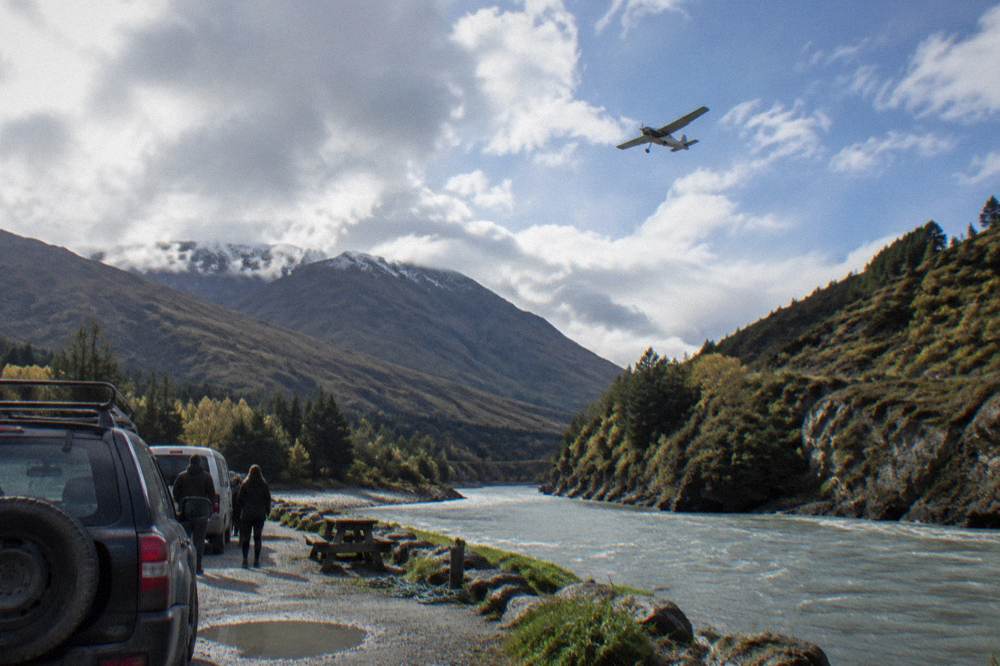
Mostly no: at skydive altitudes the brain cannot read scale accurately, so a 9,000 ft exit and a 15,000 ft exit feel similar at the door, and the altitude you buy mainly changes freefall duration, up to 25 seconds versus up to 60 seconds, rather than the fear of the exit. A low, static bungee platform is the one case where height reads clearly, which is why it scares some people more.
This is the point that surprises people who agonize over the altitude ladder. At 9,000 ft the ground is already far beyond the range where human vision can resolve detail well enough to feel the distance; at 15,000 ft it is simply further beyond it. The fear at the door is a threshold feeling: you are either outside the aircraft or you are not.
The bungee comparison inverts this. From a low platform, your eyes can still see individual features below, cars, rocks, river texture, and the mind computes the fall with uncomfortable precision. That legibility is what makes low static heights feel more exposed to many people than aircraft altitudes. It is also why the skydive's scariest view is often not from the door but from the ground, watching earlier loads climb away and knowing your check-in slot is approaching.
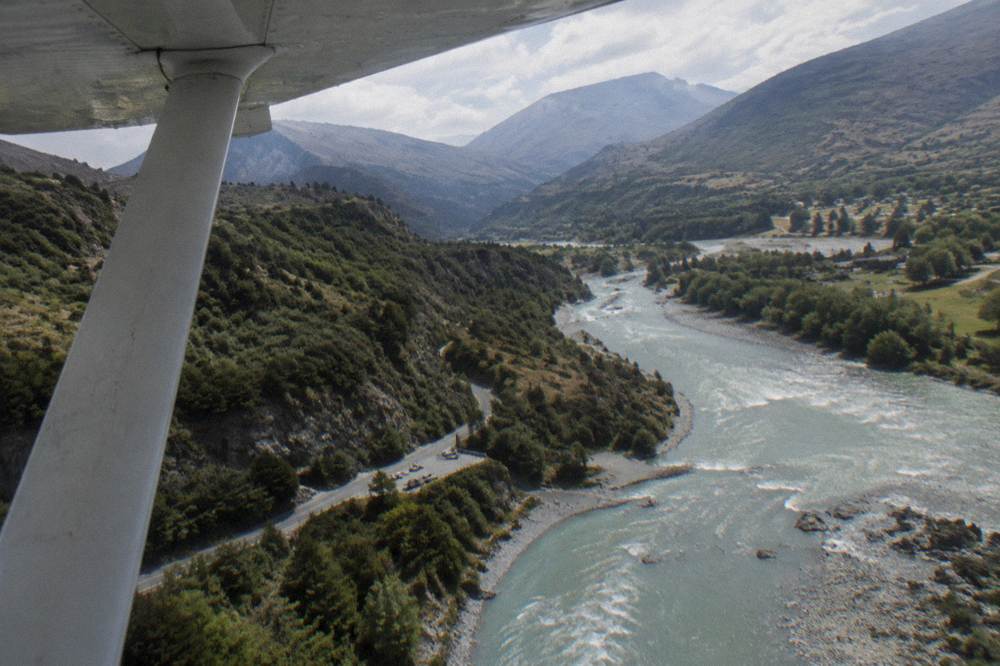
The full ladder of options, including what does not exist, is laid out in the guide to Queenstown skydive altitude options. There is no 7,000 ft product here and nothing above 15,000 ft, at either operator, per the operators' own pages.
What About Weather And The Fear Of Wasting Your Money?
Weather, not nerve, is the honest risk on a skydive day: both operators say jumps need favourable conditions, and the standard remedy is a rebooking, with a full refund only if no alternative date works for you. Free customer cancellation up to 24 hours before departure applies to the tours covered here either way.
The operators are explicit that they cannot promise the jump on the booked day. NZONE's FAQ says weather-dependent jumps are rebooked to the next suitable slot, and if you cannot rearrange, you are refunded in full. Skydive Wanaka's terms carry the same structure: rebook first, pay any difference for a higher-value change, and receive a full refund only when rebooking is not possible. The practical advice in Skydive Wanaka's booking information is worth taking: book your first available day and keep a spare day free.
For the fear question, weather cuts both ways. Some people find the uncertainty corrosive, a whole night spent watching forecasts before a dawn check-in. Others find it useful: knowing the decision can be taken out of your hands by wind or cloud makes booking less of a commitment, and the 24 hour free cancellation plus 12 month booking validity means the money side is protected even when the sky is not cooperating.
The deeper guide to Queenstown skydive weather covers how to plan around it, including which time-of-day slots to aim for.
What Trips People Up When Choosing Between The Two
The most common mistake is comparing the two on height or price alone, when the real comparison is between a solitary split-second decision at a platform edge and a shared, guided, weather-dependent half-day in an aircraft. People also book the wrong base: expecting a Queenstown pickup on the Wanaka tour, or a hotel pickup anywhere, neither of which the operators offer. And a surprising number expect to bring a camera on the jump, which both operators prohibit.
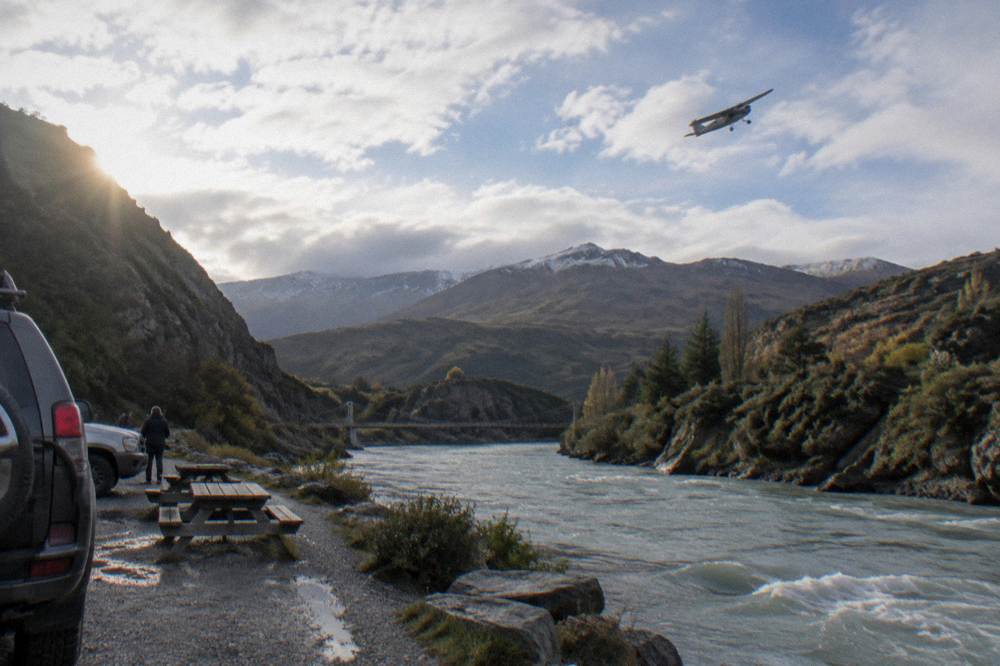
Several specific traps recur. The pickup rules differ by tour and are not interchangeable: NZONE's coach runs from 35 Shotover Street to its Drift Bay drop zone, the Wanaka tour's shuttle is the i-SITE point at 103 Ardmore Street only, and the transfers-included version is the only Wanaka product that starts in Queenstown, on four days a week. Photo and video packages are add-ons bought at check-in, never included in the jump price: NZONE lists Handicam at NZD 220, Freefall at NZD 333 and the Ultimate Combo at NZD 395, and Skydive Wanaka lists Essential from NZD 220, Freefall Photos And Video from NZD 333 and Ultimate from NZD 395.
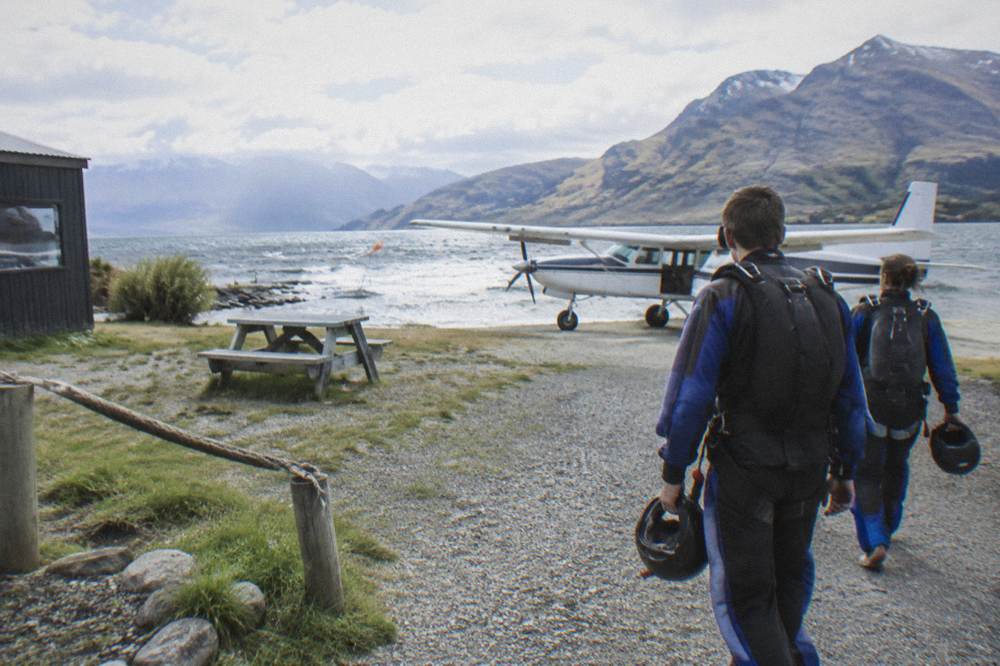
Other traps worth naming: alcohol is banned within 8 hours of your scheduled jump and scuba diving within 24 hours, per both operators' terms. Government photo ID is required for everyone on arrival. And bookings carry a check-in time, not a jump time, so building a tight same-day itinerary around a precise jump moment is a recipe for stress, the exact emotion this article is about. The site's publisher, Queenstown Tandem Skydive, keeps the practical day-plan version of this advice in the Queenstown skydive day plan guide.
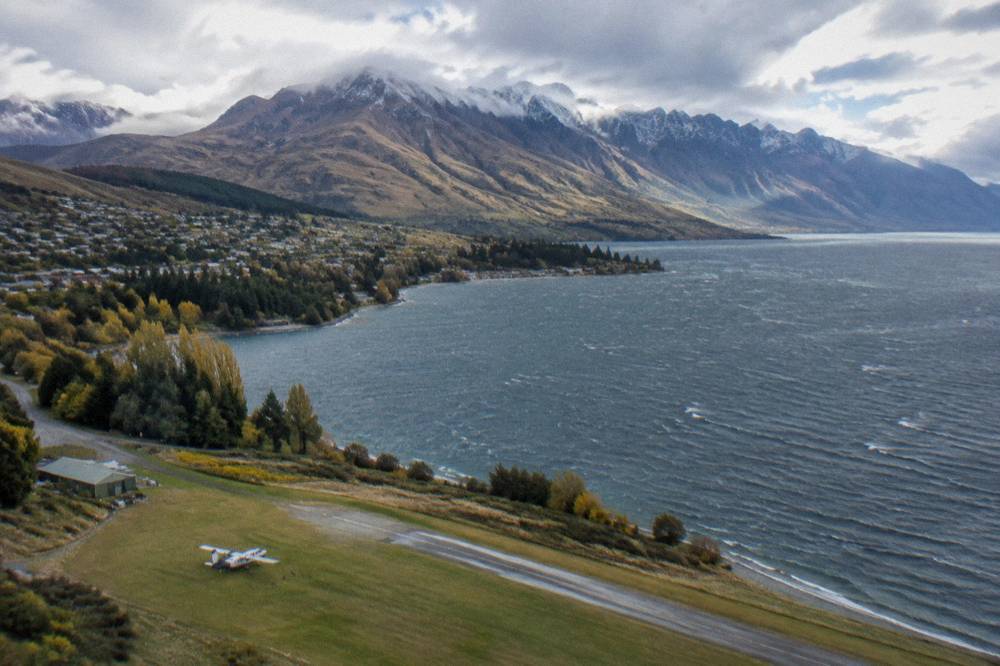
Whichever of the three options fits your base and your budget, all of them end the same way, harnessed to a tandem master:
Common Questions About Bungee Jumping Or Skydiving
Which Is Scarier, Bungee Jumping Or Skydiving?
It depends on how your fear works. A bungee jump concentrates fear into the solitary moment of stepping off a platform you can see the bottom of. A tandem skydive spreads fear across a longer build, then removes most of it at the exit because a Tandem Master harnessed to you makes every decision from the door to the landing. People who report the bungee edge as scarier usually cite the aloneness and the visible ground; people who report the skydive as scarier usually cite the long anticipation.
Do You Get The Stomach Drop Feeling When You Skydive?
Mostly no. The falling-stomach sensation comes from sudden vertical acceleration, like a rollercoaster crest. Exiting an aircraft already moving forward at speed, you transition onto a cushion of air within seconds, and NZONE gives the freefall speed as 200 km/h. The physical sensation people report is wind pressure and noise, not a lurch.
Is A Tandem Skydive Less Scary Because Of The Instructor?
For most first timers, yes. Every tour covered here pairs you with a tandem master on every jump, per both operators. You are harnessed together, the instructor handles the exit, the canopy and the landing, and your only jobs are the briefed body position and lifting your legs at touchdown. Knowing you cannot get the technical parts wrong removes a large share of the fear.
How Long Is The Scary Part Of A Skydive?
The freefall lasts up to 25 seconds from 9,000 ft, up to 45 seconds from 12,000 ft, or up to 60 seconds from 15,000 ft, at both operators. At NZONE it is followed by 3 to 4 minutes under canopy, and the flight to altitude takes 15 to 20 minutes.
What If I Am Too Scared To Jump On The Day?
Talk to the crew before you travel. Both operators ask you to disclose relevant medical factors in advance, and children and passengers over 95 kg are assessed on the day by a Tandem Master. If you cancel more than 24 hours before departure, cancellation is free on the tours covered here. Weather cancellations are different: the operator rebooks you, and you receive a full refund only if no alternative date works. Deciding not to jump once in the air forfeits the payment under Skydive Wanaka's terms.
Does Jumping From 15,000 Ft Feel Scarier Than 9,000 Ft?
Not proportionally. From skydive altitude the eye loses the scale needed to judge distance, so exits from 9,000 and 15,000 ft feel broadly similar at the door. What the higher altitude buys is duration, up to 60 seconds of freefall instead of up to 25.