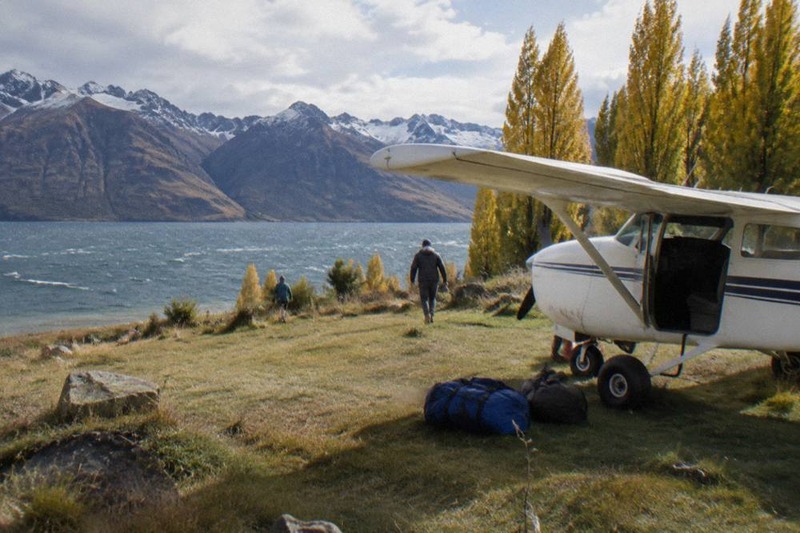
Tandem Skydive Freefall Time By Altitude
Freefall is the seconds you are actually falling, and it is the one thing a higher jump altitude buys you more of. Here is exactly how the numbers stack up at 9,000, 12,000 and 15,000 ft, operator by operator.
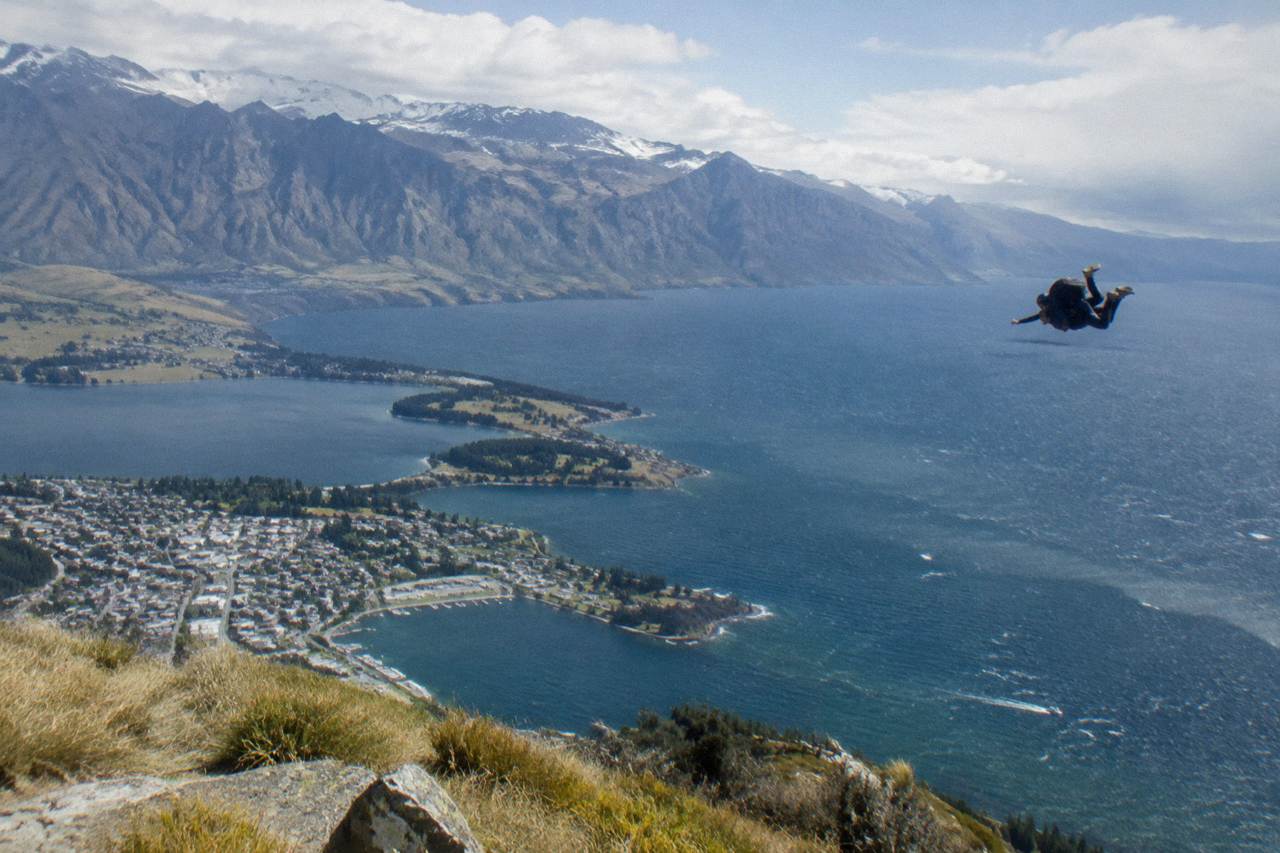
Short answer
Freefall on a tandem skydive runs up to 25 seconds from 9,000 ft, up to 45 seconds from 12,000 ft and up to 60 seconds from 15,000 ft, figures stated by both NZONE Skydive and Skydive Wanaka; NZONE puts the fall at 200 km/hour. The canopy ride then lasts 3 to 4 minutes under an NZONE-stated figure. Higher altitudes cost more per person.
Freefall seconds are the single thing a higher jump buys you more of, so this page treats them as the product: what each altitude delivers, what each one costs at each drop zone, and where the common traps are. Everything numeric here comes from the operators' own published pages and booking information, and where an operator states nothing, the page says so rather than guessing.
| Fact | Figure | Source |
|---|---|---|
| Freefall, 9,000 ft | Up to 25 seconds | NZONE and Skydive Wanaka |
| Freefall, 12,000 ft | Up to 45 seconds | NZONE and Skydive Wanaka |
| Freefall, 15,000 ft | Up to 60 seconds | NZONE and Skydive Wanaka |
| Fall speed | About 200 km/h at NZONE | NZONE and Skydive Wanaka |
| Canopy ride | 3 to 4 minutes | NZONE |
| Flight to altitude | 15 to 20 minutes | NZONE |
| Highest tandem altitude offered | 15,000 ft | Both operators |
How Long Is Freefall On A Tandem Skydive In Queenstown?
Freefall lasts up to 25 seconds from 9,000 ft, up to 45 seconds from 12,000 ft and up to 60 seconds from 15,000 ft; NZONE Skydive puts the speed at 200 km/h. Both figures are the operators' own: NZONE Skydive states them for its Drift Bay drop zone, and Skydive Wanaka states the same ladder for Wanaka Airport. Every number is an "up to", never a guaranteed second count. Weight limits are the other factor that decides who gets on the plane, and the guide to Queenstown skydiving weight limits spells out what both operators cap jumpers at and what heavier travellers can do next.
The word "up to" is doing real work in those sentences. Both operators publish the same three-step ladder anyway, because the physics is the same everywhere: more altitude means more time falling before the parachute opens. NZONE's terms even reserve the right to change altitude, freefall duration and times on the day, which is the fine print sitting behind every number on the menu.
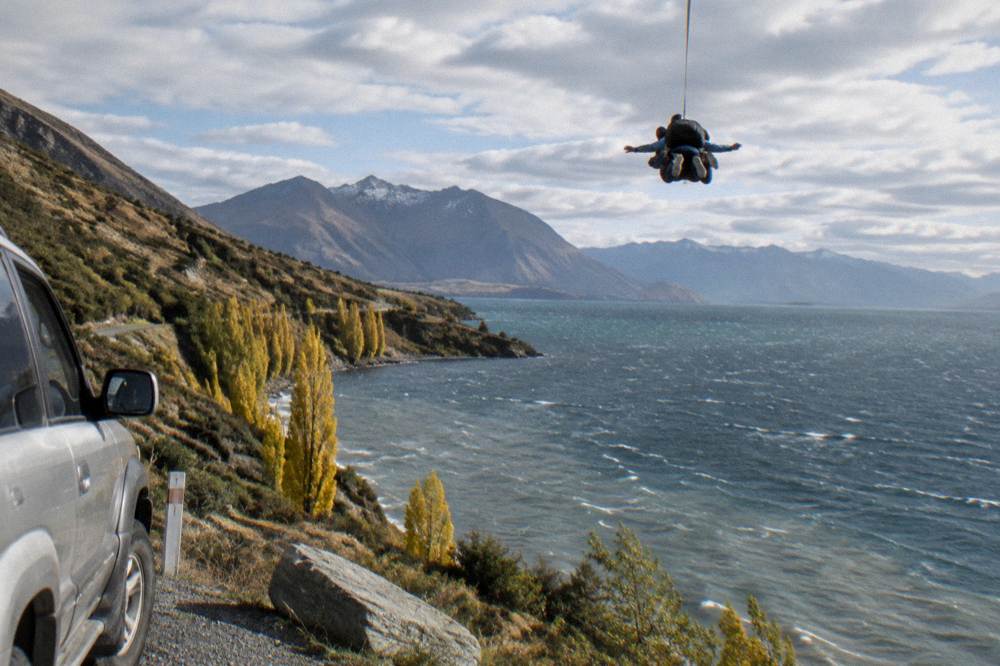
What the ladder does not show is how steep the value curve is. Going from 9,000 ft to 12,000 ft roughly doubles your freefall, from up to 25 seconds to up to 45 seconds. Going from 12,000 ft to 15,000 ft adds roughly another third again, to up to 60 seconds. The price step from entry to top at either operator is NZD 379 to NZD 575, and what that money returns is more than twice the falling.
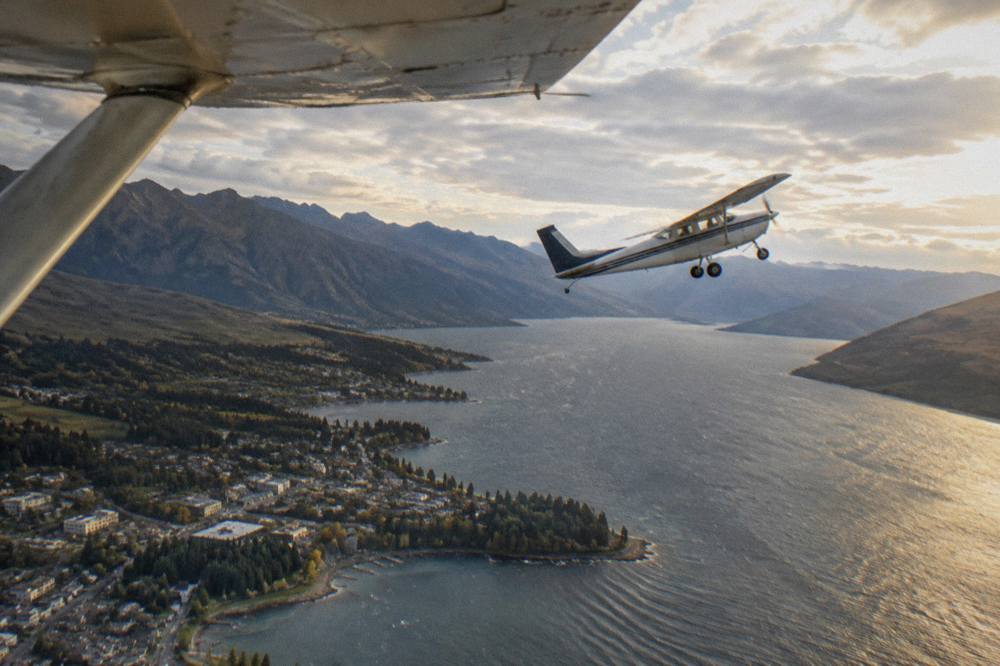
The rest of the experience is the same at every altitude. The flight to height takes 15 to 20 minutes according to NZONE's prices page, the parachute ride under canopy lasts 3 to 4 minutes on NZONE's stated figure, and the whole ground-to-ground visit runs about 3.5 hours for NZONE and about 3 hours for Skydive Wanaka. Altitude changes the fall, not the shape of the day. For the full walk-through, see what happens on a Queenstown tandem skydive day.
What Does Each Altitude Cost At Each Operator?
At NZONE Skydive the operator's prices are NZD 379 from 9,000 ft, NZD 469 from 12,000 ft and NZD 575 from 15,000 ft. Skydive Wanaka charges the same NZD 379, 469 and 575 at its Wanaka drop zone, or NZD 399, 489 and 595 when the Queenstown return transfer is included. Per person, from prices, as the operators publish them.
The two operators price identically at their own drop zones, which makes the comparison unusually clean. Where they diverge is transport: NZONE's courtesy coach from 35 Shotover Street to its Drift Bay drop zone is included in the price, while Skydive Wanaka's Queenstown return transfer is a NZD 20 add-on over the base fare that only runs on certain days. The three bookable tours on this site each carry a USD "from" price at the 9,000 ft entry altitude: NZONE Skydive from USD 215.27, 3-Hour Wanaka Skydive from USD 210.16, and Wanaka Skydive, Transfers Included from USD 221.25.
| Altitude | Freefall (up to) | Flight to altitude | NZONE price (NZD) | Skydive Wanaka price (NZD) | With Queenstown transfer (NZD) |
|---|---|---|---|---|---|
| 9,000 ft | 25 seconds | 15 to 20 minutes at NZONE | 379 | 379 | 399 |
| 12,000 ft | 45 seconds | 15 to 20 minutes at NZONE | 469 | 469 | 489 |
| 15,000 ft | 60 seconds | 15 to 20 minutes at NZONE | 575 | 575 | 595 |
Read that table as the operators' own NZD figures, per person, published on their prices pages: NZONE's prices page and Skydive Wanaka's prices and packages page. Higher altitudes cost more than the 9,000 ft entry figure shown in USD on each booking page. If the money side is the whole question for you, the dedicated breakdown is in how much a Queenstown skydive costs.
The 3-Hour Wanaka Skydive is the entry point at Wanaka Airport: from USD 210.16 at 9,000 ft, rated 4.8 across 295 reviews, about 3 hours door to door, with pickup at the Wanaka i-SITE shuttle point on 103 Ardmore Street, chosen at booking. You can check availability alongside the operator's own detail, and free cancellation runs to 24 hours before departure.
Is The Jump From 15,000 Ft Really Twice The Freefall Of 9,000 Ft?
Measured in seconds, yes: up to 60 seconds of freefall at 15,000 ft against up to 25 seconds at 9,000 ft, both operators' figures. But the honest framing is "more than twice", because the 15,000 ft jump buys up to 35 extra seconds over the entry altitude, not a doubled ride from a doubled price. The fare step from NZD 379 to NZD 575 is well under double the money for well over double the falling.
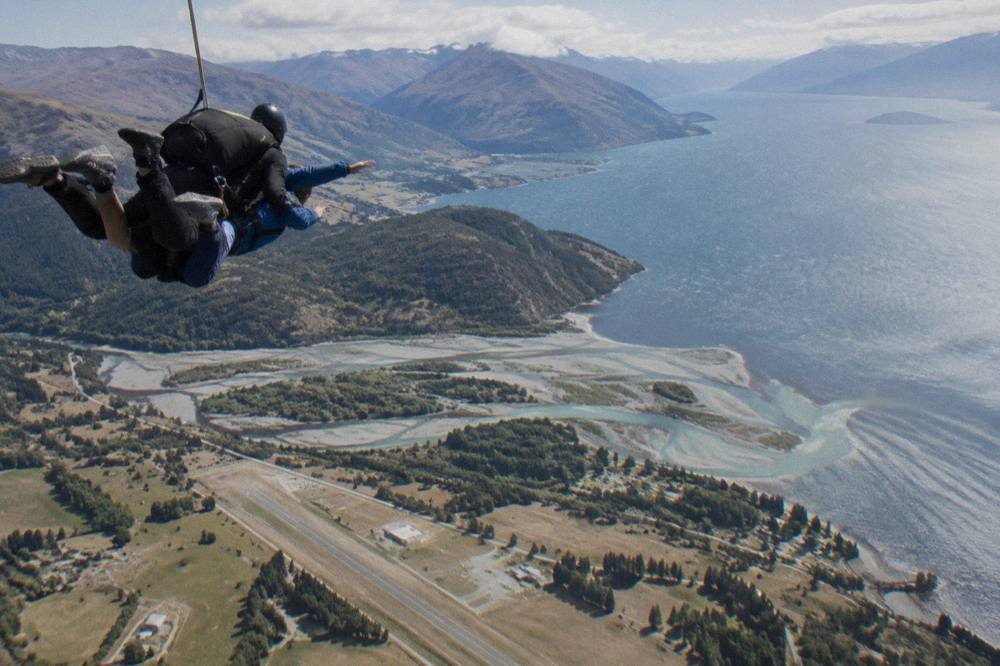
That arithmetic is why the 15,000 ft option exists and why people pay for it. The first ten seconds of any freefall are the sensory overload, the rush of the aircraft receding and the wind arriving. Everything after that is the part you actually get to be present for. At up to 25 seconds total, the 9,000 ft jump is over almost as soon as it settles. At up to 60 seconds, you have time to register the Southern Alps and the lake below.
There is also a hard ceiling on how high a tandem can go. Skydive Wanaka's FAQ is specific: it does not tandem skydive from above 15,000 ft above ground level, which at Wanaka is 16,100 ft above sea level, and it says NZPIA rules cap tandem jumping at 16,500 ft above sea level. So 15,000 ft is not just the top rung on a menu, it is close to a regulatory ceiling. No operator in this region offers anything higher, and any product implying otherwise does not exist here.
The middle rung deserves more respect than it gets. Up to 45 seconds at 12,000 ft already gives you nearly double the falling of the entry jump for a modest step up from the base fare, NZD 469 against NZD 379 at either operator.
How Fast Do You Fall, And Does The Speed Change With Altitude?
Tandem freefall happens at about 200 km/h, a figure NZONE Skydive states. The speed does not meaningfully change between 9,000 and 15,000 ft, because a tandem pair reaches terminal velocity within the first seconds of the fall. What altitude buys is duration at that speed, not extra speed.
Terminal velocity is the point where air resistance balances gravity, and a tandem master with a passenger strapped in front reaches it quickly given the combined weight and surface area. From then on, the fall is a steady, extremely loud rush rather than an acceleration. This is why the jump from 12,000 to 15,000 ft adds seconds but not kilometres per hour: the physics has already flattened out.
It also explains a common disappointment. What the wind does to your face for 25, 45 or 60 seconds is the real product. If that distinction matters to you, how scary a first Queenstown skydive feels covers it honestly.
One point worth fixing early: falling farther does not mean falling faster for longer in any way you would notice. Whether you exit at 9,000 or 15,000 ft, the first few seconds feel essentially the same, the wind builds, the body flattens, the noise arrives. The difference only reveals itself in how long that state persists before the tandem master waves, arms come out and the canopy opens over the lake.
Which Altitude Should You Book For Your First Jump?
For a first jump, most people are best served by 12,000 ft or 15,000 ft rather than the 9,000 ft entry, purely on freefall-per-dollar: the step from the base fare to NZD 469 roughly doubles your falling time, and the step to NZD 575 takes it to up to 60 seconds, at both operators. Choose 9,000 ft only if budget or nerves say so, not for the experience itself.
Children are an exception written into the rules. NZONE's FAQ is explicit that children 12 years and under are permitted to skydive from a maximum height of 9,000 ft, and Skydive Wanaka carries the same cap; every child is assessed on the day by the Tandem Master regardless. So for a family jump with a younger child, 9,000 ft is not the budget pick, it is the only permitted pick. Minimum age is 6 at both operators.
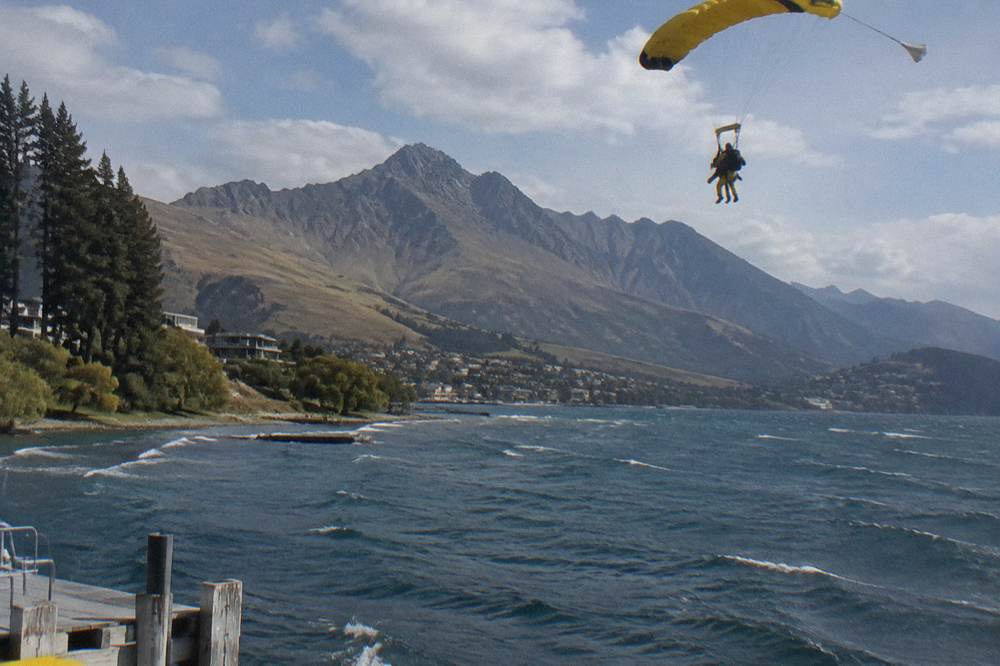
For adults, the decision usually comes down to whether this is a once-only jump or the first of several. Repeat or cautious jumpers who want the lowest outlay can start at 9,000 ft and upgrade later; NZONE allows rescheduling any number of times until 24 hours before departure, and bookings stay valid for 12 months.
The two drop zones also differ in practical ways that matter as much as the altitude choice, and the honest comparison is easier to see side by side:
| What differs | NZONE Skydive | 3-Hour Wanaka Skydive | Wanaka Skydive, Transfers Included |
|---|---|---|---|
| Drop zone | Drift Bay, 786 Kingston Road, Lake Wakatipu | Wanaka Airport, 14 Mustang Lane | Wanaka Airport, 14 Mustang Lane |
| Duration | About 3.5 hours | About 3 hours | Up to 6 hours |
| Rating and reviews | 4.7 across 1,479 reviews | 4.8 across 295 reviews | 4.7 from 3 reviews |
| Entry price, 9,000 ft | From USD 215.27 | From USD 210.16 | From USD 221.25 |
| Getting there | Courtesy coach from 35 Shotover Street, included | Wanaka i-SITE shuttle point only, 103 Ardmore Street, selected at booking | Return transfer from 35 Shotover Street, about 1.5 hours each way, Mon, Wed, Fri and Sun from 19 October 2026 |
| Minimum weight | 40 kg | 30 kg | 30 kg |
NZONE Skydive is the most reviewed option here by a wide margin, 4.7 across 1,479 reviews, about 3.5 hours from check-in to return, with the courtesy coach from 35 Shotover Street to the Drift Bay drop zone included in the price. The Queenstown drop zone sits on Lake Wakatipu, which matters when the freefall views are half of what you are buying. NZONE describes itself as New Zealand's first skydive operation and the birthplace of tandem skydiving in New Zealand, claims worth knowing as operator self-descriptions.
What Comes After Freefall, And How Long Is The Whole Day?
After freefall, the parachute opens and you ride the canopy for 3 to 4 minutes, a figure NZONE states for its jumps, with the tandem master steering and room to take in Lake Wakatipu or the Wanaka basin. The whole experience runs about 3.5 hours for NZONE, about 3 hours for the 3-Hour Wanaka Skydive, and up to 6 hours for the Wanaka jump with the Queenstown return transfer.
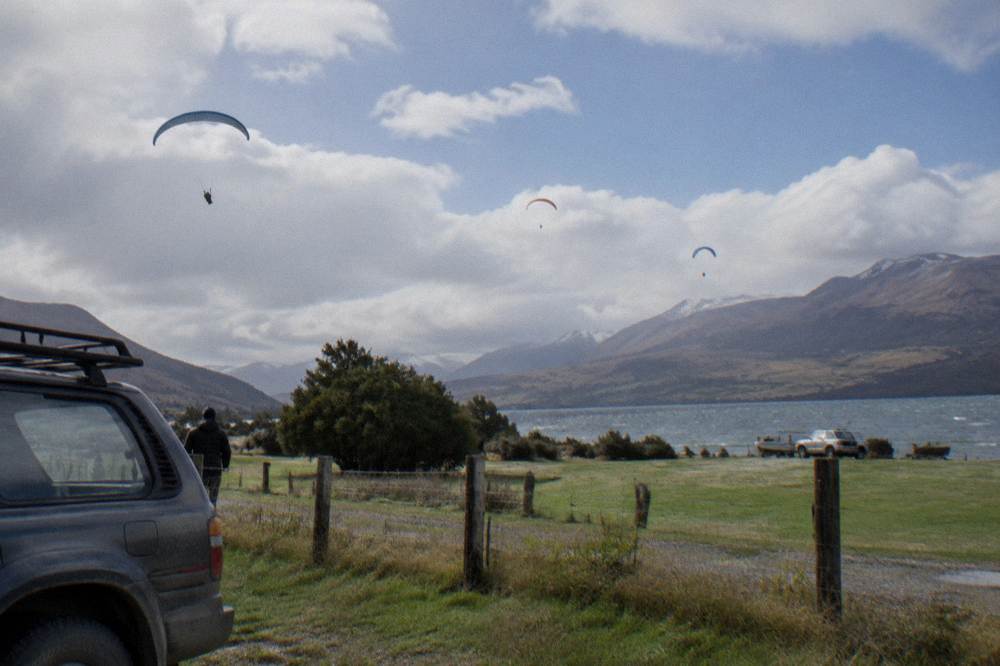
Those durations are ground-to-ground, check-in to return, and should never be added to the freefall or flight times, they already contain them. NZONE's FAQ says about 3.5 hours from check-in to return, its terms say it endeavours to have you away within 3 to 3.5 hours of arrival, and both operators advise planning for more of the day than the headline figure. Bookings carry a check-in time, not a jump time; the actual exit depends on loads and weather through the day.
The transfer version is the long one because of the drive. Wanaka Skydive, Transfers Included runs from the NZONE Skydive Centre at 35 Shotover Street, about 1.5 hours each way to Wanaka Airport, on Monday, Wednesday, Friday and Sunday only, from 19 October 2026. Its rating of 4.7 comes from only 3 reviews, so treat that number as a small sample rather than a verdict. NZONE's own terms, which spell out the 24-hour free cancellation and 12-month validity, apply to its jumps.
At NZONE, the canopy flight runs 3 to 4 minutes, under a parachute large enough to hold two people, flown by the tandem master, and it is the calm half of the trip. This is when the scenery does its work, Lake Wakatipu and the Remarkables toward Drift Bay, or Lake Wanaka, Mount Aspiring and the river country toward the Wanaka landing.
Does Weather Change Your Freefall Time?
Weather does not change the seconds a given altitude produces, but it can change the day, the altitude actually jumped or whether the jump runs at all. Both operators describe their skydives as weather-dependent: they rebook you to the next suitable slot, and if no other date works you receive a full refund. Neither promises the jump on the booked day.
NZONE's FAQ puts it plainly: if you cannot rearrange to another trip, you are refunded in full. Its terms add that NZONE may change aircraft, drop zone, altitude, freefall duration or times without that being grounds for a refund claim, which is the fine print behind every "up to" on the menu. Skydive Wanaka's terms carry the same structure: rebook first, pay any difference for a higher-value change, full refund only when rebooking is not possible.
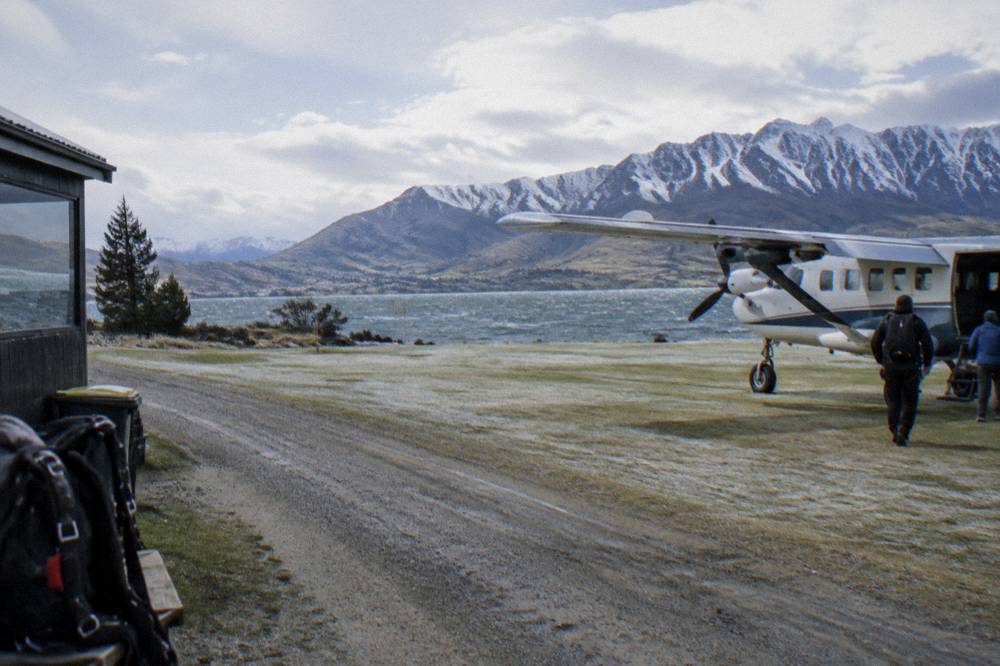
The practical countermeasure is simple: book your first available day and keep a spare day free. Skydive Wanaka's booking information advises exactly that, and it also suggests calling 30 minutes before your booking time to check the weather. Strong wind or complete cloud cover stops jumping at Wanaka. For the fuller picture, how Queenstown skydive weather works covers rebooking, refunds and seasonality.
What Trips People Up When Choosing An Altitude?
The common mistakes are treating "up to" as a guarantee, comparing review scores without their counts, assuming pickup works the same at both drop zones, and expecting photo packages to be inside the jump price. Freefall figures are the operators' own maximums, the Wanaka-with-transfer tour has only 3 reviews, and photo and video are NZD add-ons bought at check-in, never included in a fare.
The pickup confusion is the most expensive. Pickup for the 3-Hour Wanaka Skydive is the Wanaka i-SITE shuttle point only, at 103 Ardmore Street, selected at booking; no Queenstown transfer is included. NZONE's coach runs from 35 Shotover Street to Drift Bay and is included, but hotel pickup is not offered. Only Wanaka Skydive, Transfers Included connects Queenstown to Wanaka Airport, on four days a week. The detail is all in Queenstown skydive pickup and transfer options.
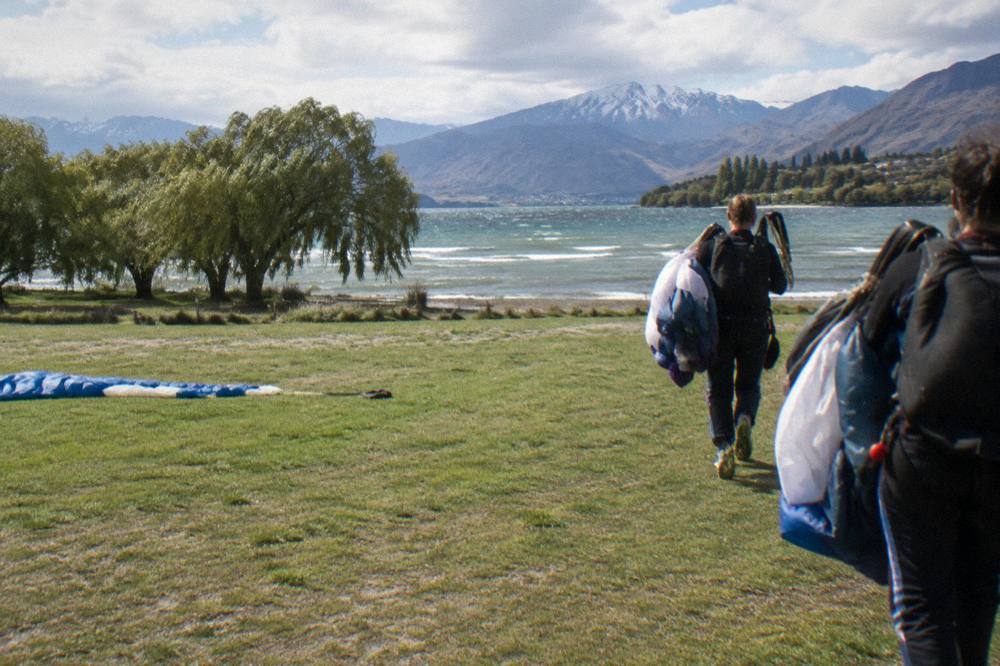
Photo and video pricing trips the other way. NZONE's packages are NZD 220 for Handicam, NZD 333 for the dedicated freefall camera flyer and NZD 395 for the Ultimate Combo, and Skydive Wanaka's run from NZD 220, 333 and 395 for its equivalent tiers, all add-ons at or around check-in, none inside the jump fare. Personal cameras and smart glasses are not allowed on the jump at either operator, an NZPIA safety rule. The full run-down, including which packages cannot be pre-booked, is in Queenstown skydive photo and video options.
Weight is the last quiet trap. NZONE's minimum weight is 40 kg and Skydive Wanaka's is 30 kg, so do not generalise one to the other. Anyone over 95 kg faces a Tandem Master assessment at the drop zone at both operators, and Skydive Wanaka charges surcharges of NZD 50 at 95-104.9 kg, NZD 75 at 105-114.9 kg and NZD 100 at 115 kg and over, payable at check-in; NZONE names no amounts. Both operators' terms note limits vary by drop zone and day, with a maximum of 110 to 115 kg at most drop zones.
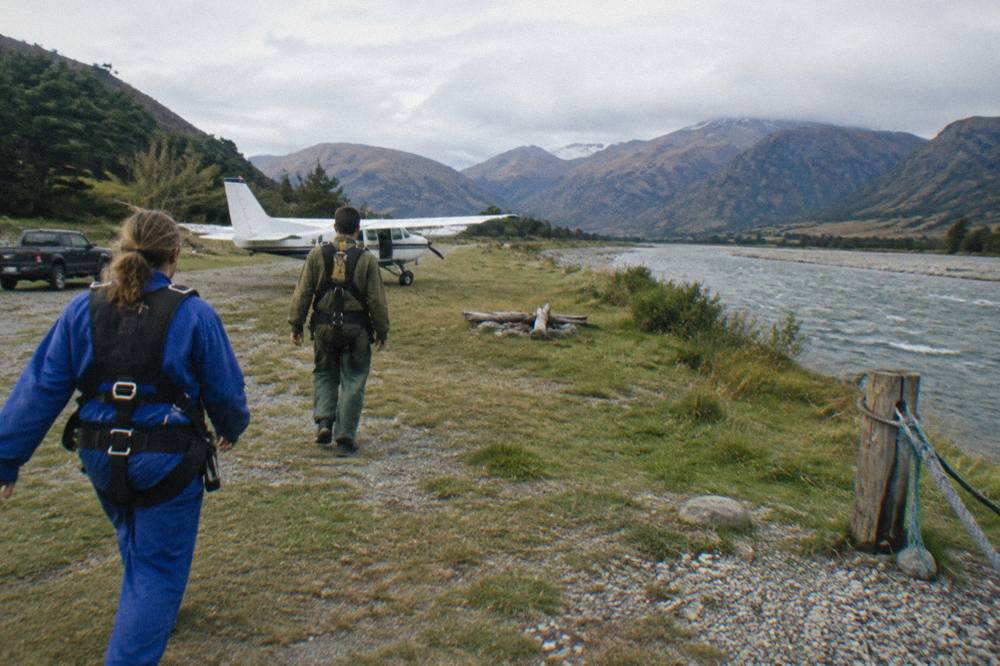
Wanaka Skydive, Transfers Included, from USD 221.25 at 9,000 ft, is the option that pairs the Wanaka drop zone with a Queenstown start, and its up-to-6-hour duration is mostly the two 1.5-hour drives. It carries 4.7 from 3 reviews, a count too small to rank anything by, but the underlying operator is the same Skydive Wanaka that holds 4.8 across 295 reviews on its core Wanaka tour. Free cancellation runs to 24 hours, and the operator advises booking your first available day with a spare one behind it.
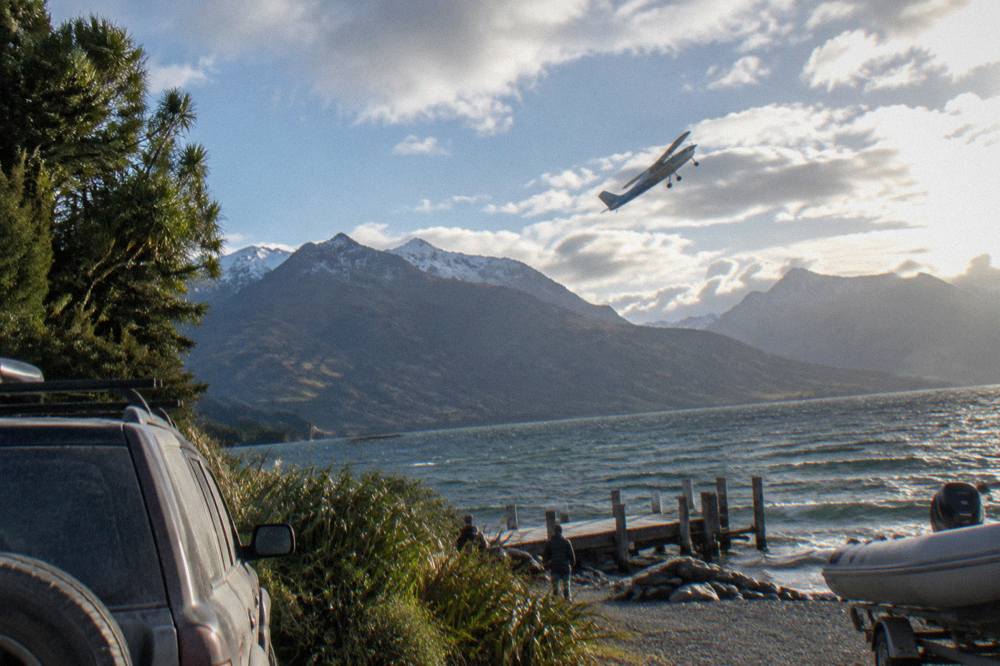
The choice between the drop zones comes down to scenery and logistics rather than seconds, because the freefall ladder is identical. NZONE falls over Lake Wakatipu toward Drift Bay; Skydive Wanaka falls over Lake Wanaka and Mount Aspiring country, landing at a private farm near the airport. The honest comparison, including the transfer trade-offs, is laid out in skydive Queenstown versus Wanaka.
Common Questions About Tandem Skydive Freefall Time By Altitude
How Long Is Freefall On A Tandem Skydive?
Up to 25 seconds from 9,000 ft, up to 45 seconds from 12,000 ft and up to 60 seconds from 15,000 ft, at the 200 km/h speed NZONE states for its jumps. NZONE Skydive and Skydive Wanaka state the same freefall figures for their Queenstown and Wanaka drop zones respectively, the 200 km/h speed is NZONE's, and every figure is an "up to" rather than a guaranteed count.
Is 15,000 Ft Worth The Extra Cost Over 9,000 Ft?
Measured in seconds, the 15,000 ft jump gives up to 35 more seconds of freefall than 9,000 ft, more than twice the total, with the operator fare rising from NZD 379 to NZD 575 per person. The 9,000 ft jump is the only option permitted for children 12 and under.
How Long Does The Whole Skydive Take Including Freefall?
About 3.5 hours from check-in to return for NZONE Skydive, about 3 hours for the 3-Hour Wanaka Skydive, and up to 6 hours for Wanaka Skydive, Transfers Included because of the roughly 1.5-hour drive each way. At NZONE, those durations already contain the 15 to 20-minute flight to altitude and the 3 to 4-minute canopy ride, so never add the parts together.
Does A Higher Altitude Mean Falling Faster?
No. NZONE describes the fall at speeds of 200 km/hour at every altitude on the menu. Extra altitude buys extra seconds at that speed, not extra speed, which is why the 15,000 ft jump feels longer rather than faster.
Can Weather Reduce My Freefall Time?
Weather can stop a jump running at all, and NZONE's terms reserve the right to change altitude and freefall duration on the day, which is part of why every published figure is an "up to". If weather cancels your jump, both operators rebook you first and refund in full only when no other date works.
Do Both Queenstown And Wanaka Operators Offer The Same Altitudes?
Yes. Both offer 9,000, 12,000 and 15,000 ft with the same freefall maximums of 25, 45 and 60 seconds, and both price them at NZD 379, 469 and 575 at their own drop zones. The Wanaka operator adds NZD 20 per altitude when the Queenstown return transfer is included.