Is There A Weight Limit For Skydiving?
Yes, tandem skydives have weight limits, and they differ between operators. Here is how the minimums, assessments and surcharges work at the Queenstown and Wanaka drop zones.
In short: Yes, weight is one of the first eligibility checks for a tandem skydive, and it gates your booking before anything else. In the Queenstown region there is no single universal limit: NZONE Skydive sets a 40 kg minimum, Skydive Wanaka sets 30 kg, both assess anyone from 95 kg on the day, and Skydive Wanaka adds surcharges of NZD 50, NZD 75 and NZD 100 at check-in. The details follow.
This article sits in the eligibility corner of Queenstown Tandem Skydive, alongside the fuller Queenstown skydive weight limit guide, which covers harness sizing and body measurements in more depth. Here the focus is the practical question sequence: is there a limit, what is the minimum, what happens at 95 kg and above, and how the two drop zones in this region differ. The two operators that matter are NZONE Skydive, which jumps at Drift Bay on Lake Wakatipu, and Skydive Wanaka, which jumps from Wanaka Airport. A third option, a Wanaka skydive with Queenstown transfers included, is flown by Skydive Wanaka too, so its weight rules follow the Wanaka numbers.
Yes, there is a weight limit for skydiving, and in New Zealand it is set by each operator rather than by a single national rule. In the Queenstown region the minimums are 40 kg at NZONE Skydive and 30 kg at Skydive Wanaka, with assessments starting at 95 kg and extra assessment over 110 kg at both.
The reason weight matters is physical, not arbitrary. In a tandem skydive you are strapped to a Tandem Master, and the pair of you share one parachute system designed around a combined weight range. The harness has to fit your body, the canopy has to carry you and your tandem master as one combined load, and the aircraft has a payload limit that depends on how many jumpers are aboard that flight. That is why both operators say the same thing in their terms: limits vary by drop zone and by day, and at most drop zones the maximum is 110 to 115 kg.
The minimum matters just as much as the maximum. A harness is not one-size-fits-all; below a certain body weight the leg straps and chest strap cannot be tightened enough for the harness to be safe. Hence the 40 kg floor at NZONE and the 30 kg floor at Skydive Wanaka, each paired with a minimum height of 1.2 m. NZONE's own FAQ page spells out its figures, including the note that everyone from 95 kg upward is assessed by the Tandem Master at the drop zone (NZONE Skydive's FAQ page).
| Rule | NZONE Skydive (Queenstown) | Skydive Wanaka (Wanaka Airport) |
|---|---|---|
| Minimum weight | 40 kg | 30 kg |
| Minimum height | 1.2 m | 1.2 m |
| Assessment threshold | 95 kg and over | 95 kg and over |
| Extra assessment | Over 110 kg | Over 110 kg |
| Stated maximum | Not stated; terms say 110 to 115 kg at most drop zones | Not stated; terms say 110 to 115 kg at most drop zones |
| Weight surcharge amounts | Not stated by NZONE | Skydive Wanaka charges NZD 50 / NZD 75 / NZD 100, payable at check-in |
One caution on reading that table: a stated maximum of "110 to 115 kg at most drop zones" is a terms-and-conditions range, not a promise that any particular weight will be accepted. Both operators reserve the right to decline a jumper on the day if the Tandem Master's assessment says the harness fit or the combined load is outside safe limits. If your weight is anywhere near those numbers, contact the operator before booking rather than after.
A second caution follows from the first. Because the limit is per operator, per aircraft and per day, no article, FAQ or forum thread can tell you with certainty that your weight will fly. What good information can do is narrow the question: state the floors, name the assessment thresholds, and point you to the reservations team that actually makes the call.
The practical comparison for most readers comes down to these three options, all tandem jumps with a Tandem Master on every flight:
“Amazing experience. Had our first ever skydiving and it was one of a lifetime experience. Wish i could do it again.”
What Is The Minimum Weight For A Tandem Skydive?
The minimum weight for a tandem skydive is 40 kg at NZONE Skydive in Queenstown and 30 kg at Skydive Wanaka. Both operators also require a minimum height of 1.2 m and a harness that fits. Children 12 and under may jump from a maximum of 9,000 ft at both drop zones, and every child is assessed on the day by the Tandem Master. For more on how young a jumper can be, the guide to minimum age requirements for young skydivers covers what else determines whether a child can take the plunge.
The minimum is really a harness-fit rule. Tandem harnesses adjust within a range, and below the floor the straps cannot be secured tightly enough against a small frame. NZONE flies two Cessna Grand Caravan aircraft that hold up to nine customers each; Wanaka operates from its airport base at 14 Mustang Lane.
Age interacts with weight here, which is why families ask this question most. The minimum age is 6 at both operators, under 18s need written parental or guardian consent, and NZONE's terms add that a parent or guardian must be present at the drop zone unless consent documents are arranged in advance. There is no maximum age at either operator; NZONE records passengers up to 94 years old and Skydive Wanaka up to 92. The gate for a young jumper is not the birthday, it is whether the child clears the weight and height minimums and passes the on-the-day assessment.
For parents booking for a lighter child, the altitude ceiling matters as much as the floor. The 9,000 ft entry jump, the one children 12 and under are limited to, still delivers up to 25 seconds of freefall, at speeds of 200 km/h and followed by 3 to 4 minutes under canopy according to NZONE. The higher altitudes, 12,000 ft and 15,000 ft with up to 45 and 60 seconds of freefall respectively, are reserved for jumpers over 12. Prices at both operators start from NZD 379 for the 9,000 ft jump, before any transfer or photo add-on.
“Nzone are really well organised: it was a very smooth check-in in their office in town, and at the airstrip. All the staff that helped us were really friendly, and my tandem instructor was really calm, friendly and respectful.”
For a family weighing options, the detailed Queenstown skydive age limit guide covers consent paperwork, and the weight-and-harness specifics live in the weight limit guide. As a starting point, NZONE Skydive, the most reviewed tandem in the region at 4.7 across 1,479 reviews, takes jumpers from 40 kg and includes a courtesy coach from its Shotover Street centre to the drop zone.
What Happens If You Weigh 95 Kg Or More?
Anyone weighing 95 kg or more is assessed by the Tandem Master at the drop zone, at both NZONE Skydive and Skydive Wanaka. Skydive Wanaka charges NZD 50 for 95 to 104.9 kg, NZD 75 for 105 to 114.9 kg and NZD 100 for 115 kg and over, payable at check-in. NZONE states no surcharge amounts.
The assessment at 95 kg is not a penalty, it is a fitting and load check. The Tandem Master looks at height, build and harness fit together, because two people of the same weight can fit the same harness very differently. Skydive Wanaka's terms also ask anyone over 95 kg to tell its reservations team before the jump date, so the drop zone can plan the flight load and, where needed, the availability of qualified Tandem Masters for heavier pairings. Over 110 kg, both operators apply an extra assessment, by the Drop Zone Safety Officer or a Tandem Master at NZONE.
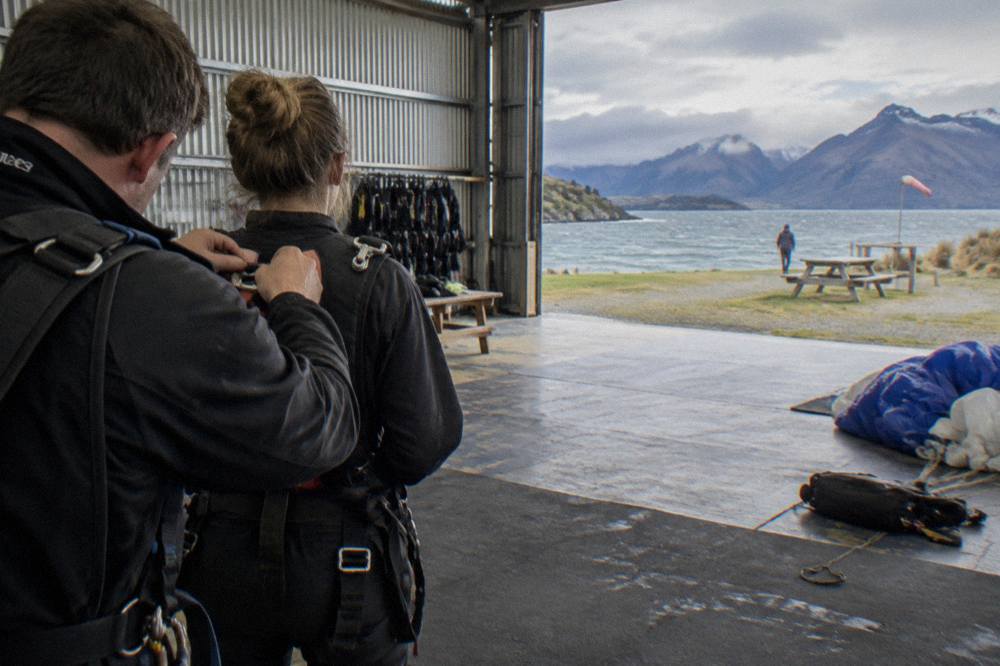
The surcharge bands deserve their own table, because this is where the two operators genuinely diverge and where readers get caught out. The amounts appear only in Skydive Wanaka's booking information, so they apply to the Wanaka tandems: the 3-Hour Wanaka Skydive and the Wanaka Skydive, Transfers Included option that adds a Queenstown return transfer. NZONE publishes no surcharge amounts on its own pages, and the honest way to describe that is "not stated", not "none" (Skydive Wanaka's FAQ page sets out its weight rules and the 30 kg minimum).
| Weight band | What happens | Applies to |
|---|---|---|
| 95 to 104.9 kg | Tandem Master assessment; Skydive Wanaka adds a NZD 50 surcharge at check-in | Both operators; surcharge Wanaka only |
| 105 to 114.9 kg | Tandem Master assessment; Skydive Wanaka adds a NZD 75 surcharge at check-in | Both operators; surcharge Wanaka only |
| 115 kg and over | Extra assessment; Skydive Wanaka adds a NZD 100 surcharge at check-in | Both operators; surcharge Wanaka only |
Can You Skydive If You Weigh Over 110 Kg?
Possibly, but nothing is guaranteed in advance. Both operators' terms say that at most drop zones the maximum limit is 110 to 115 kg, that anyone over 110 kg faces extra assessment by the Drop Zone Safety Officer or Tandem Master, and that acceptance depends on the availability of qualified Tandem Masters. Book only after speaking with the operator directly.
The upper limit is not a fixed number. The combined weight of you and the Tandem Master must sit inside the canopy's operating envelope, the aircraft payload depends on how many jumpers and how much fuel the flight carries, and weather conditions on the day can tighten both margins. That is what "limits vary by drop zone and day" means in practice: a weight that flew on Monday morning may not fly on a gusty Tuesday afternoon with a full load aboard. NZONE's terms, which Skydive Wanaka mirrors in substance, spell out this day-to-day variability (NZONE Skydive's terms and conditions).
“It was such a breathtaking experience, amazing and terrifying at the same time. The instructors were so nice and comforting and they’ve all done thousands of jumps.”
If you are in this bracket, the sequence that works is: call or email the operator before booking, give your accurate weight and height, and let reservations advise which date, altitude and flight might work. Booking first and disclosing later risks a declined jump and a wasted trip to the drop zone. For heavier jumpers weighing their options more broadly, the companion piece can a 300 lb person skydive works through the arithmetic and the honest outcomes in detail.
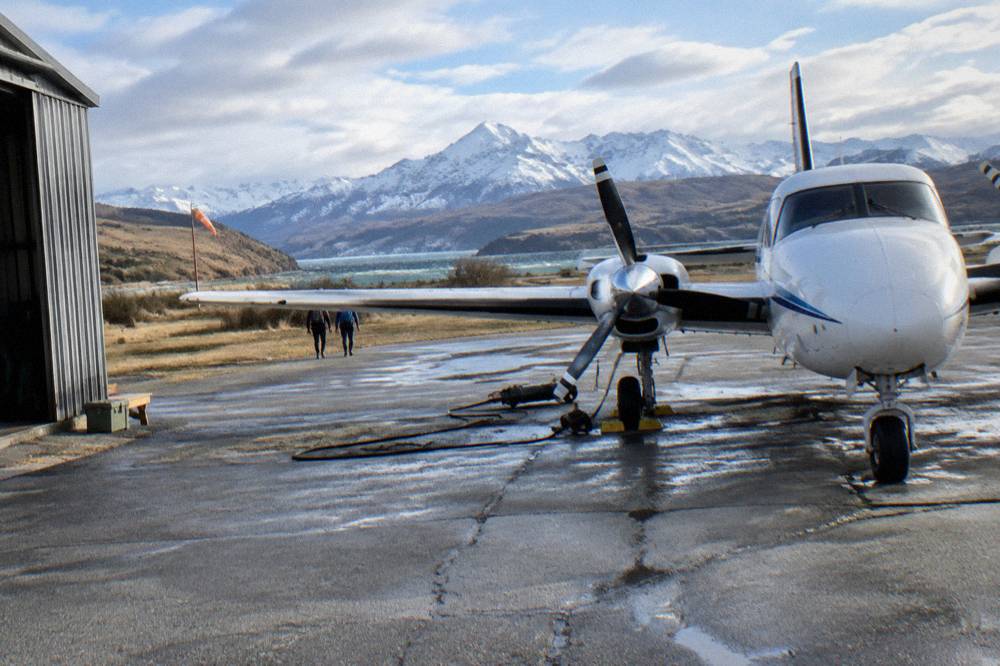
One more note that applies regardless of weight: a government-issued photo ID is required for everyone on arrival at the drop zone, and neither operator allows personal cameras or smart glasses on the jump, a safety requirement of the New Zealand Parachute Industry Association. Photo and video packages, from NZD 220 for a wrist-camera option at either operator, are bought at check-in, never smuggled aboard. The article on phone and camera rules for Queenstown skydives covers the rule and the packages you can buy instead.
Do Weight Rules Differ Between Queenstown And Wanaka?
Yes, in two visible ways: the minimum weight is 40 kg at NZONE Skydive's Drift Bay drop zone near Queenstown and 30 kg at Skydive Wanaka, and only Skydive Wanaka publishes surcharge bands for 95 kg and over. The assessment thresholds, 95 kg and 110 kg, are the same at both. The jump experience itself differs more than the weight rules do.
“Well organized. First time skydive from 15000 ft. The colleague are very professional and friendly. Also there are many interactions from the coach. Great experience. If u never tried skydive, this is a must do experience.”
NZONE Skydive operates from its centre at 35 Shotover Street in Queenstown, with a courtesy coach included in the price out to the drop zone at 786 Kingston Road, Drift Bay, on Lake Wakatipu, and the whole visit runs about 3.5 hours from check-in to return. Skydive Wanaka starts at Wanaka Airport, about 3 hours door to door, with pickup from the Wanaka i-SITE shuttle point at 103 Ardmore Street if you select it at booking; the landing itself happens at a private farm nearby, where there is no safe spectator viewing, so family and friends wait at the airport base. The two experiences are compared in full in the Queenstown versus Wanaka skydive guide.
The third tour in this region, Wanaka Skydive, Transfers Included, is flown by Skydive Wanaka but starts in Queenstown: a return transfer from 35 Shotover Street, about 1.5 hours each way, running Monday, Wednesday, Friday and Sunday, with the whole experience running up to 6 hours. Weight-wise it follows the Wanaka rules, 30 kg minimum and the Wanaka assessment process, and it prices slightly higher at the entry altitude, from USD 221.25 per person against from USD 210.16 for the Wanaka-only jump, reflecting the transfer. Its rating shows 4.7 from 3 reviews, a pool too small to compare with NZONE's 4.7 from 1,479 reviews or the Wanaka jump's 4.8 from 295.
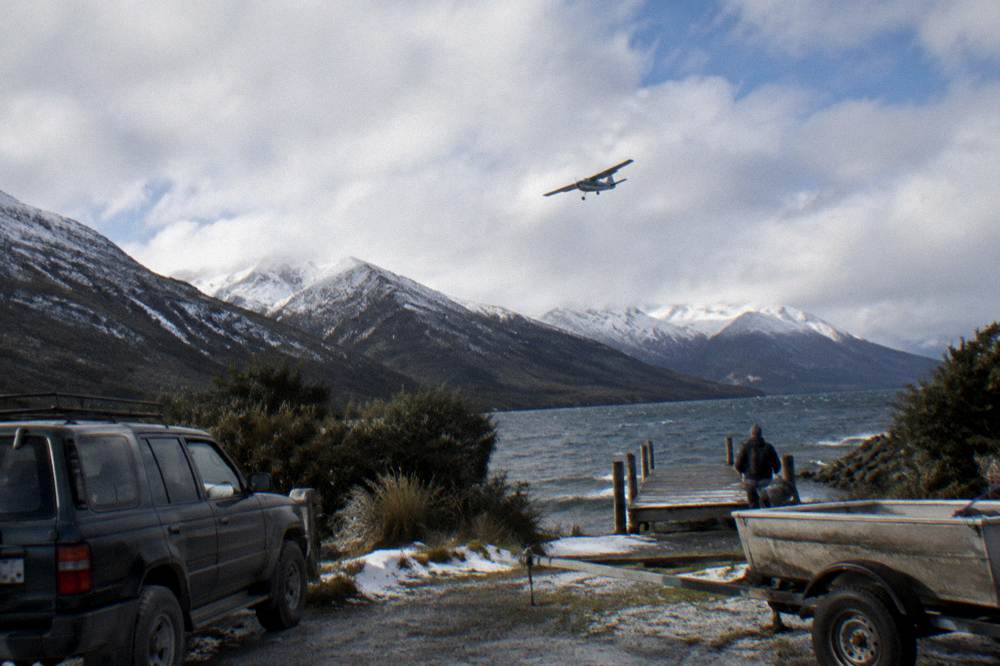
Given that the surcharge bands are attached to the Wanaka operator only, a heavier jumper deciding between drop zones on cost has a real calculation to make. The published entry prices are close, from USD 215.27 with NZONE against from USD 210.16 in Wanaka, but NZONE states no surcharge amounts on its own pages, so the like-for-like cost for a heavier jumper cannot be worked out in advance. Nobody should book on that arithmetic alone: the assessment on the day is the final word at both drop zones.
What Mistakes Trip People Up On Skydive Weight Limits?
The most common mistakes are under-declaring weight at booking, assuming hotel pickup exists, expecting a guaranteed jump time, budgeting without the surcharge bands, and assuming the two operators share identical limits. Each mistake has a fix that costs nothing: weigh yourself accurately, read the pickup terms, keep a spare day free, ask about surcharges, and check the minimum for your specific drop zone.
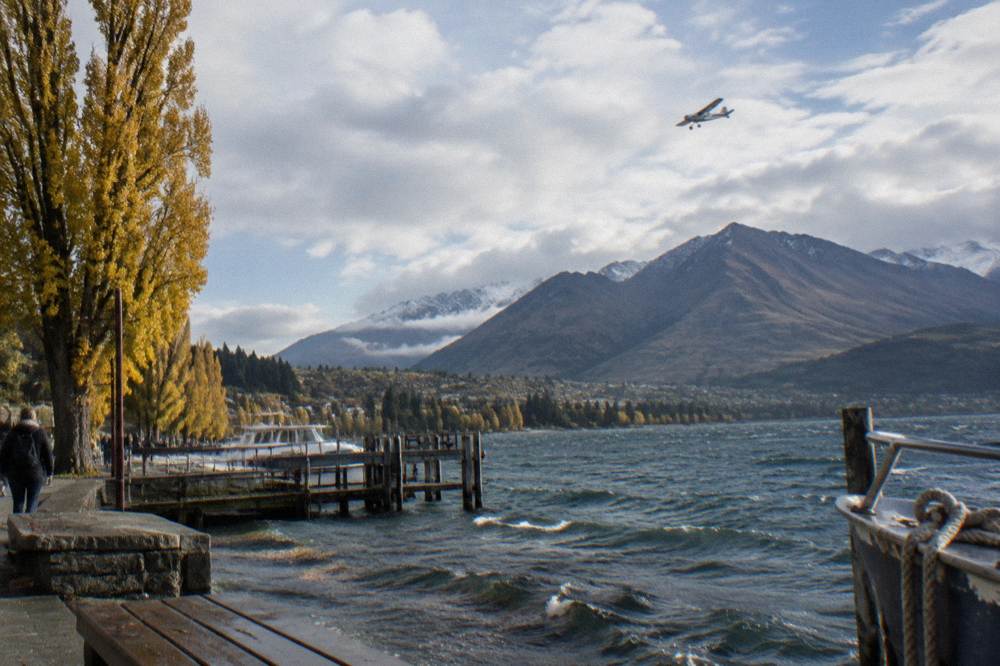
Under-declaring is the big one. People round down out of embarrassment, and the error surfaces at the drop zone in front of the Tandem Master, where it can mean an assessment failure or a surcharge nobody budgeted for. Weigh yourself the week you book and state the honest number. The second is assuming a universal minimum: a 35 kg teenager is fine at Wanaka and below the floor at NZONE, so the choice of drop zone can decide the trip. The third is schedule: weather decides whether a jump runs, both operators rebook first and refund in full only when no other date works, and the Wanaka transfer listing advises booking your first available day and keeping a spare day free. If those operator and weather wrinkles have you weighing whether the country suits a first jump at all, the guide to skydiving in New Zealand for beginners walks through the drop zone options, altitude choices, and age rules in plain terms.
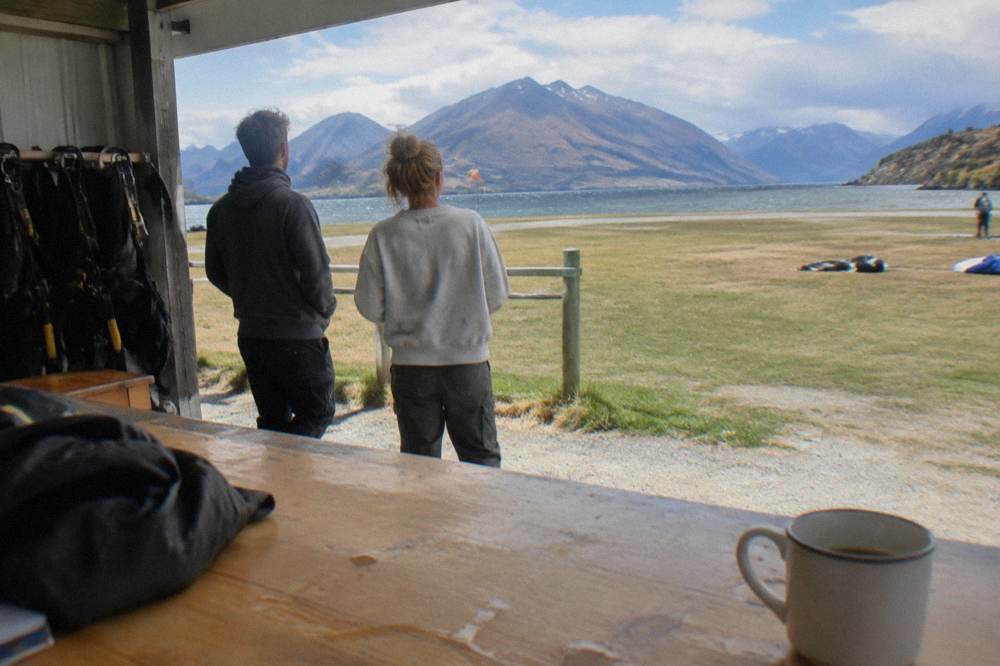
A short planning table pulls the practical numbers together for the region's three tandem options:
| Tour | Min weight | Where it starts | Duration |
|---|---|---|---|
| NZONE Skydive | 40 kg | Queenstown, 35 Shotover Street | About 3.5 hours |
| 3-Hour Wanaka Skydive | 30 kg | Wanaka, pickup from the i-SITE shuttle point | About 3 hours |
| Wanaka Skydive, Transfers Included | 30 kg | Queenstown, 35 Shotover Street, transfer days only | Up to 6 hours |
How Should You Check Your Weight Before Booking?
Weigh yourself accurately in the week before booking, compare the number against the 40 kg or 30 kg minimum for your chosen drop zone, and if you are 95 kg or over, tell the operator's reservations team before you pay. Then keep a spare day in your itinerary, since weather decides whether the jump runs and refunds only apply when no alternative date works.
The booking flow rewards honesty at every step. State your true weight and height, flag any medical conditions the terms ask about, recent injuries, surgery, epilepsy, high blood pressure or heart conditions, and expect a Tandem Master assessment if you are 95 kg or over. Cancellation is free up to 24 hours before departure at all three options, and bookings stay valid for 12 months, so a weather shift rarely means losing your money. What to wear matters less for eligibility but still counts: secure enclosed tie-up shoes at both operators, with jumpsuits, gloves, hats and goggles provided, and goggles that fit over glasses.
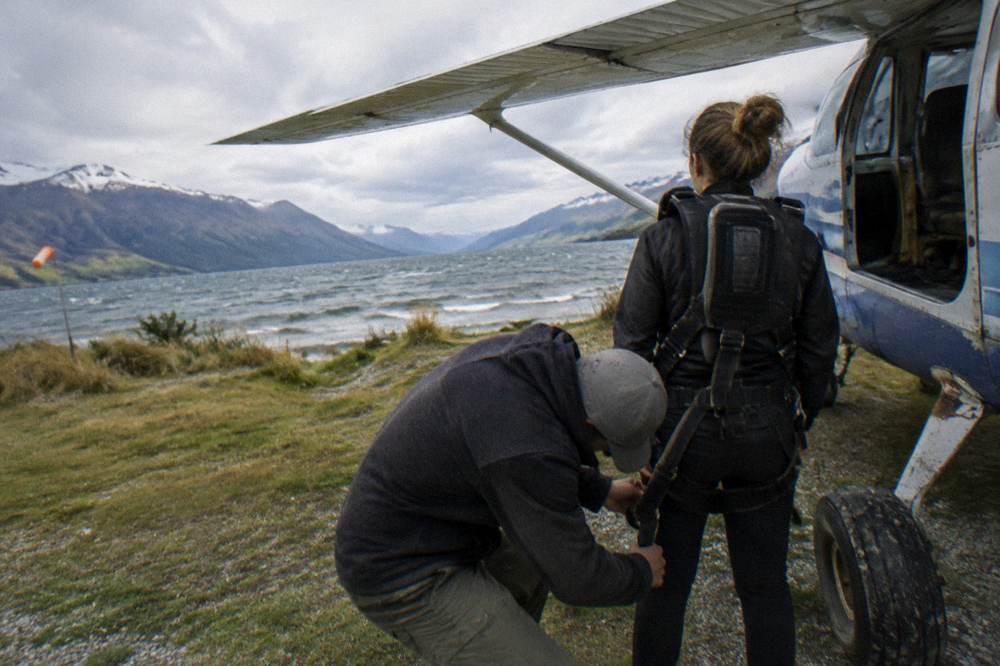
It also pays to know which questions the reservations team will ask you. Expect your height alongside your weight, since the two together determine harness fit; expect questions about recent injuries or medical conditions; and if you are bringing spectators, expect to hear that bus space at NZONE is free but not guaranteed, limited to one spectator per customer and never on the last trip of the day. At Wanaka, spectators are welcome at the airport base but cannot fly, because everyone aboard wears a parachute. Knowing these answers in advance makes the pre-booking call short and precise.
Common Questions About Skydive Weight Limits
Is There A Weight Limit For Skydiving?
Yes. In New Zealand each operator sets its own limits. NZONE Skydive requires a minimum of 40 kg and Skydive Wanaka 30 kg, both assess jumpers from 95 kg, both apply extra assessment over 110 kg, and their terms say the maximum at most drop zones is 110 to 115 kg.
What Is The Minimum Weight For A Tandem Skydive?
It is 40 kg at NZONE Skydive and 30 kg at Skydive Wanaka, with a minimum height of 1.2 m at both. The floor exists because the harness must fit securely; children are additionally limited to 9,000 ft if they are 12 or under.
Do You Pay More If You Weigh Over 95 Kg?
At Skydive Wanaka, yes: NZD 50 for 95 to 104.9 kg, NZD 75 for 105 to 114.9 kg and NZD 100 for 115 kg and over, payable at check-in. NZONE Skydive states no surcharge amounts, though its 95 kg Tandem Master assessment still applies.
Can You Skydive Over 110 Kg?
Sometimes. Over 110 kg both operators apply an extra assessment by the Drop Zone Safety Officer or Tandem Master; NZONE's terms add that such jumps are subject to the availability of qualified Tandem Masters. Contact the operator before booking.
Is The Weight Limit The Same In Queenstown And Wanaka?
No. The minimum differs, 40 kg in Queenstown with NZONE and 30 kg in Wanaka, and only Skydive Wanaka publishes surcharge bands. The 95 kg and 110 kg assessment thresholds are the same at both.
Does Weight Affect The Price Of The Jump Itself?
The published price is per person at each altitude and does not change with weight; what can change your total is the Skydive Wanaka surcharge bands at check-in and any photo or video package, which start at NZD 220 as an add-on.