Can You Hold Your Phone While Skydiving?
No, personal cameras are not allowed on Queenstown tandem skydives. Here is what the operators say, why, and the photo and video packages you can buy instead.
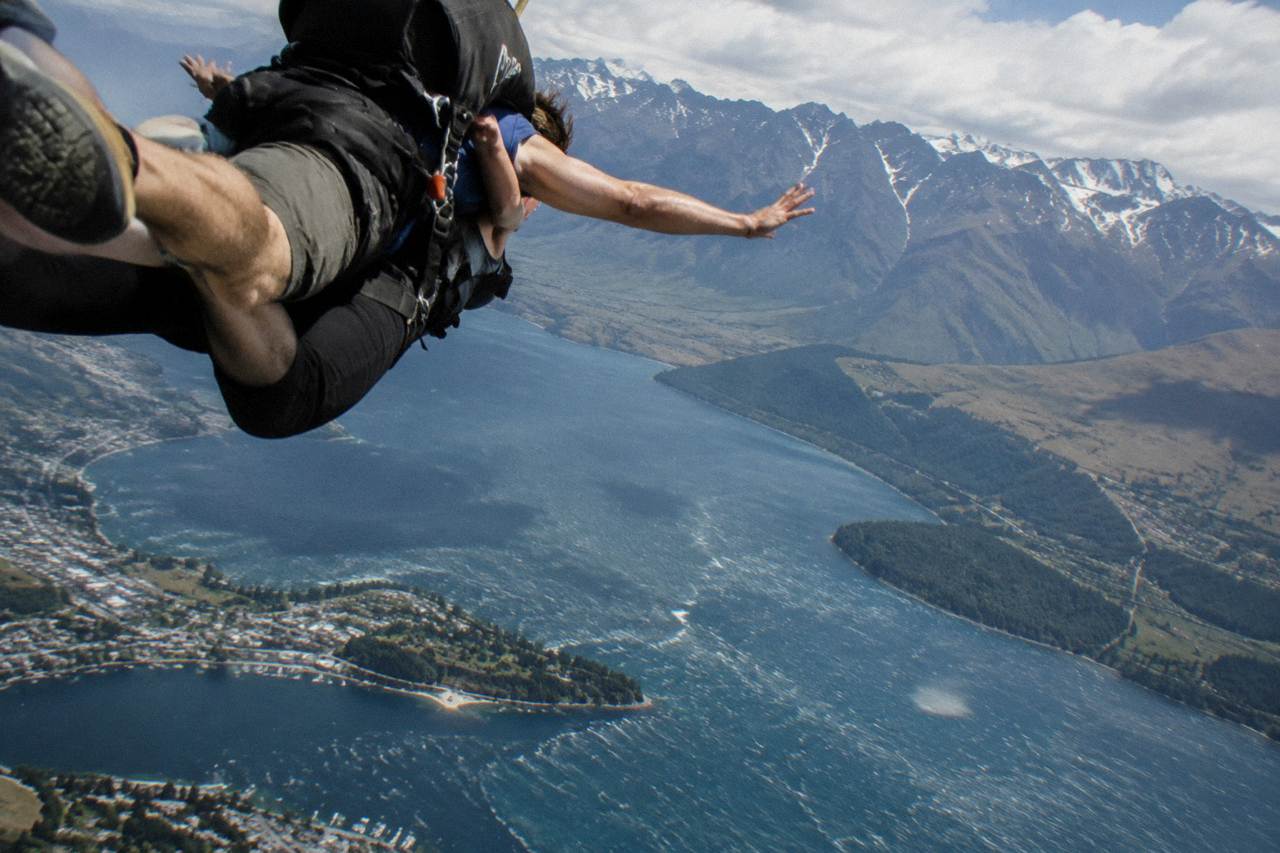
In short: No, you cannot hold your phone while skydiving in Queenstown or Wanaka. NZONE Skydive and Skydive Wanaka both state that personal cameras and smart glasses are not allowed on the jump, pointing to a New Zealand Parachute Industry Association safety requirement. Photos and video from your jump come from the operator's own camera packages, booked as add-ons. Your phone stays on the ground with your belongings and comes back out for the post-landing photos.
This question matters more than it looks. It sits at the centre of a real decision: nearly everyone wants footage of a first tandem, almost nobody can bring their own, and the packages that replace your phone cost real money on top of the jump. This article walks through the rule as the operators state it, what each camera package actually contains, what each one costs in the operator's own New Zealand dollar pricing, and how the choice plays out across the three tandem products available in this region. For the wider picture of filming options, the Queenstown skydive photo and video guide covers the packages in more depth.
No. Both operators in this region state plainly that personal cameras and smart glasses are not allowed on the jump, and each attributes the ban to a New Zealand Parachute Industry Association safety requirement. There is no altitude exception, no selfie-stick workaround and no pay-extra loophole at either drop zone. The rule covers the aircraft, the exit, the freefall and the canopy ride down to landing.
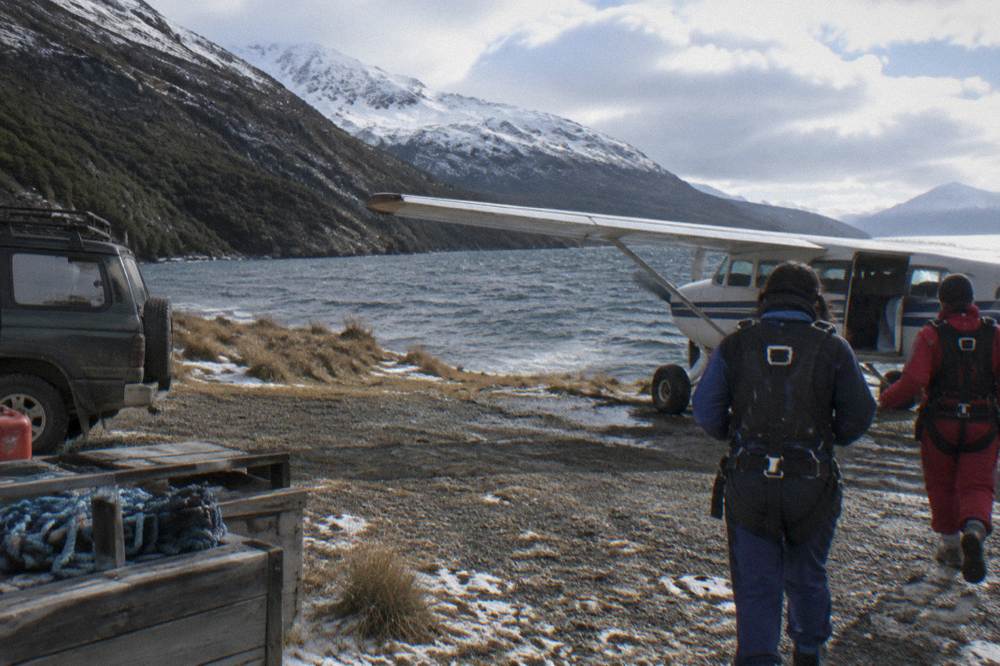
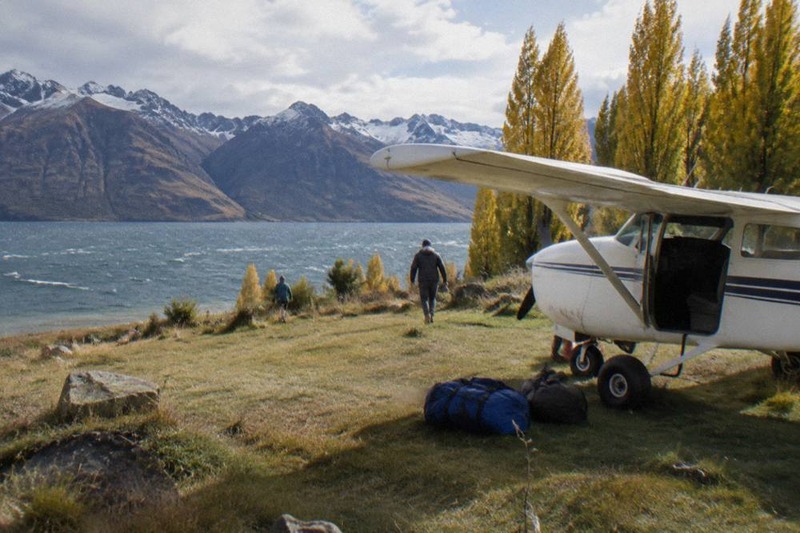
NZONE Skydive, which jumps from its drop zone at Drift Bay on Lake Wakatipu, publishes the rule on its photo and video page: cameras and smart glasses cannot be taken on the skydive. Skydive Wanaka, whose tandems take off from Wanaka Airport and land at a private farm nearby, carries the same wording on its own filming page. The two companies are siblings in the same experience group, so the matched wording is not a coincidence, and it means the answer does not change depending on which drop zone you pick.
What is worth being clear about is what the operators do not say. Neither company publishes a paragraph explaining the reasoning behind the rule beyond naming the industry safety requirement, and this article will not invent one. Loose objects in freefall, strapped-on electronics near parachute equipment and distracted hands during a harness-and-exit sequence are all plausible-sounding explanations, but they are not in the operators' own material, so they stay out of this page. The honest version is short: the rule exists, both operators name the same industry body, and it applies to you.
“Friendly staff, able to reschedule jump after weather conditions changed, great experience, great video and pictures!”
The practical consequence is that your phone's job on skydive day is everything except the jump. Use it in the waiting area, hand it to a friend at the landing area where one is permitted, take it back for the post-jump photos. During the jump itself, the only cameras flying are the ones the operator supplies: either a small wrist-mounted action camera handled by your tandem master, or a dedicated camera flyer who jumps alongside you in freefall.
Why Are Personal Cameras Banned On A Tandem Skydive?
The operators state the ban as a New Zealand Parachute Industry Association safety requirement, and that is the full extent of what they publish. NZONE's terms and filming pages carry the rule for its Drift Bay drop zone, and Skydive Wanaka's pages carry matching wording for Wanaka Airport. Neither operator elaborates on the reasoning, so any deeper explanation you read anywhere, including guesses about loose objects or entanglement, is inference rather than operator statement.
That distinction matters because skydive marketing is full of confident explanations, and this region's operators have chosen not to make them. What can be stated here, because each operator says it in its own material: a tandem master flies with every jump at both operators, the tandem master's hands are occupied with the jump itself, and the camera products that do fly are either operated by that tandem master on a wrist mount or flown by a separate, dedicated camera person. The structure of the packages tells you the operators treat in-air filming as a job for trained crew, not passengers.
“Amazing experience. Had our first ever skydiving and it was one of a lifetime experience. Wish i could do it again.”
There is also a scope question people ask in a few different forms. Does the ban cover a GoPro mounted on your own body? Yes, a personal camera is a personal camera. Does it cover smart glasses? Yes, both name them explicitly. Does it cover a phone in a zipped pocket, switched off, purely carried rather than held? That specific case is not addressed in the operators' published wording, which speaks of holding and using cameras on the jump, so the honest move is to ask the operator before your jump date rather than assume either way. NZONE takes questions by phone and email, and Skydive Wanaka's reservations team handles the same questions for the Wanaka drop zone.
The ban does have a quiet upside that first-time jumpers rarely expect. Without a screen in your hand, the 200 km/h the operators quote for freefall, and the three to four minutes of canopy time NZONE describes, arrive unmediated. The footage question then resolves itself on the ground, where the packages live.
What Camera Packages Replace Your Phone?
Each operator sells three photo and video add-ons, booked at check-in and priced in New Zealand dollars including GST: an entry wrist-camera package from NZD 220, a dedicated camera-flyer package from NZD 333, and a top-tier combination package at NZD 395. None of these prices is inside the jump price. The jump itself starts from USD 215.27 per person at NZONE's 9,000 ft entry altitude.
“It was really awesome. We enjoyed every bit of the experience and it was well worth the money. Also, the photos and videos we got afterwards were amazing. I went with my 13-year-old son and we both had a blast. I would highly recommend it, and would definitely do it again!”
At NZONE the three packages are named Handicam, Freefall and Ultimate Combo. Handicam at NZD 220 puts a wrist-mounted action camera on your tandem master, who films the ground preparation, the interview, the flight, the exit, the freefall, the canopy ride and the landing, then delivers an edited video plus more than 40 digital photos through a private website. Freefall at NZD 333 adds a second person to the equation: a dedicated camera flyer who jumps alongside you and films the freefall from outside your own frame. It cannot be pre-booked, it is subject to availability on the day, and it also delivers an edited video and 40-plus photos. Ultimate Combo at NZD 395 stacks both cameras onto one jump.
Skydive Wanaka's lineup mirrors the pricing almost exactly. Essential starts at NZD 220 with the wrist camera operated by your tandem master, and the operator's page lists more than 100 photos with it. Freefall Photos And Video starts at NZD 333 with the dedicated camera flyer, also listed with 100-plus photos, also not pre-bookable. Ultimate starts at NZD 395 combining both cameras. One more Wanaka detail from the operator's page: only one person can be filmed in freefall at a time, which matters if you are jumping with a partner and both want outside-camera footage of the same aircraft load.
| Package | NZONE Skydive (NZD) | Skydive Wanaka (NZD) | Who Films | Pre-Bookable |
|---|---|---|---|---|
| Entry wrist camera | Handicam, 220 | Essential, from 220 | Tandem master on a wrist mount | Wanaka says yes for Essential; NZONE packages are booked at check-in |
| Dedicated camera flyer | Freefall, 333 | Freefall Photos And Video, from 333 | A separate camera person in freefall | Not pre-bookable at either operator, availability on the day |
| Both cameras | Ultimate Combo, 395 | Ultimate, from 395 | Tandem master plus camera flyer | Ultimate Combo booked at check-in at NZONE; availability applies to the flyer |
A planning note on how these costs land against the jump itself. At NZONE's operator pricing, moving up from the 9,000 ft jump at NZD 379 to the 12,000 ft jump at NZD 469 costs less than the NZD 333 camera-flyer package, and the same is true of the step from 12,000 ft to 15,000 ft at NZD 575. If your total budget is fixed, you are genuinely choosing between a higher altitude with up to 60 seconds of freefall and a fuller camera package at a lower altitude. That is a personal call, and it is the real decision this article's question leads to.
Which Queenstown Skydive Should You Book If Footage Matters?
If the camera outcome is the priority, NZONE Skydive is the region's most reviewed option by a wide margin, rated 4.7 across 1,479 reviews, with all three camera packages available at check-in and a courtesy coach from its Shotover Street centre to the Drift Bay drop zone included in the price. The 9,000 ft entry starts from USD 215.27 per person and the whole visit runs about 3.5 hours from check-in to return.
The camera logic travels with you whichever tour you pick, because the same operator pages govern the filming. The NZONE Skydive tour page covers the full altitude and price set. One timing detail that couples the two decisions: NZONE's Freefall and Ultimate Combo packages cannot be pre-booked and depend on a camera flyer being available on your load, so if outside footage is the one thing you will be disappointed without, it is worth asking the operator about camera flyer availability when you book the jump, and keeping your date flexible.
“NZONE is a great operation. The people at checkin were friendly and helpful, the transport to the jump zone was comfortable, and the crew on the ground were amazing.”
The Wanaka alternatives split by where you sleep. The 3-Hour Wanaka Skydive, rated 4.8 across 295 reviews and priced from USD 210.16 per person at the 9,000 ft entry, runs from Wanaka Airport with pickup from the Wanaka i-SITE shuttle point on Ardmore Street, selected at booking; there is no Queenstown transfer on that product. Its sibling, Wanaka Skydive, Transfers Included, adds a return transfer from 35 Shotover Street in Queenstown, about 1.5 hours each way, on Monday, Wednesday, Friday and Sunday only, and runs up to 6 hours door to door. It carries a 4.7 score from only 3 reviews, a pool too small to compare with NZONE's 1,479. Its starting price is from USD 221.25 per person at 9,000 ft, and free cancellation up to 24 hours before departure applies to all three tours.
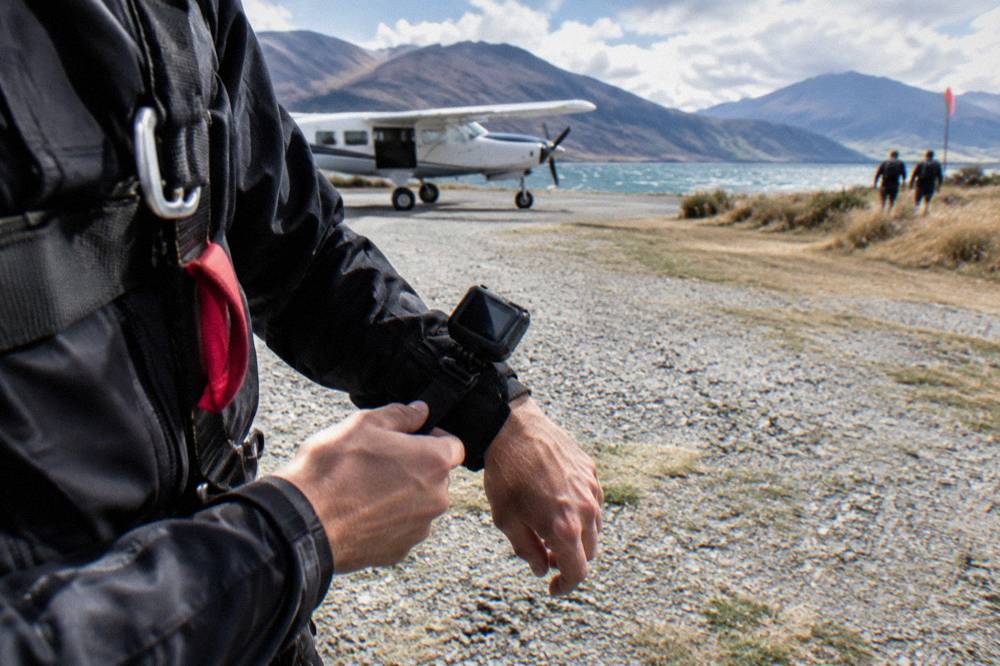
Can You Take Photos On The Plane Or Before The Jump?
Before boarding, yes, freely: your phone works anywhere on the ground at both drop zones and at both operators' check-in centres. Aboard the aircraft, the ban on personal cameras and smart glasses applies, because the rule covers the jump operation end to end, not just the freefall moment. After landing, your phone comes straight back out, and at both operators the landing and de-harness moments are the natural place for friends' photos.
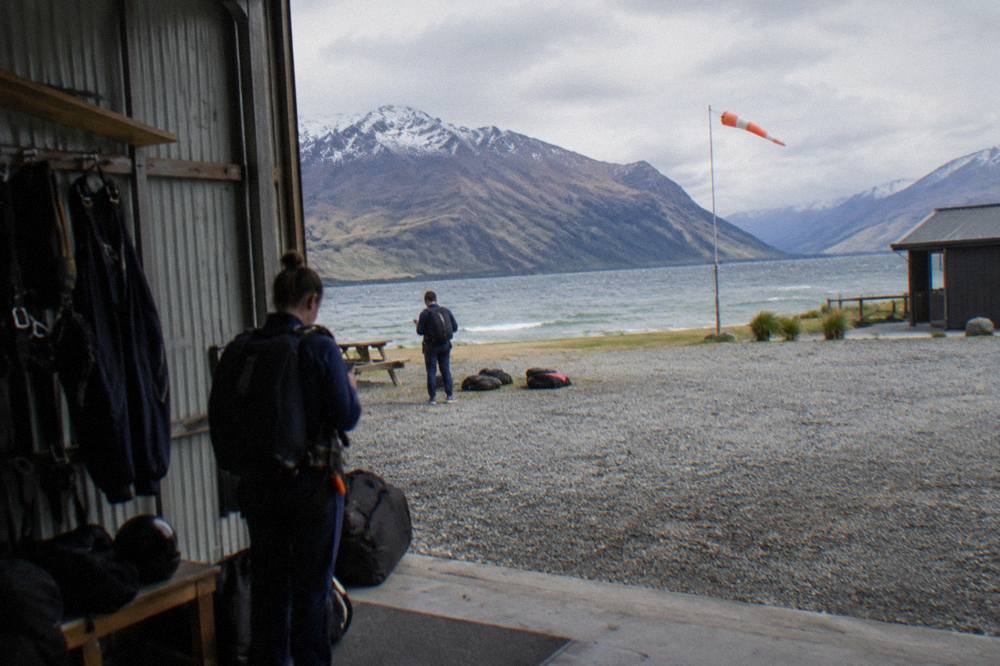
The before-and-after window is bigger than people expect, and it is worth planning rather than wasting. At NZONE, check-in happens at the NZONE Skydive Centre on Shotover Street in central Queenstown, and the courtesy coach to the Drift Bay drop zone is part of the price, so the ground phase includes the kitting-up, the jumpsuit, the harness fitting and the pre-jump briefing, all of it filmable by you. NZONE provides the full jumpsuit, gloves, hat and goggles, and its goggles fit over glasses, so the getting-dressed sequence makes for genuinely good phone footage. The operator asks everyone to bring government-issued photo ID to the drop zone, which is worth remembering before you lock your wallet away. The wider set of guides lives on Queenstown Tandem Skydive.
At Wanaka the ground phase is similar. You get a jumpsuit, helmet, goggles and gloves, there are spare layers for cold days, and the airport base at Mustang Lane is where friends and family can wait. One hard limit from Skydive Wanaka's own page: the landing happens at a private working farm nearby, and the operator states there is no safe spectator viewing at the landing zone, so a friend hoping to film your touchdown from the ground should ask the operator where they can stand rather than assume the landing area is open. Spectators are welcome at the airport base itself. NZONE runs a different arrangement: spectators can ride the courtesy bus to Drift Bay free of charge if space allows, one per customer, not guaranteed, and not on the last trip of the day.
Inside the aircraft the phone goes away, and that is also the moment the operator's cameras take over if you bought a package. The Handicam and Essential wrist packages deliberately film the ride to altitude, the door opening and the exit, which is precisely the footage you could not have taken yourself; NZONE puts its flight to altitude at 15 to 20 minutes. That is the trade in one sentence: the ban costs you the cabin selfie, and the entry-level package replaces it with a camera angle no passenger could ever get.
“Well organized. First time skydive from 15000 ft. The colleague are very professional and friendly. Also there are many interactions from the coach. Great experience. If u never tried skydive, this is a must do experience.”
What Trips People Up On Skydive Day?
The recurring mistakes are assuming the camera package is included in the jump price, assuming the camera flyer can be pre-booked, arriving without photo ID, expecting spectators at the Wanaka landing zone, and counting on the jump running on the booked day. Every skydive here is weather-dependent, both operators rebook first and refund in full only when no other date works, and free customer cancellation runs to 24 hours before departure.
The package assumption is the most expensive. Photo and video are add-ons at both operators, never inside the jump fare, and the entry tier alone is NZD 220. Budget for the camera decision as a separate line, and know roughly which tier you want before check-in, because that is when NZONE's packages are booked and when Skydive Wanaka's day-of availability gets confirmed. If you want the camera flyer and only the camera flyer, remember it cannot be pre-booked at either operator.
“SO MUCH FUN!! The views were incredible - from the plane and on the way down! The entire experience was professionally handled. We felt safe, informed and prepared. The staff was fun too!! The photo/video package was so worth it for the amazing memories. My cousin's first jump ever and now he's ready for more! Just do it!”
The weight and age rules catch people too, and they differ by operator in a way that matters. NZONE's minimum weight is 40 kg and Skydive Wanaka's is 30 kg, both with a minimum height of 1.2 m; those are not interchangeable numbers. Over 95 kg triggers a Tandem Master assessment at the drop zone at both operators, and Skydive Wanaka adds surcharges payable at check-in: NZD 50 across 95 to 104.9 kg, NZD 75 across 105 to 114.9 kg and NZD 100 at 115 kg and over. NZONE publishes no surcharge amounts; its terms note that at most drop zones the maximum limit sits between 110 and 115 kg and that over 110 kg depends on qualified tandem master availability. The Queenstown skydive weight limit guide works through the details.
Then the day itself. Alcohol is off the menu for 8 hours before your jump and scuba diving for 24 hours, per both operators' shared terms. No jandals or bare feet at Wanaka; secure enclosed tie-up shoes at NZONE. Bookings carry a check-in time, not a jump time, so plan a whole morning or afternoon, roughly 3.5 hours at NZONE, about 3 hours at Wanaka, up to 6 hours with the Queenstown transfer. And because weather decides, the Skydive Wanaka transfer listing advises booking your first available day and keeping a spare day free.
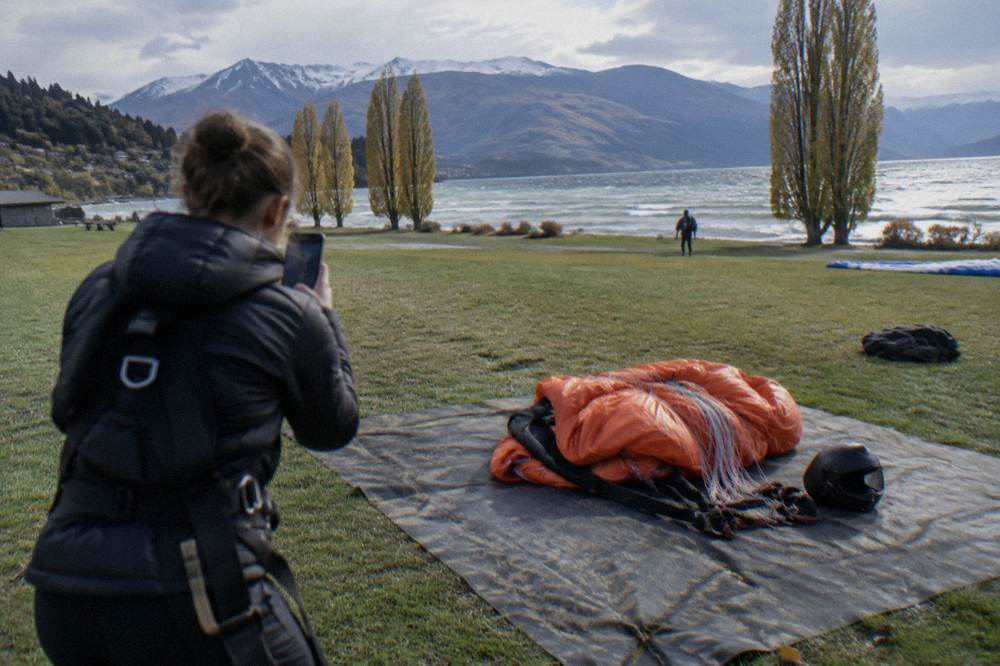
Is A Camera Package Worth It Without Your Own Phone?
Yes, even without your own phone, a camera package is worth it for a first tandem if you want any footage at all: the entry wrist-camera tier, NZD 220 at either operator, needs no phone and captures the full arc from kitting up to landing with no dependency on a second jumper, while the NZD 333 camera-flyer tier produces more spectacular freefall images but cannot be pre-booked and depends on availability.
Think about what you will actually rewatch. The wrist camera's strength is continuity: the nervous interview, the ride up, the door, the exit, the canopy, the face on landing. The camera flyer's strength is scale: you, tiny against Lake Wakatipu or the Southern Alps near Wanaka, filmed from outside. Neither is strictly better; they do different jobs, which is exactly why the NZD 395 combination tier exists for people whose budget allows both and whose disappointment risk is high.
A few honest edge cases. If you are jumping mainly to conquer fear rather than to post footage, save the NZD 220 and let the memory stand alone; the how scary is first time skydiving piece covers what the experience actually asks of you. If you are jumping as a couple, remember the Skydive Wanaka note that only one person can be filmed in freefall at a time, so plan loads accordingly or one of you takes the wrist package. If your date is tight and weather may push you around, the non-pre-bookable tiers get riskier, and it is worth a call to the operator before you commit. Free cancellation up to 24 hours before departure applies at both drop zones, so a change of mind on the jump itself is cheap; the only refund term stated for the camera packages is Skydive Wanaka's Essential, refunded if the operator cannot provide it.
“Nothing short of amazing! If you are unsure about skydiving or scared because it you have never done it before I highly recommend this company. They were organized, professional, and guided you through step by step the entire process and what to expect. We dove at 15,000 feet and it was spectacular! The adrenaline rush, the views, the spins, and the amazing photos/ video you get at the end was great.”
How Do You Choose Between The Three Skydive Tours?
Choose NZONE Skydive for the shortest day out of Queenstown, the deepest review base at 4.7 from 1,479 reviews, and a courtesy coach already covered by the price from 35 Shotover Street. Choose the 3-Hour Wanaka Skydive if you are staying in Wanaka, from USD 210.16 at 9,000 ft with pickup at the Wanaka i-SITE only. Choose Wanaka Skydive, Transfers Included for a Queenstown base with Wanaka scenery, running four travel days a week.
“Nzone are really well organised: it was a very smooth check-in in their office in town, and at the airstrip. All the staff that helped us were really friendly, and my tandem instructor was really calm, friendly and respectful.”
The camera question barely separates them, since the packages and prices align closely across the two operators. What separates them is geography and schedule. NZONE jumps at Drift Bay on Lake Wakatipu, a short coach ride from town, with the whole experience around 3.5 hours. Skydive Wanaka jumps from Wanaka Airport with landings at a private farm, about a 1.5 hour drive from Queenstown each way, which is why the transfer product runs up to 6 hours and only on four days a week. The altitude and freefall menu is identical in structure at both: 9,000 ft with up to 25 seconds of freefall, 12,000 ft with up to 45, and 15,000 ft with up to 60, at operator prices of NZD 379, 469 and 575, with the transfer-inclusive Wanaka fares at NZD 399, 489 and 595.
| Tour | Starts From | Duration | Drop Zone | Reviews |
|---|---|---|---|---|
| NZONE Skydive | USD 215.27 per person at 9,000 ft | about 3.5 hours | Drift Bay, Lake Wakatipu | 4.7 from 1,479 |
| 3-Hour Wanaka Skydive | USD 210.16 per person at 9,000 ft | about 3 hours | Wanaka Airport | 4.8 from 295 |
| Wanaka Skydive, Transfers Included | USD 221.25 per person at 9,000 ft | up to 6 hours | Wanaka Airport | 4.7 from 3 |
Every one of the three carries free cancellation up to 24 hours before departure and a tandem master with every jump. Whichever you choose, the phone plan is the same: full use on the ground, locked away for the flight, and a package bought at check-in if you want the air covered.
Common Questions About Holding Your Phone While Skydiving
Can You Hold Your Phone While Skydiving?
No. NZONE Skydive and Skydive Wanaka both state that personal cameras, phones and smart glasses are not allowed on the jump, citing a New Zealand Parachute Industry Association safety requirement. Your phone stays on the ground during the flight, freefall and canopy ride.
Can You Bring A GoPro On A Tandem Skydive?
No. A personal action camera falls under the same personal-camera ban the operators publish, whether handheld, body-mounted or helmet-mounted. The only cameras that fly are the operator's own: a wrist-mounted camera handled by the tandem master or a dedicated camera flyer.
How Much Do Skydive Photos And Video Cost In Queenstown?
At NZONE, Handicam is NZD 220, Freefall is NZD 333 and Ultimate Combo is NZD 395, booked at check-in. At Skydive Wanaka, Essential starts at NZD 220, Freefall Photos And Video at NZD 333 and Ultimate at NZD 395. These are add-ons on top of the jump price, which starts from USD 215.27 per person at NZONE's 9,000 ft entry.
Can You Film In The Plane Before The Jump?
On the ground, yes. Aboard the aircraft, no: the ban on personal cameras and smart glasses covers the jump operation, not just freefall. The wrist-camera packages film the ride to altitude, the door and the exit, which replaces the cabin footage.
Can A Friend Film My Landing?
At NZONE, a spectator can ride the courtesy bus to the Drift Bay drop zone free if space allows, one per customer, not guaranteed and not on the last trip. At Skydive Wanaka, landings happen at a private farm with no safe spectator viewing, but friends are welcome at the Wanaka Airport base.
Can You Pre-Book The Camera Flyer?
No. The dedicated camera-flyer packages cannot be pre-booked at either operator and depend on availability on the day. The wrist-camera tiers are the reliable choice; at Wanaka the Essential tier can be pre-booked.