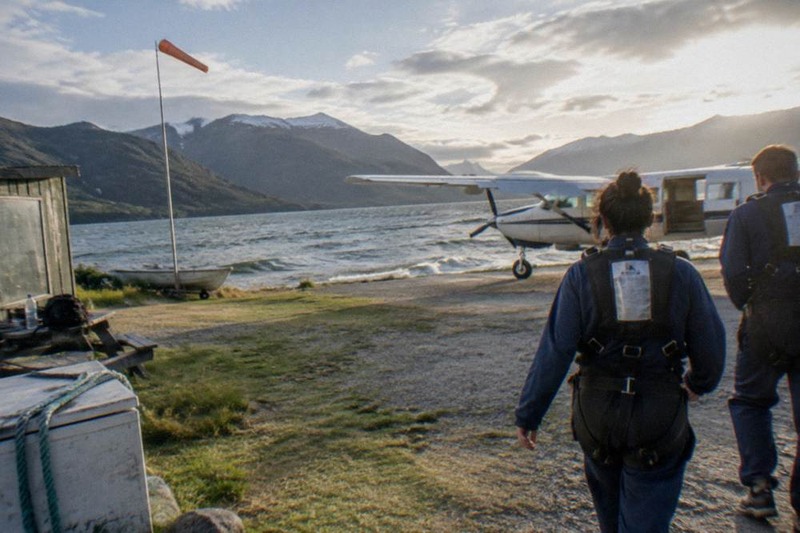
Can A 300 Lb Person Skydive In Queenstown?
A 300 lb reader weighs about 136 kg, above the 110 to 115 kg typical maximum stated by both Queenstown and Wanaka skydive operators. Here is what the operators actually say, and what to do next.
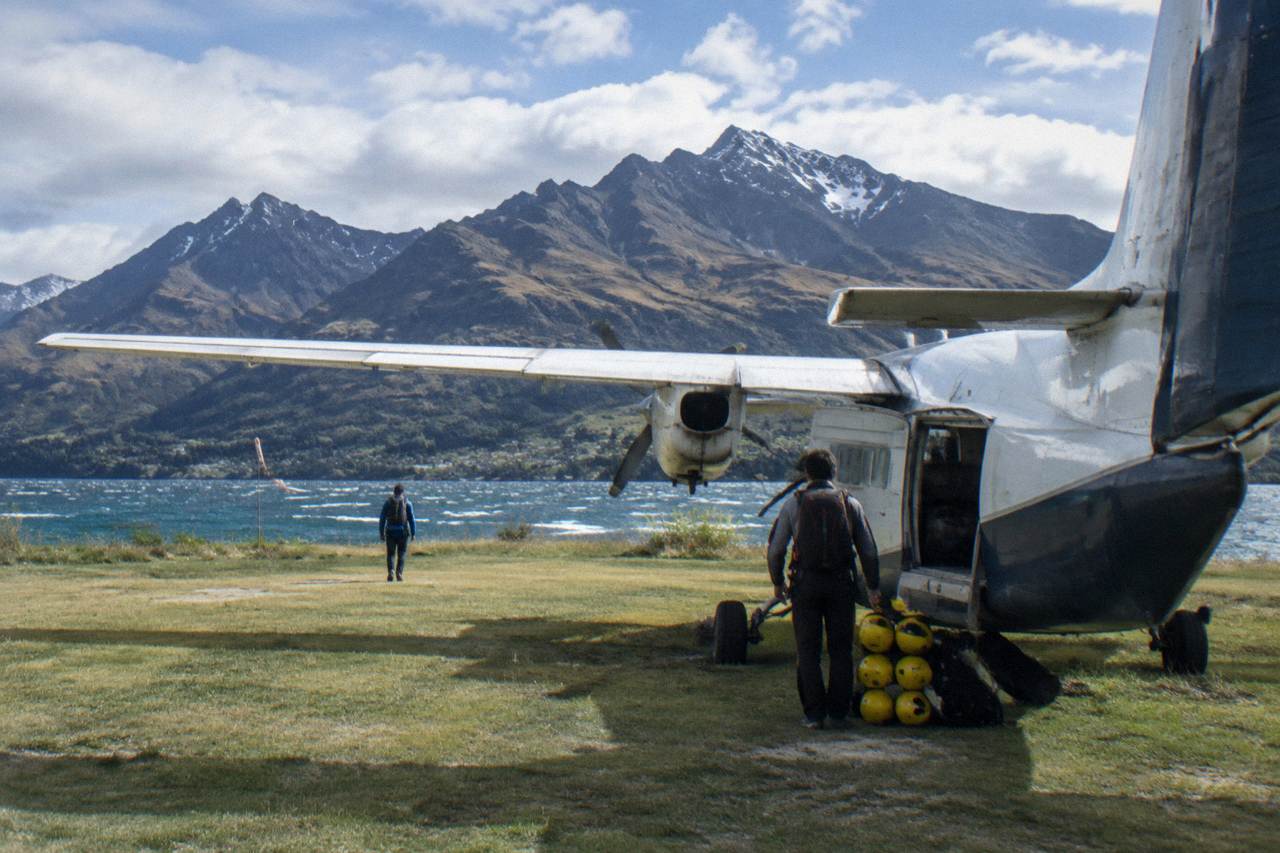
The honest answer first, because this question deserves one. A 300 lb person weighs about 136 kg. Both operators covered here, NZONE Skydive and Skydive Wanaka, say in their own terms that weight limits vary by drop zone and by day, and that at most drop zones the maximum is 110 to 115 kg. Neither operator states a limit anywhere near 136 kg, and Skydive Wanaka's published surcharge tiers stop at 115 kg and above. That does not make the answer a flat no forever, because the operator, not a web page, makes the final call, and limits move with equipment, aircraft and staffing on the day.
This page works through the rules operator by operator, explains why the limits exist at all, covers the 250 lb case, which is a different situation entirely, and finishes with the practical steps a heavier traveller should take before paying for anything. Along the way it points to the three tandem products actually sold here: NZONE Skydive in Queenstown, the 3-Hour Wanaka Skydive, and Wanaka Skydive, Transfers Included, which adds a Queenstown return transfer on set days.
Not on the terms stated by the operators covered here. A 300 lb person weighs about 136 kg, and both NZONE and Skydive Wanaka say weight limits vary by drop zone and day but that at most drop zones the maximum sits at 110 to 115 kg. Skydive Wanaka's surcharge schedule tops out at 115 kg and above. No published maximum reaches 136 kg, so contact the operator directly and ask what applies at your weight.
“It was really awesome. We enjoyed every bit of the experience and it was well worth the money. Also, the photos and videos we got afterwards were amazing. I went with my 13-year-old son and we both had a blast. I would highly recommend it, and would definitely do it again!”
That is a hard thing to read if it applies to you, and it deserves more than a shrug. The operators' own terms leave room for day to day variation, and NZONE's terms note that passengers over 110 kg are subject to the availability of qualified tandem masters. Nothing in that wording is a promise that 136 kg works, and nothing here should be read as one. What it means is that a phone call to reservations, with an honest weight figure, is the only reliable way to find out.
A few practical notes if you do make that call. Call before you book, not after. Both operators have reservation lines, and Skydive Wanaka's terms ask anyone over 95 kg to tell reservations before the jump date, while NZONE states the assessment happens at the drop zone. Booking first and being assessed at the drop zone risks a wasted trip, and while both operators rebook weather cancellations generously, a weight refusal at check-in is a different situation, so settle it on the phone.
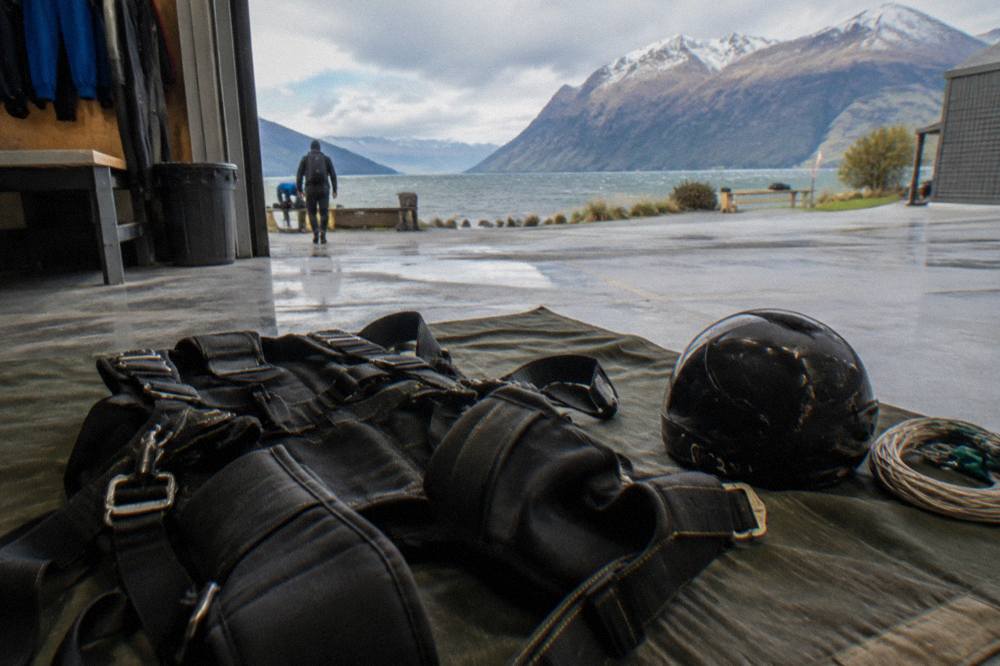
It also helps to understand what the person on the phone is weighing up. A tandem rig, a passenger and a tandem master together carry real mass through a parachute opening at speed. Harness fit matters as much as the number on the scale, and both operators assess size, not just weight. That is why the answer can vary between two people who both weigh 136 kg.
How Heavy Is Too Heavy For A Tandem Skydive?
There is no single number, and any page that gives you one is guessing. Both operators state that limits vary by drop zone and day, that at most drop zones the maximum is 110 to 115 kg, and that anyone over 95 kg is assessed by a Tandem Master. NZONE states no exact maximum and no surcharge amounts; Skydive Wanaka charges NZD 50, NZD 75 and NZD 100 by weight band, payable at check-in, with the top tier at 115 kg and above.
“NZONE is a great operation. The people at checkin were friendly and helpful, the transport to the jump zone was comfortable, and the crew on the ground were amazing.”
The thresholds below 95 kg are simple. Children and lighter adults clear the medical and harness checks like anyone else, provided they meet the minimums: NZONE requires a minimum of 40 kg and Skydive Wanaka a minimum of 30 kg, both with a minimum height of 1.2 m. From 95 kg, both operators apply a Tandem Master assessment at the drop zone. Over 110 kg, both operators add a further assessment by a Drop Zone Safety Officer or Tandem Master, and NZONE notes that such jumps depend on qualified staff being available.
| Weight band | NZONE Skydive (Queenstown) | Skydive Wanaka |
|---|---|---|
| Under 30 kg | Below the stated minimum of 40 kg, cannot jump | Below the stated minimum of 30 kg, cannot jump |
| 30 to 40 kg | Below the 40 kg minimum | Above minimum, subject to normal checks |
| 40 kg up to 95 kg | Above minimum, normal checks | Above minimum, normal checks |
| Over 95 kg | Tandem Master assessment at the drop zone | Tandem Master assessment at the drop zone |
| Over 110 kg | Further assessment by Drop Zone Safety Officer or Tandem Master, subject to staff availability | Further assessment, and at most drop zones 110 to 115 kg is the maximum |
| 115 kg and above | No stated maximum, contact the operator | Highest surcharge tier stated, contact the operator |
NZONE's own terms put it plainly: limits vary, and at most drop zones the maximum is 110 to 115 kg. NZONE's frequently asked questions page is where those weight rules live, alongside the minimum height and harness fit requirements. Skydive Wanaka carries the same structure on its own pages, with a lower 30 kg floor at the light end.
The pattern to hold on to is that weight is assessed, not merely declared. The scale reading is one input. Harness fit, body shape, the tandem master rostered that day and the aircraft scheduled all play a part. That is genuinely better for a heavier passenger than a fixed cut-off would be, because it means a real person looks at your case rather than a form rejecting it.
Search results for this question often quote a single figure, usually 100 kg or 220 lb, as a universal limit. That number belongs to no operator in particular and to plenty of drop zones elsewhere. The only limits that matter are the ones the operator you book with states, and both here state a range, not a line.
“SO MUCH FUN!! The views were incredible - from the plane and on the way down! The entire experience was professionally handled. We felt safe, informed and prepared. The staff was fun too!! The photo/video package was so worth it for the amazing memories. My cousin's first jump ever and now he's ready for more! Just do it!”
Can A 300 Lb Person Skydive?
As stated by the operators here, no. About 136 kg sits well above the 110 to 115 kg maximum that both operators describe as typical across drop zones, and no tour sold here claims to take it. The final decision belongs to the operator, so the workable step is to phone reservations, give an accurate weight, and ask whether any day, aircraft or configuration could work.
It is worth being precise about why the phone call is the answer rather than a loophole. NZONE's terms say passengers over 110 kg are subject to availability of qualified tandem masters, which implies the ceiling flexes with staffing rather than being welded shut. But an implication is not a promise, and no honest travel page should turn it into one. If you weigh around 136 kg, the best case after that call is a specific yes for a specific date. The likely case, on the published numbers, is a no.
“Nothing short of amazing! If you are unsure about skydiving or scared because it you have never done it before I highly recommend this company. They were organized, professional, and guided you through step by step the entire process and what to expect. We dove at 15,000 feet and it was spectacular! The adrenaline rush, the views, the spins, and the amazing photos/ video you get at the end was great.”
If the answer is no, three honest routes remain. The first is weight loss, which at Skydive Wanaka moves you into a lower surcharge band rather than the NZD 100 band for 115 kg and over. The second is asking about future seasons, since limits follow equipment and aircraft, and neither operator will thank a page for predicting them. The third, and the immediate one, is choosing a different adventure: the Queenstown region has plenty, and a page on Queenstown Tandem Skydive decisions should be straight with you about where the boundaries sit.
There is also a dignity point worth making. Being told no by an operator is not being told no by the sky. Plenty of people who could not jump at one weight jump comfortably at another, and NZONE has carried passengers up to 94 years old while Skydive Wanaka's oldest passenger was 92, which says the gate is about physics, not about who deserves the experience.
What About A 250 Lb Person, Which Is About 113 Kg?
A 250 lb person weighs about 113 kg and is a completely different case from 300 lb. At 113 kg you sit inside the 105 to 114.9 kg band, where Skydive Wanaka charges a NZD 75 surcharge payable at check-in. For NZONE, no surcharge amount is stated; the published rules are the over 95 kg Tandem Master assessment and the further assessment above 110 kg.
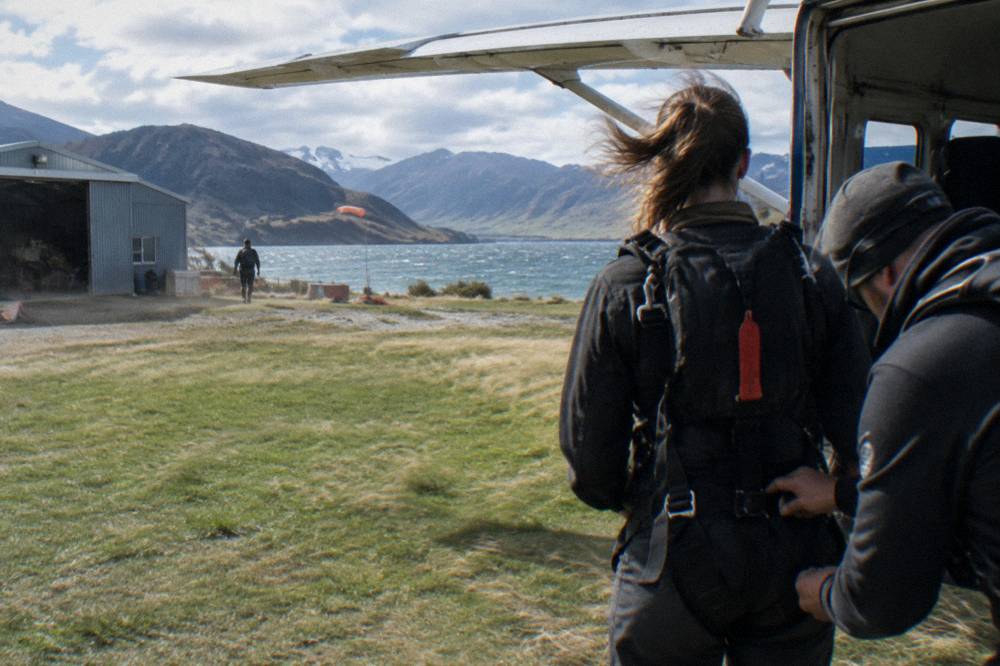
So a 250 lb traveller should expect an extra assessment, with two conditions. The first is disclosure: Skydive Wanaka's terms ask anyone over 95 kg to tell reservations before the jump date, and doing so avoids a bad surprise. The second is the assessment itself, which is standard practice at both drop zones and usually a short harness and size check rather than an interrogation.
| Passenger weight | Skydive Wanaka surcharge, payable at check-in | What NZONE states |
|---|---|---|
| 95 to 104.9 kg | NZD 50 | Tandem Master assessment, no surcharge amount stated |
| 105 to 114.9 kg | NZD 75 | Tandem Master assessment and, over 110 kg, further assessment, no surcharge amount stated |
| 115 kg and above | NZD 100 | No stated maximum, contact the operator |
Those surcharge figures apply to Skydive Wanaka's tours only: the 3-Hour Wanaka Skydive and, on its operating days, Wanaka Skydive, Transfers Included. NZONE publishes no surcharge amounts at all, and this page will not invent one. If you jump with NZONE, budget for the possibility and ask reservations directly.
Why Weight Limits Exist At All
Weight limits exist because a tandem jump loads one parachute with two people, and the mathematics of the opening shock, the harness and the aircraft do not care how keen you are. The operators' terms vary limits by drop zone and day because the equipment, aircraft and qualified staff differ between days. That is why the assessment happens at the drop zone with a Tandem Master rather than on a web page.
“Nzone are really well organised: it was a very smooth check-in in their office in town, and at the airstrip. All the staff that helped us were really friendly, and my tandem instructor was really calm, friendly and respectful.”
A tandem canopy is built for a two person load, and opening it puts several times body weight of force through the lines and the harness webbing. NZONE's published freefall figures, up to 60 seconds from 15,000 ft at 200 km/h, describe a lot of energy arriving at once. Every kilogram added to the passenger side changes how that opening behaves and how the harness distributes it across the body.
Then there is fit. The harness is the piece of equipment that attaches a human being to the rig, and it has to sit correctly on shoulders, chest and legs to do its job. Two passengers with the same scale weight can have very different harness fits, which is why both operators assess size and shape rather than weight alone, and why a person's answer can differ between drop zones.
Skydive Wanaka's own explanation of its 15,000 ft ceiling, that it does not jump above 15,000 ft above ground level at Wanaka, shows the same thinking applied to altitude: the operator states the boundary it can stand behind. Skydive Wanaka's questions page covers its weight rules in the same direct manner, including the 30 kg minimum.
“It was such a breathtaking experience, amazing and terrifying at the same time. The instructors were so nice and comforting and they’ve all done thousands of jumps.”
A Cessna Grand Caravan at NZONE carries up to nine customers, and every seat, belt and load calculation assumes passengers inside stated bands. None of this is about enthusiasm or courage. It is about the same arithmetic that decides how much luggage a plane carries, applied to a parachute.
How The Check-In Assessment Actually Works
On arrival you state your weight, a Tandem Master checks harness fit and size, and over 95 kg that assessment decides whether the jump proceeds. Over 110 kg both operators add a further assessment by a Drop Zone Safety Officer or Tandem Master, and the officer's decision is final. Surcharge payments at Skydive Wanaka, NZD 50, NZD 75 or NZD 100 depending on band, are taken at check-in, which is why honest disclosure in advance matters.
The sequence of a skydive day is worth knowing, because the weight assessment is not a separate ordeal bolted onto it. You check in at the meeting point, NZONE's Skydive Centre at 35 Shotover Street in Queenstown or Skydive Wanaka's base at 14 Mustang Lane, Wanaka Airport, you gear up, you meet your Tandem Master, and the checks happen in and around that gearing up. Government photo ID is required at the drop zone for everyone.
“Friendly staff, able to reschedule jump after weather conditions changed, great experience, great video and pictures!”
Two things trip people at this stage. The first is understating weight, sometimes by a kilogram or two out of embarrassment, sometimes by optimistically deducting for clothing. The gear calculation does not work with optimistic numbers, and being caught at check-in after a booking is worse than an honest call beforehand. The second is forgetting the surcharge cash flow: Skydive Wanaka's tiers are payable at check-in, on top of the jump price, so budget for them if you are in those bands.
The 3-Hour Wanaka Skydive itself runs about 3 hours from arrival, rated 4.8 across 295 reviews, from USD 210.16 per person at the 9,000 ft entry altitude. NZONE Skydive runs about 3.5 hours from check-in to return, rated 4.7 across 1,479 reviews, from USD 215.27. Neither duration is a promise of a jump time; both are arrival to finish, weather permitting, with the assessment inside it.
Wanaka Skydive, Transfers Included wraps the same Wanaka jump in a Queenstown return transfer from 35 Shotover Street, about 1.5 hours each way, on Monday, Wednesday, Friday and Sunday, making it an up to 6 hour day. It carries a 4.7 rating from only 3 reviews, too few a base for any comparison with the 1,479 review NZONE product, so treat it as a transport decision rather than a ratings one.
“Amazing experience. Had our first ever skydiving and it was one of a lifetime experience. Wish i could do it again.”
Mistakes That Trip Up Heavier Jumpers
The avoidable errors are booking before asking, understating weight at check-in, forgetting the surcharge is payable on the day, and reading a generic internet limit as if it were the operator's. Each one costs money or a trip, and each is fixed by one honest phone call to reservations before payment.
The first mistake is the most common. A traveller books a skydive as a surprise or on impulse, arrives, and the weight assessment stops the jump. Customer cancellation is free up to 24 hours before departure on all three tours here, and bookings stay valid for 12 months, so the money is usually recoverable or movable, but the day is lost. A call beforehand costs ten minutes.
The second is understating. Disclose in advance, especially over 95 kg, where Skydive Wanaka's terms specifically ask for it.
The third is the surcharge. Budget the check-in payment, NZD 50 to NZD 100 at Skydive Wanaka depending on band, as part of the real cost rather than an insult at the counter. For NZONE, no amount is stated, so ask when you call. For a fuller walk through the bands and the two different minimums, see the guide to Queenstown skydive weight limits, and the companion piece on whether skydiving has a weight limit at all.
The fourth is trusting a universal figure. A page stating that 100 kg is "the limit" for skydiving is describing some drop zone somewhere, not these. The operators here state ranges that vary by day, and the only authority is the one running the aircraft.
Which Tour Fits Which Traveller?
Choose NZONE Skydive for the most reviewed option and a courtesy coach from central Queenstown to its Drift Bay drop zone. Choose the 3-Hour Wanaka Skydive if you are based in or near Wanaka, where the pickup is the Wanaka i-SITE shuttle point only. Choose Wanaka Skydive, Transfers Included if you want the Wanaka jump without needing to drive, accepting a longer day on four days a week.
“Well organized. First time skydive from 15000 ft. The colleague are very professional and friendly. Also there are many interactions from the coach. Great experience. If u never tried skydive, this is a must do experience.”
NZONE Skydive is the heavyweight on review count, 4.7 across 1,479 reviews, and its courtesy coach from 35 Shotover Street to the drop zone at 786 Kingston Road, Drift Bay on Lake Wakatipu is included in the price. Note that hotel pickup is not part of it; you make your own way to the Shotover Street shop. Minimum weight 40 kg, about 3.5 hours all up, from USD 215.27.
The 3-Hour Wanaka Skydive starts at Wanaka, with pickup from the Wanaka i-SITE shuttle point at 103 Ardmore Street, selected at booking. There is no Queenstown transfer on this product. It jumps from Wanaka Airport with landing at a private farm nearby, runs about 3 hours, and starts at USD 210.16, with a 30 kg minimum weight.
Wanaka Skydive, Transfers Included is the same Wanaka experience plus a return transfer from 35 Shotover Street in Queenstown, about 1.5 hours each way, running Monday, Wednesday, Friday and Sunday, from 19 October 2026, at NZD 20 more per altitude on the operator's NZD pricing. Allow up to 6 hours. Its rating rests on 3 reviews, so let the transfer convenience, not the score, drive the choice.
All three are weather dependent, and all three rebook first and refund in full when no other date works. Free customer cancellation applies up to 24 hours before departure. Photo and video packages are add-ons bought at check-in, never part of the fare, from NZD 220 for the entry wrist camera option at either operator.
Common Questions About Skydiving At 300 Lb
Can A 300 Lb Person Skydive?
Not on the terms stated here. A 300 lb person weighs about 136 kg, above the 110 to 115 kg typical maximum both operators describe and above every published surcharge tier. Contact the operator's reservations line with an accurate weight and ask; the operator decides.
Is There A Strict Weight Limit For Skydiving In New Zealand?
Not a single national figure. Both operators covered here say limits vary by drop zone and day, that at most drop zones the maximum is 110 to 115 kg, and that anyone over 95 kg is assessed by a Tandem Master. Minimums differ too: NZONE requires 40 kg, Skydive Wanaka 30 kg.
Do You Pay More If You Weigh Over 95 Kg?
At Skydive Wanaka, yes: NZD 50 for 95 to 104.9 kg, NZD 75 for 105 to 114.9 kg, and NZD 100 for 115 kg and above, payable at check-in. NZONE states no surcharge amounts, so ask its reservations team directly before booking.
Can A 250 Lb Person Skydive In Queenstown Or Wanaka?
About 113 kg sits inside the 105 to 114.9 kg band, which at Skydive Wanaka carries a NZD 75 check-in surcharge, and at NZONE falls under the over 95 kg assessment plus the further assessment above 110 kg. Expect to jump after assessment, and disclose weight when booking.
Does Height Or Body Shape Affect The Weight Limit?
Yes. Both operators require a minimum height of 1.2 m and assess harness fit, size and shape on the day, not just scale weight. Two people at the same weight can get different answers, which is why the Tandem Master assessment at the drop zone is the deciding step.
What Happens If You Are Refused At Check-In For Weight?
Prevention is better: disclose weight before booking, especially over 95 kg. Free customer cancellation applies up to 24 hours before departure on all three tours, and bookings stay valid for 12 months, so a settled-in-advance problem is usually a reschedule rather than a loss.