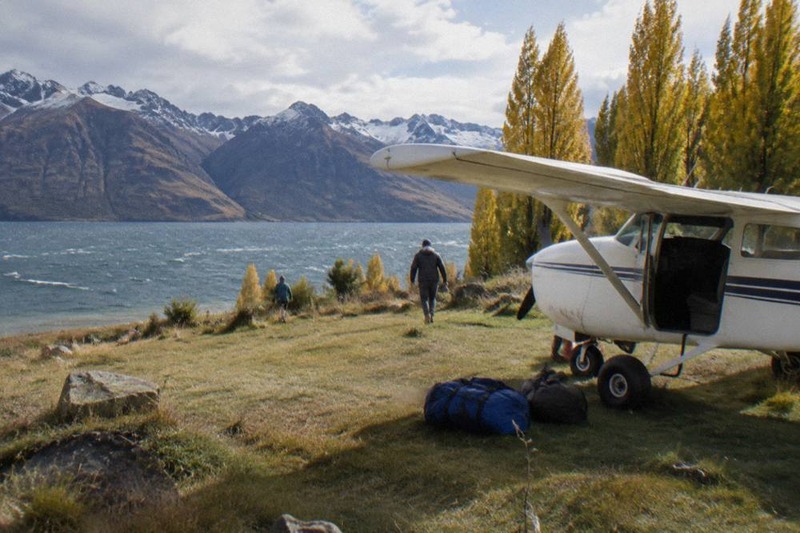
Is Skydiving In Queenstown Scary? A First-Timer Guide
The honest answer for a nervous first-timer: yes, the build-up is the hard part, and the operator's own day-of facts explain exactly what to expect between check-in and landing.
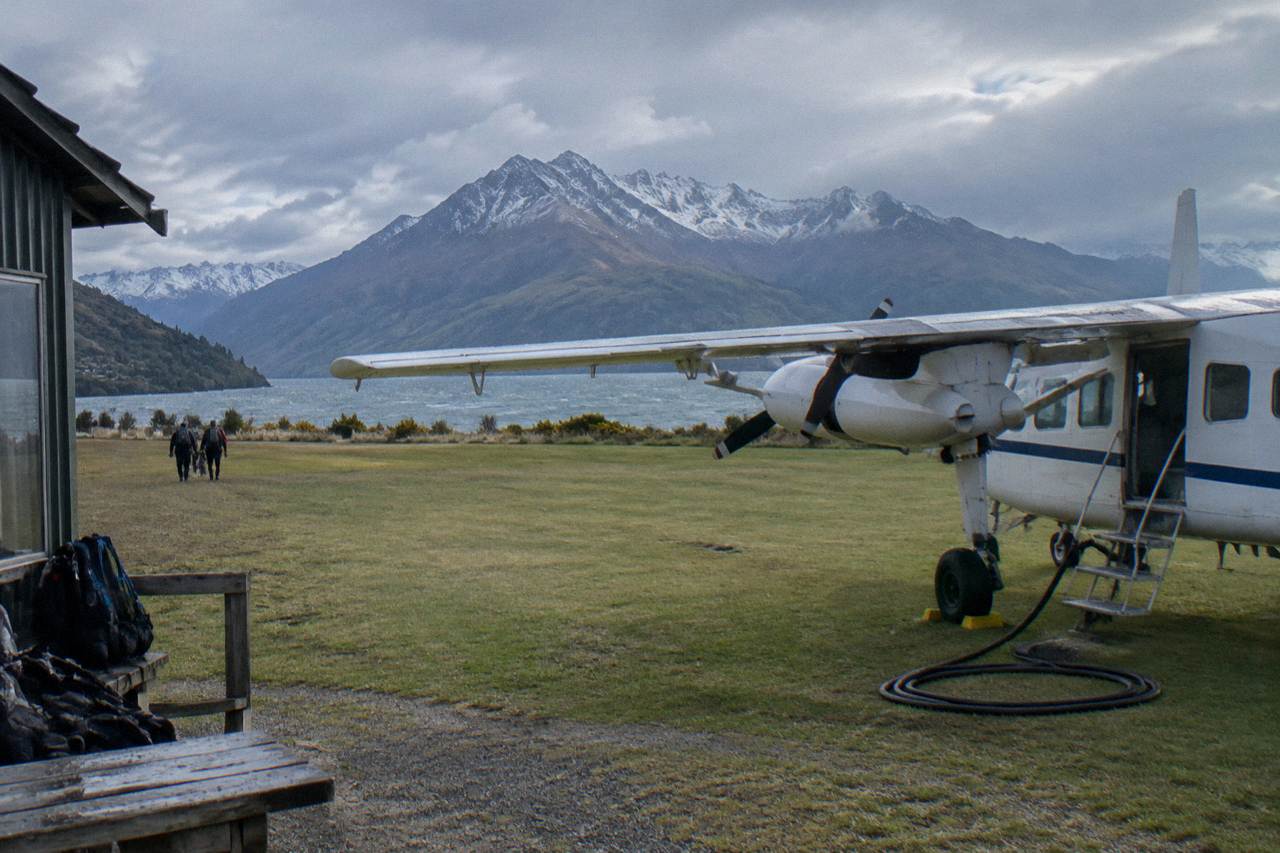
Short answer
A first tandem skydive in Queenstown is intense but short: freefall lasts up to 25 seconds at 9,000 ft, up to 45 at 12,000 ft and up to 60 at 15,000 ft, and at NZONE the canopy ride lasts 3 to 4 minutes. You are harnessed to a Tandem Master throughout, and the entry price is from USD 215.27 per person.
Nerves are the normal starting point here, not a sign you are unfit for this. At NZONE Skydive, freefall runs up to 25 seconds at 9,000 ft, up to 45 seconds at 12,000 ft and up to 60 seconds at 15,000 ft, all at speeds of 200 km/h, and then you spend 3 to 4 minutes drifting under a parachute with a view of Lake Wakatipu and the Remarkables. NZONE Skydive, the most reviewed option covered here at 4.7 from 1,479 reviews, describes its whole experience as about 3.5 hours from check-in to return. The fear question deserves a straight answer rather than hype, and this guide gives it using what the operators themselves publish.
For the wider picture on how a jump day unfolds, see what happens on a Queenstown tandem skydive day.
| Quick fact | The detail |
|---|---|
| Entry price | From USD 215.27 per person (NZONE Skydive, 9,000 ft); from USD 210.16 (3-Hour Wanaka Skydive, 9,000 ft) |
| Freefall | Up to 25 s (9,000 ft), up to 45 s (12,000 ft), up to 60 s (15,000 ft) |
| Canopy time | 3 to 4 minutes (NZONE figure) |
| Minimum age | 6 at both operators; children 12 and under jump from a maximum of 9,000 ft |
| Minimum weight | 40 kg at NZONE, 30 kg at Skydive Wanaka |
| Cancellation | Free up to 24 hours before departure on all three tours |
| Weather | Jumps are weather-dependent; operators rebook, and refund in full if no other date works |
How Scary Is A First Tandem Skydive In Queenstown?
Being harnessed to a Tandem Master the whole time also changes things, since you are a passenger with no responsibility for the jump, and nerves before the jump are normal.
The operators structure the day around that fact without saying so directly. NZONE Skydive's day runs about 3.5 hours from check-in to return, and much of that is paperwork, kitting up, a briefing and the 15 to 20 minute flight to altitude, during which the fear has room to build and then, for most people, plateau. The jump itself is a tiny fraction of the day. The 3-Hour Wanaka Skydive covers similar ground in about 3 hours from its Wanaka Airport base at 14 Mustang Lane.
What you actually feel is a matter of individual reaction and no honest article should claim to know yours. What can be said factually: the freefall at each altitude is an "up to" figure published by the operators, roughly 25 seconds at the entry altitude, and at NZONE the canopy ride afterwards is 3 to 4 minutes of comparative quiet. Fear peaks, then runs out of things to feed on. That is the consistent shape of the experience, even though the intensity differs from person to person.
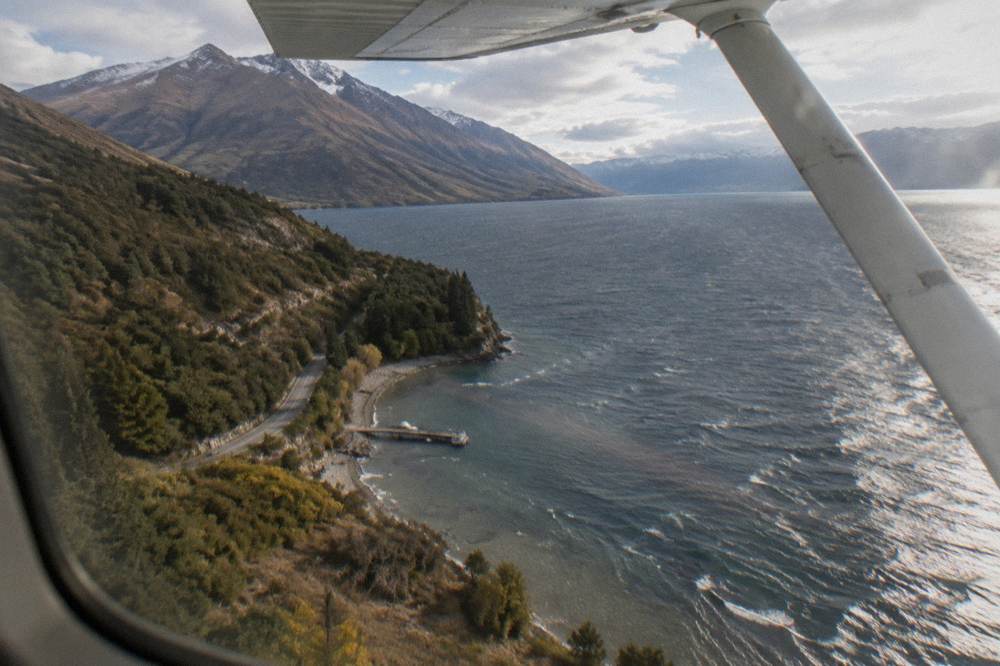
If the fear question is really a "is it worth it" question in disguise, the honest framing helps: NZONE Skydive holds 4.7 across 1,479 reviews, and 3-Hour Wanaka Skydive holds 4.8 across 295. Those are large enough pools to mean something. The third option, Wanaka Skydive, Transfers Included, carries 4.7 from only 3 reviews, which is too small a base to treat as a signal either way.
What Actually Happens Between Check-In And The Door In Queenstown?
After you check in at the NZONE Skydive Centre at 35 Shotover Street in central Queenstown, you get fitted with a harness and jumpsuit, receive a briefing, and board a courtesy coach to the drop zone at Drift Bay on Lake Wakatipu, all covered by the price. From there, NZONE's 15 to 20 minute climb to altitude leads to the door, and your booking sets a check-in time rather than a jump time.
Knowing the sequence in advance is the single cheapest calm-down tool available, because vague dread is worse than any specific step. After check-in and kitting up, the coach ride out to 786 Kingston Road at Drift Bay takes you along the lake; self-driving is allowed but you still check in at the Shotover Street centre first, and parking at the drop zone is limited. Spectators can ride along free if there is bus space, though that is not guaranteed, with a maximum of one per customer and none on the last trip of the day.
The briefing is where the Tandem Master does the work that matters for a nervous jumper: harness connection, body position for the exit, and the arch you hold in freefall. Everything the master wears, flies and lands is their responsibility, not yours. The plane NZONE uses is a Cessna Grand Caravan holding up to 9 customers, so the flight is shared rather than solitary, which many first-timers find steadying. NZONE says it operates seven days a week through the day, and describes itself as New Zealand's first skydive operation with over 350,000 jumps.
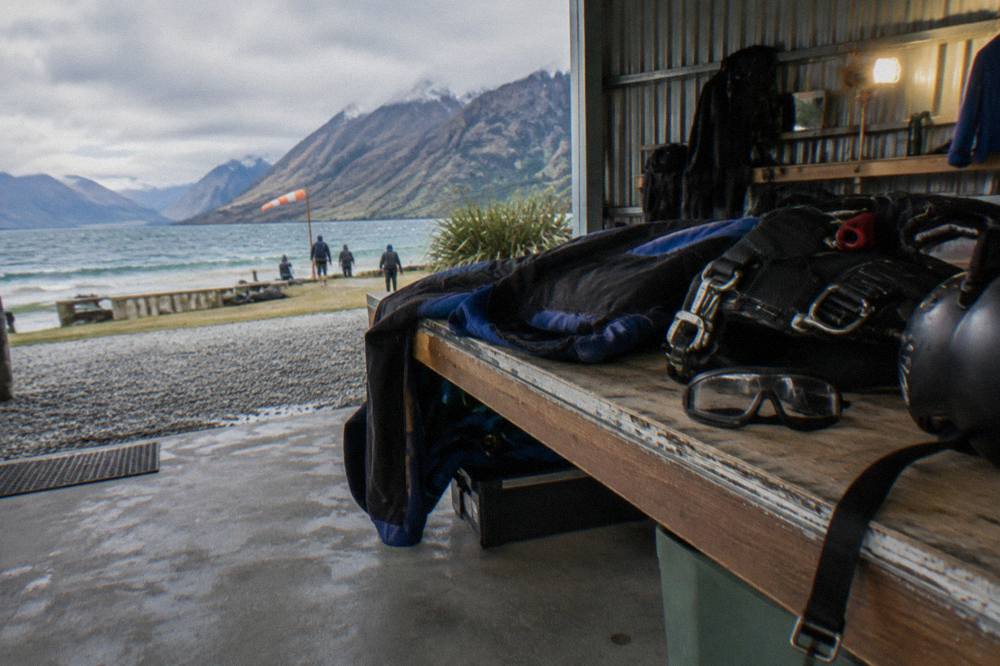
The flight to altitude lasts 15 to 20 minutes per NZONE's prices page, and that is the stretch where nerves peak for most people. The operators are explicit that jumps happen only in suitable weather: NZONE rebooks to the next suitable slot, and if you cannot rearrange, you are refunded in full. You can read the operator's own day-of and pre-jump questions on NZONE's FAQ page.
Which Altitude Should A Nervous First-Timer Choose In Queenstown?
Most nervous first-timers should choose the 9,000 ft jump: it delivers the full tandem experience with up to 25 seconds of freefall and costs the least, from USD 215.27 with NZONE Skydive. Higher options add only freefall time, up to 45 seconds at 12,000 ft and up to 60 seconds at 15,000 ft, yet the fear peaks at the door moment, which is identical at every altitude.
The pricing logic supports the cautious choice. NZONE's own prices are NZD 379 for 9,000 ft, NZD 469 for 12,000 ft and NZD 575 for 15,000 ft, which work out to about USD 215.27, USD 266.39 and USD 326.60 respectively at the entry figures on this site's tour pages. 3-Hour Wanaka Skydive prices its Wanaka-based jumps at the same NZD 379 / 469 / 575, from about USD 210.16 for the entry altitude. The Skydive Wanaka version with a Queenstown transfer included, Wanaka Skydive, Transfers Included, prices at NZD 399 / 489 / 595, from USD 221.25 at 9,000 ft.
| Altitude | Freefall (up to) | NZONE Skydive NZD | 3-Hour Wanaka Skydive NZD | Wanaka Skydive, Transfers Included NZD |
|---|---|---|---|---|
| 9,000 ft | 25 seconds | 379 | 379 | 399 |
| 12,000 ft | 45 seconds | 469 | 469 | 489 |
| 15,000 ft | 60 seconds | 575 | 575 | 595 |
A useful thought for the undecided: the difference between 25 and 60 seconds of freefall matters enormously to skydivers and rather little to a first-timer on their first exposure. The sensory overload of the first jump dominates either way. Plenty of nervous first-timers book 9,000 ft, love it, and buy the bigger altitude next time; that progression costs a little more overall but removes almost all of the pre-booking risk. The deeper comparison of the numbers lives in Queenstown skydive altitude options.
One firm ceiling is worth knowing: Skydive Wanaka says it does not tandem skydive from above 15,000 ft above ground level, so 15,000 ft is the maximum on offer anywhere in this region, and no 7,000 ft option exists at these operators. Freefall figures are detailed further in skydive freefall time by altitude.
Can You Change Your Mind Once You Are Up In The Plane?
Yes, you can change your mind: nobody is forced out of the aircraft, and you can share your nerves with the team at any point on the ground. But the decision carries a cost in the air, since Skydive Wanaka's terms offer no refund if you decline to jump while in the air, and free cancellation on the ground applies only up to 24 hours before departure.
That single term is worth sitting with before you book, because it reframes the decision honestly. The operators are not in the business of dragging people out of planes; every account of a tandem day involves the Tandem Master checking readiness at the door. But the refund rule means the commitment you make when you board is real.
The escape hatches that do exist are generous if you use them in time. Cancel more than 24 hours before departure and you pay nothing on any of the three tours. Cancel inside 24 hours and the fee is 100 percent. If weather grounds the jump, the operator rebooks you, and a full refund applies when no other date works, per NZONE's FAQ wording. Bookings stay valid for 12 months from the original departure date, which is a long runway for a nervous first-timer who wants the date on the calendar without treating it as do-or-die.
What none of this changes is the psychology of the plane ride. Knowing that backing out in the air costs the full fare is, for many people, strangely calming: it converts an open-ended escape fantasy into a closed decision, and the door moment becomes something you walk through rather than renegotiate. Others prefer to book the cheapest altitude precisely so the stakes feel proportionate. Both approaches are legitimate; the point is to choose your framing before check-in, not at 15,000 ft.
What Rules Apply On The Day That Affect Your Nerves?
Three practical rules shape the day: no alcohol or recreational drugs within 8 hours of your scheduled jump time, government-issued photo ID for everyone on arrival at the drop zone, and secure enclosed tie-up shoes. Clothing should suit the season, with winter layers; the operator provides the jumpsuit, gloves, hat and goggles, and the goggles fit over glasses. Personal cameras and smart glasses are not allowed on the jump.
The alcohol rule is the one that catches people on holiday in Queenstown, where the evening before a jump is often a big one. NZONE's terms are blunt: anyone judged intoxicated may be refused, with no refund. Eight hours is the stated window. Scuba diving within 24 hours of a jump is likewise excluded under the same terms. Neither rule is a nerves rule, exactly, but both protect the clarity that a nervous first-timer needs, and both are cheap to comply with.
Medical disclosure is the other rule that matters. NZONE asks you to flag recent injuries or surgery, mobility limits, epilepsy, high blood pressure, angina or heart conditions before booking, and a doctor's clearance can be required. Accessibility needs are assessed with a doctor's certificate plus a Drop Zone Safety Officer review, and the officer's decision is final. A head cold or blocked sinuses on the day can cause complications, so a snuffly first-timer should call ahead rather than push through. The NZONE terms page holds the full list.
| Rule | What the operator says | Whose rule it is |
|---|---|---|
| Alcohol and drugs | None within 8 hours of the scheduled jump; intoxication can mean refusal with no refund | NZONE and Skydive Wanaka terms |
| Photo ID | Government-issued photo ID required on arrival at the drop zone | NZONE terms |
| Footwear | Secure enclosed tie-up shoes; no jandals or bare feet at Skydive Wanaka | Both operators |
| Cameras | Personal cameras and smart glasses not allowed on the jump | NZPIA safety requirement cited by both |
| Under 18 | Written parental or guardian consent; a parent or guardian at the drop zone, or consent documents arranged in advance | Both operators' terms |
Eating normally is explicitly encouraged by Skydive Wanaka's FAQ: jumping on an empty stomach out of nerves tends to make the wait worse, not better. Warm layers matter in winter, and the provided jumpsuit goes over them. If you are still building your kit list, what to wear skydiving in Queenstown covers the details.
What Are First-Timers Actually Afraid Of In Queenstown?
Loss of control is the real fear, and it is answered structurally by a Tandem Master harnessed to you who performs every part of the jump.
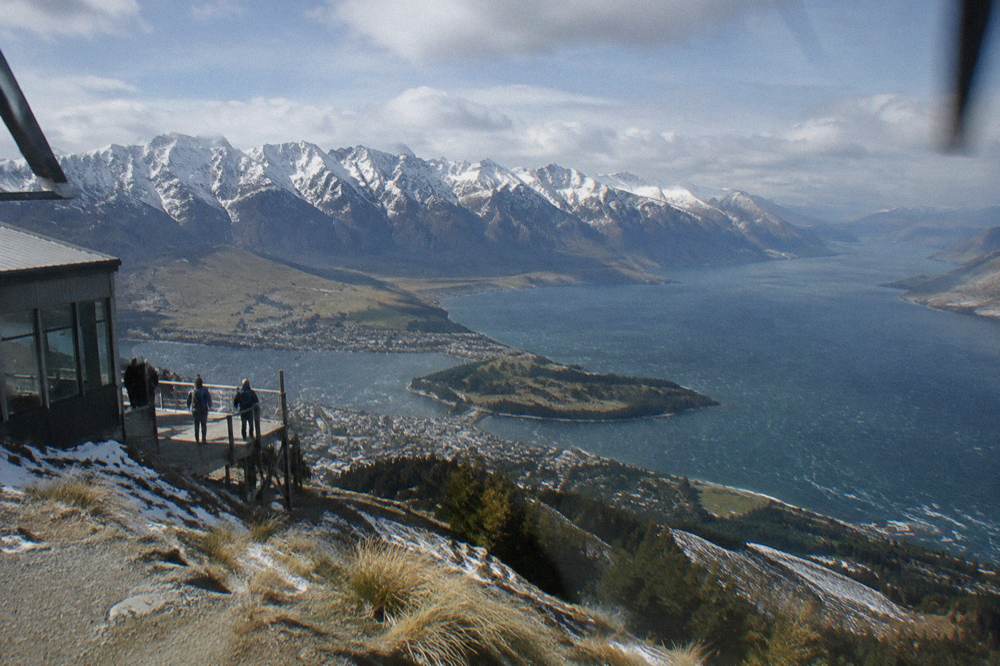
The stomach question deserves its own honest treatment, and this site covers it in detail in do you feel it in your stomach when you skydive. The short version is that the sensation is wind and pressure, not falling. The height question is answered by physics and by the view: Lake Wakatipu, the Remarkables, and from the Wanaka side Mount Aspiring and Lake Wanaka spread out below, and at that scale the brain stops processing a cliff-edge sensation. What remains is the control question, and that is where the tandem format does its work.
You do not pull the ripcord, you do not steer the canopy, you do not time the exit. The Tandem Master is a trained professional whose entire job is performing those actions while you experience them. Both operators put a tandem master with every jump, per their own published information. The under-18 consent rules, the child assessments, the weight assessments, all of it exists to put each jumper with a master whose job is exactly this. For many nervous first-timers, realising they are a passenger is the moment the fear becomes manageable excitement.
Fear of equipment or of the operator is a different worry again, and the honest answer is to look at what each operator says about itself and nothing more. Skydive Wanaka states it has operated for over 30 years, and NZONE describes itself as the birthplace of tandem skydiving in New Zealand. No safety statistics are published on the pages these operators maintain, and no honest article should invent them; the is skydiving in Queenstown safe guide handles that question with the same discipline.
Wanaka Or Queenstown For A Nervous First Jump?
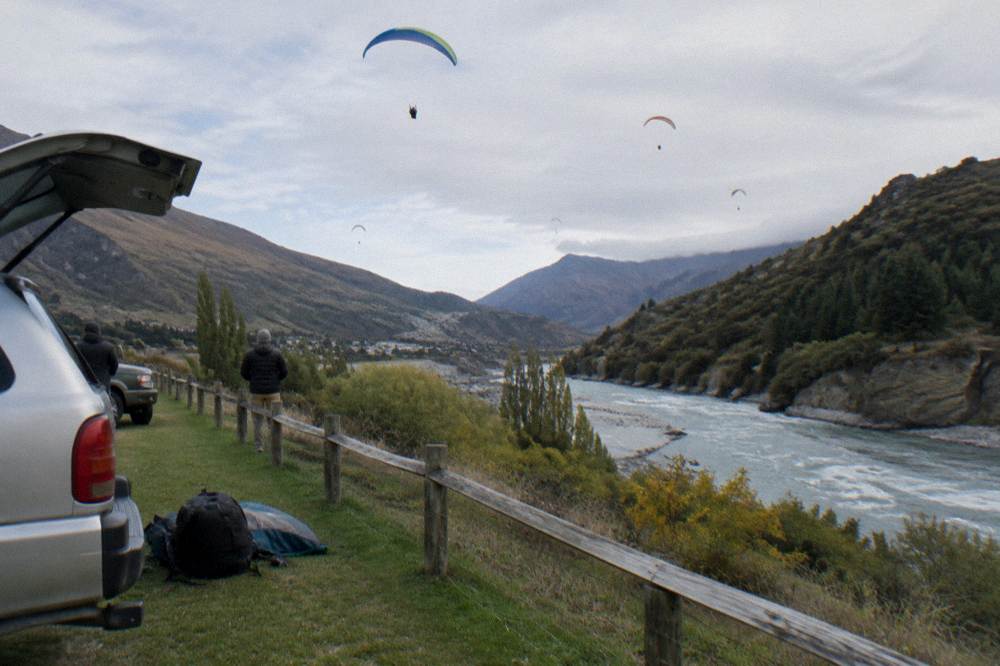
For a nervous first-timer, Queenstown is the easier choice: NZONE Skydive checks in right in town at 35 Shotover Street, includes the courtesy coach to the drop zone, and wraps up in about 3.5 hours. Wanaka offers a calmer, quieter airfield, but 3-Hour Wanaka Skydive starts in Wanaka itself, and Wanaka Skydive, Transfers Included commits up to 6 hours including about 1.5 hours of transfers each way.
The psychology of a nervous jump day is mostly the psychology of logistics. A shorter day with fewer moving parts leaves less room for dread to accumulate. NZONE Skydive compresses check-in, briefing, coach ride, flight, jump and return into about 3.5 hours, and the courtesy coach from the Shotover Street centre to Drift Bay is included in the price, with no hotel pickup offered. 3-Hour Wanaka Skydive runs about 3 hours from Wanaka Airport, and its only pickup is the Wanaka i-SITE shuttle point at 103 Ardmore Street, selected at booking. Wanaka Skydive, Transfers Included adds a return transfer from 35 Shotover Street, Queenstown on Monday, Wednesday, Friday and Sunday.
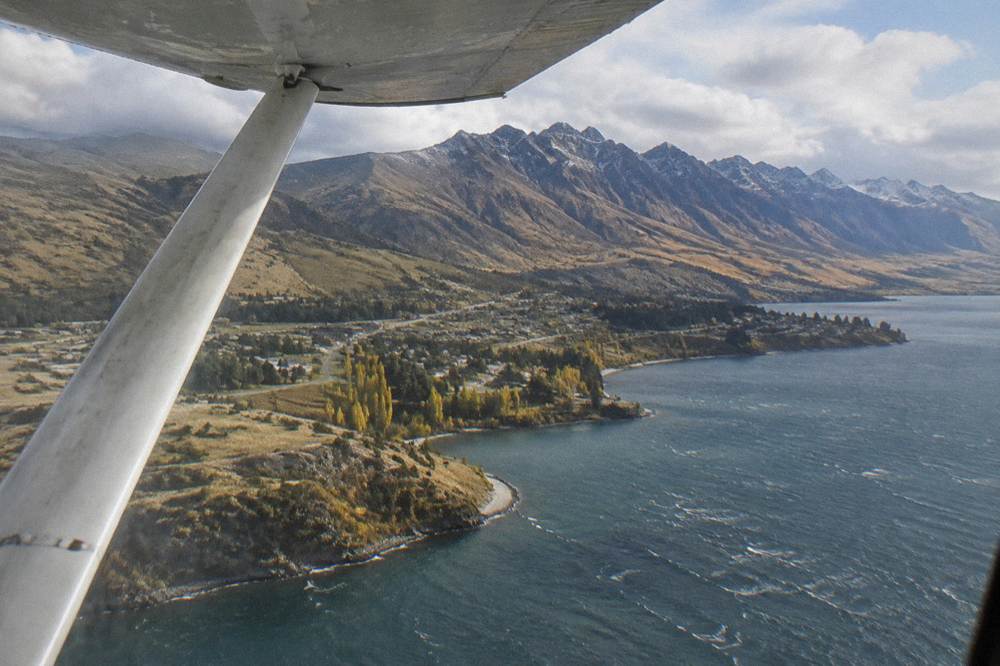
Wanaka Skydive, Transfers Included sits between the two: it starts in Queenstown at the same 35 Shotover Street meeting point, but the return transfer to Wanaka Airport runs about 1.5 hours each way, Monday, Wednesday, Friday and Sunday only, from 19 October 2026, and the whole experience can run up to 6 hours. Its rating of 4.7 comes from just 3 reviews, too few to read as a verdict either way. For a full decision framework, is it better to skydive in Wanaka or Queenstown works through the trade-offs.
There is one genuine Wanaka-side advantage for the anxious: a quieter, less busy airfield can feel less like a production line. Wanaka Airport sits about 10 minutes from Wanaka township, and the landing happens at a private working farm nearby, where the operator notes there is no safe spectator viewing at the landing zone, though friends and family are welcome at the airport base. Whether bustle or quiet soothes you more is a personal call, and it is a legitimate reason to choose either drop zone.
What Mistakes Do Nervous First-Timers Make In Queenstown?
The classic first-timer mistakes in Queenstown are booking a morning slot after a late night, arriving without photo ID, wearing shoes that cannot be tied tight, skipping breakfast out of nerves, and having no spare day in the itinerary. The other big error is booking the top altitude to prove something, when the cheapest altitude delivers the same door moment.
The spare-day point deserves emphasis because it is the one that turns disappointment into disaster. Skydive Wanaka asks you to call 30 minutes before your booking time to check weather, and if wind or full cloud cover grounds the jump, the operator rebooks you later the same day or the next. A traveller flying out the following morning has no slack in that system. NZONE's equivalent advice is to plan for a whole day, since bookings carry a check-in time rather than a jump time and the schedule can shift with conditions.
The second cluster of mistakes is bodily. Showing up hungover violates the 8-hour alcohol rule and risks refusal with no refund. Showing up fasting, out of nerves, makes the wait miserable; Skydive Wanaka explicitly says to eat normally. Wearing jandals or slip-ons fails the footwear rule at both operators. Forgetting government-issued photo ID stops you at check-in at the drop zone. None of these are exotic, and all of them are free to avoid.
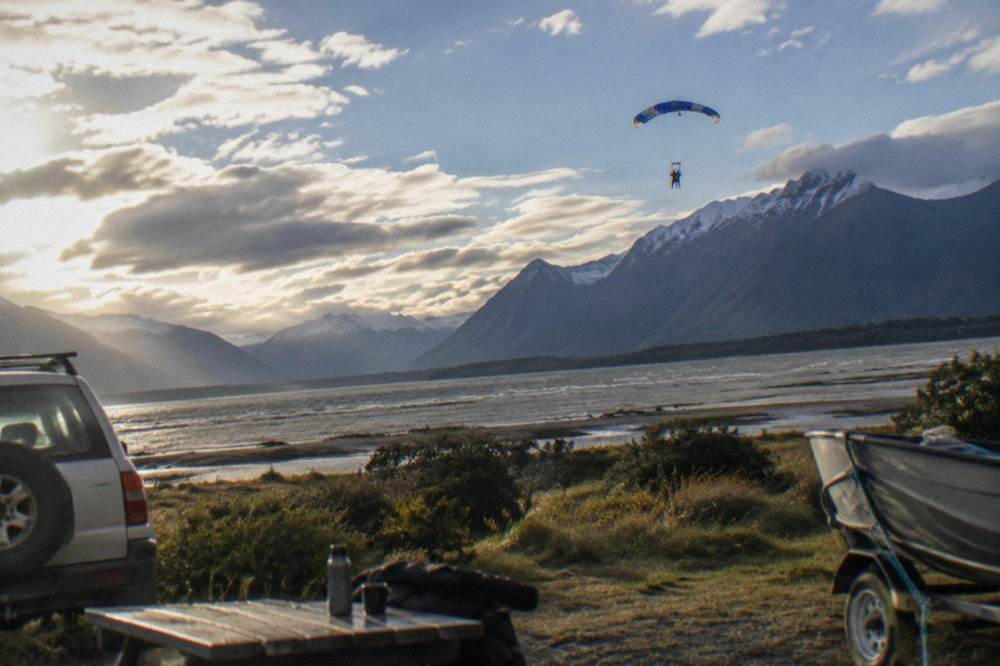
The third mistake is paying for media you have not thought about. Photo and video are add-ons bought at check-in, never included in a jump price. NZONE's packages run NZD 220 for Handicam, NZD 333 for a dedicated freefall camera flyer and NZD 395 for the Ultimate Combo, and Skydive Wanaka mirrors those price points. Deciding at the last second to add the freefall camera is a gamble, because at both operators that option cannot be pre-booked and depends on availability on the day. The full breakdown is in Queenstown skydive photo and video.
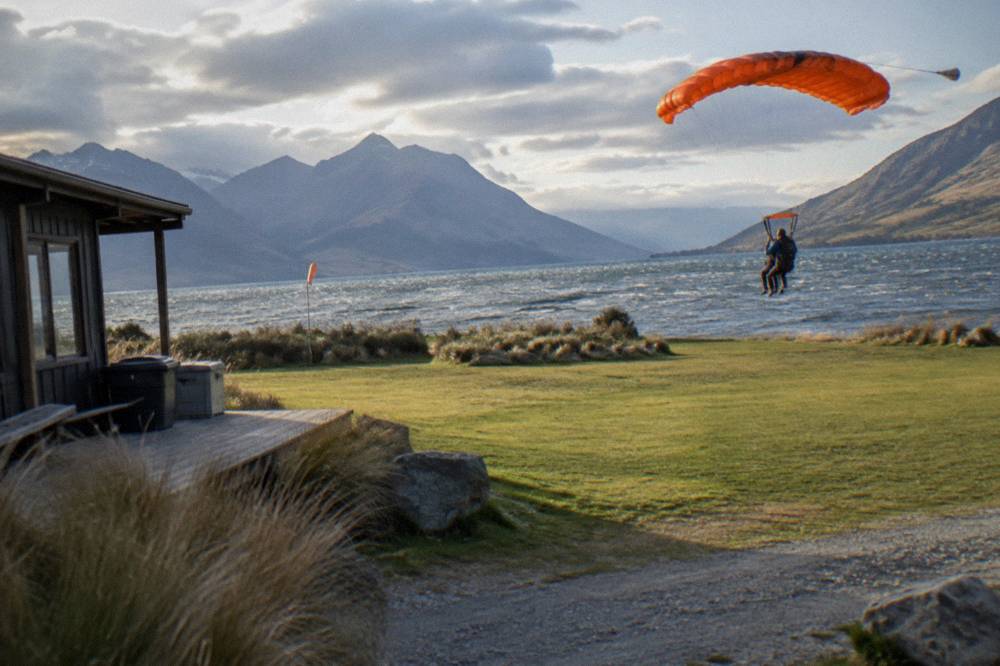
How Do You Actually Calm Down Enough To Jump?
You calm down through procedure rather than willpower: learn the day's sequence before you arrive, pick the 9,000 ft jump to keep the stakes small, eat normally, and tell the team you are nervous at any point. At NZONE, the 15 to 20 minute flight to altitude gives peak fear time to crest and fade, nobody is pushed, and the 24-hour free-cancellation window keeps your commitment explicit.
Preparation beats pep talks. Read the NZONE sequence: check-in at 35 Shotover Street, kit and briefing, coach to Drift Bay, 15 to 20 minute flight to altitude, up to 25 seconds of freefall at the entry altitude, 3 to 4 minutes of canopy, landing. Each step is ordinary in itself. Fear thrives on the unknown, and a first-timer who can recite the day has replaced the unknown with a schedule. The deeper version of that sequence, including what the briefing covers, is in what happens on a Queenstown tandem skydive day.
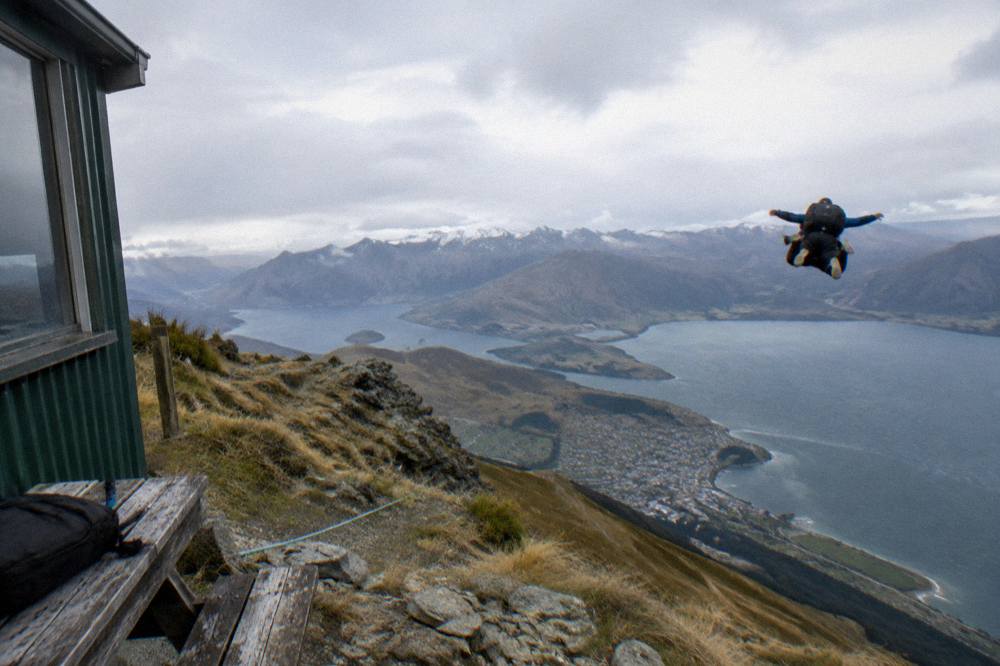
Practical anchors on the day are simple. Breathe slowly during the climb; NZONE allows 15 to 20 minutes and the plane holds up to 9 customers, so you are not alone in your nerves. Watch the Tandem Master's routine rather than the door. Keep your hands where the briefing put them. The freefall is shorter than the time it took to read this paragraph. NZONE puts the canopy ride at 3 to 4 minutes, a stretch of the jump with Lake Wakatipu and the Remarkables below from the Drift Bay drop zone.
Two things that do not help: alcohol the night before, which is banned within 8 hours anyway and can void your fare, and a companion talking you into an altitude you did not choose yourself. The decision framework that suits a nervous first-timer is the cheapest one that delivers the experience, with the option to go bigger next time once the fear has a known shape. NZONE Skydive's entry jump is from USD 215.27 per person, and every operator here offers free cancellation up to 24 hours before departure, so the commitment can be made in stages rather than all at once.
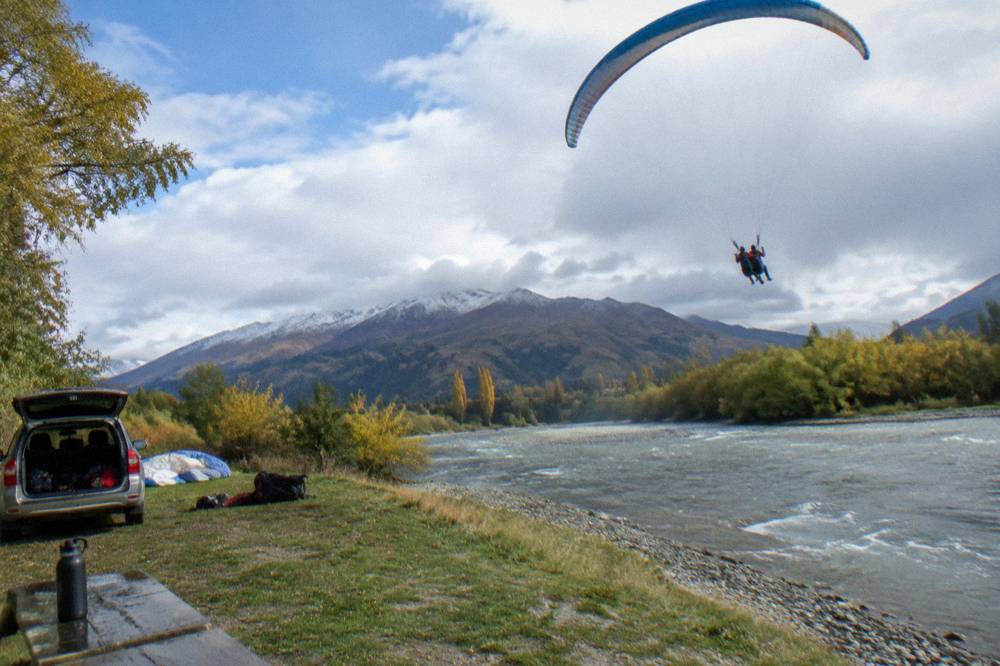
The other honest note: for a small number of people the answer to "is it scary" is genuinely "too much", and that is a legitimate outcome, not a failure. Deciding on the ground costs you nothing within the cancellation window. Deciding in the air costs the fare, per Skydive Wanaka's terms. Knowing where that line sits before you board is, oddly, one of the most calming facts a first-timer can hold.
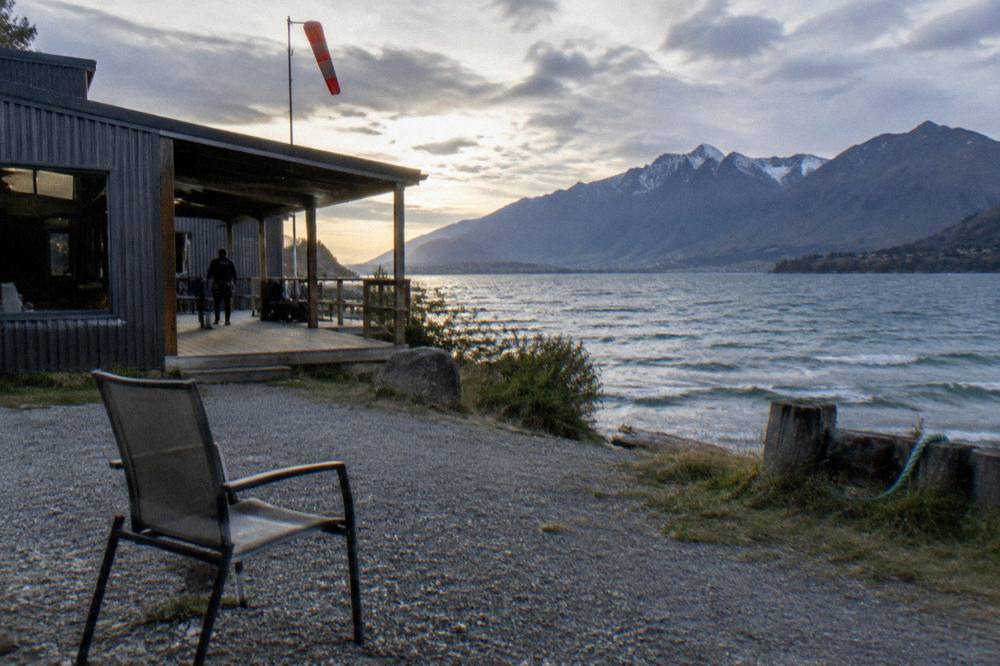
Whether the answer to the fear question points you toward the town-side drop zone at Drift Bay or the quieter Wanaka airfield, Queenstown Tandem Skydive exists to make that decision with the operators' own numbers rather than marketing noise. If the nerves win this trip, the booking stays valid for 12 months; the mountains will still be there.
Common Questions About Being Scared To Skydive In Queenstown
Is Skydiving In Queenstown Scary?
The anticipation is the hardest part for most first-timers. At NZONE, freefall lasts up to 25, 45 or 60 seconds depending on altitude, followed by 3 to 4 minutes under canopy, and you are harnessed to a Tandem Master throughout. The operators' review counts, 4.7 from 1,479 for NZONE Skydive and 4.8 from 295 for 3-Hour Wanaka Skydive, suggest most people come away glad they jumped.
Will My Stomach Drop On A Queenstown Skydive?
The fairground stomach-drop feeling is rarely what people report, because the aircraft is already moving forward when you exit. The dominant sensations are wind and pressure rather than falling. This is a matter of individual reaction and no article can promise your experience, but the physics of exiting a moving aircraft removes the elevator-drop that people fear.
What If I Am Too Scared To Jump On The Day?
You can tell the team about nerves at any point on the ground, and nobody is forced out of the aircraft. Free cancellation applies up to 24 hours before departure. Skydive Wanaka's terms state that deciding not to jump while in the air means no refund, so the free decision ends at the door.
Which Altitude Is Best For A Nervous First-Timer?
Most nervous first-timers should book 9,000 ft. It delivers the full tandem experience with up to 25 seconds of freefall, it is the cheapest entry point at from USD 215.27 with NZONE Skydive, and children 12 and under are capped at 9,000 ft anyway. The door moment is the same at every altitude; only the freefall length changes.
Can I Have A Drink To Calm My Nerves Before Jumping?
No. Both operators' terms prohibit alcohol and recreational drugs within 8 hours of the scheduled jump time, and anyone judged intoxicated may be refused with no refund. Skydive Wanaka's advice to eat normally points the other way: a normal meal and water serve a nervous jumper far better than sedation.
How Long Does The Scary Part Last?
Freefall runs up to 25 seconds at 9,000 ft, up to 45 seconds at 12,000 ft and up to 60 seconds at 15,000 ft. At NZONE, the jump runs at speeds of 200 km/h, the flight to altitude beforehand takes 15 to 20 minutes and the canopy ride afterwards lasts 3 to 4 minutes, so the fear window is bracketed by long, calmer periods.