Queenstown Skydive Medical Conditions: Who Should Check First
A tandem skydive is a physical experience, and both Queenstown-region operators put a short list of medical questions between you and the plane. Here is exactly what their terms ask you to declare, what may need a doctor's clearance, and what can stop a jump on the day.
Short answer
Tell the operator before booking about recent injuries or surgery, mobility limits, epilepsy, high blood pressure, angina or heart conditions. A doctor's medical clearance may be needed. NZONE takes accessibility questions on +64 03 442 5867, and a previously dislocated shoulder is jumpable if the team knows. This is what the operators' terms say, not medical advice.
NZONE Skydive, the most reviewed option here at 4.7 across 1,479 reviews, puts the medical questions in its terms and takes phone questions before you commit; its accessibility line is +64 03 442 5867.
Quick Facts
| Question | The operator's rule |
|---|---|
| What must be declared before booking | Recent injuries or surgery, mobility limits, epilepsy, high blood pressure, angina, heart conditions |
| May a doctor's clearance be required | Yes, the operator's terms say medical clearance may be needed |
| Accessibility needs | Doctor's certificate plus assessment by the Drop Zone Safety Officer, whose decision is final |
| Previously dislocated shoulder | Can still jump, provided the team is told (NZONE) |
| Alcohol before a jump | None within 8 hours of the scheduled jump time |
| Scuba diving before a jump | None within 24 hours of the scheduled jump time |
| Sick on the day | A cold, flu or blocked sinuses may cause complications; tell the operator |
| Cancellation if you cannot jump | Free up to 24 hours before departure, per both operators' terms |
What Medical Conditions Do You Need To Declare Before A Queenstown Skydive?
Both Queenstown-region operators ask the same core question before a tandem jump: do any of these apply to you, recent injuries or surgery, mobility limits, epilepsy, high blood pressure, angina, or heart conditions. The terms are the operators' own wording, and they exist because a jump loads the body in specific ways during freefall, under canopy and on landing. Declaring is not a barrier; it is how the team decides whether a clearance or an adjustment is needed. Diabetes is not on either operator's list, and the guide to tandem skydiving with diabetes explains who makes the call on the day and how to raise it before booking.
That list is deliberately short, and it is worth resisting the urge to self-diagnose beyond it. What the terms do say, in NZONE's case, is that the ability to jump depends on age, weight, size and how the harness fits, and that certain declared conditions may need a doctor's medical clearance before you are cleared to fly. Skydive Wanaka's terms carry the same medical wording, which is not surprising given the two operators are siblings in the same experience group; the figures that matter for fitness, such as minimum weight, still differ, 40 kg at NZONE against 30 kg at Skydive Wanaka.
NZONE sets out its medical questions in its terms and conditions and expands on them in its tandem skydive FAQ. Read those two pages before you book rather than after; the FAQ also covers the practical questions that sit next to the medical ones, like what to wear and how the day runs. If your situation is anything other than plain sailing, a phone call before payment beats a form on the day.
The practical framing is this. A tandem skydive with NZONE runs about 3.5 hours from check-in to return, starting at the NZONE Skydive Centre at 35 Shotover Street in Queenstown, and the 3-Hour Wanaka Skydive runs about 3 hours from Wanaka Airport. Those are ground-to-ground durations, not time in the air. At NZONE, the freefall runs at up to 200 km/h and the canopy ride lasts 3 to 4 minutes, and the medical questions are about whether your body can take the exit, the freefall, the canopy ride, and a landing where you lift your legs and let the tandem master touch down first.
| Item to declare | What the operator's terms say | What may happen next |
|---|---|---|
| Recent injuries or surgery | Must be disclosed before booking | The operator may ask for a doctor's medical clearance |
| Mobility limits | Must be disclosed before booking | Assessed case by case |
| Epilepsy | Must be disclosed before booking | Medical clearance may be required |
| High blood pressure | Must be disclosed before booking | Medical clearance may be required |
| Angina | Must be disclosed before booking | Medical clearance may be required |
| Heart conditions | Must be disclosed before booking | Medical clearance may be required |
| Previously dislocated shoulder | Can jump, NZONE says, if the team is told | Tell the crew at check-in |
| A cold, flu or blocked sinuses on the day | May cause complications | Tell the operator; expect a possible rebook |
One boundary worth stating plainly: nothing on this page is medical advice, and neither operator's terms replace a conversation with your own doctor. The operators wrote rules for a business; your doctor knows your history. Where the two seem to disagree, ask both before you jump.
Can You Skydive With A Heart Condition Or High Blood Pressure In Queenstown?
A heart condition, angina or high blood pressure does not automatically rule out a tandem skydive, but it does put you in the declare-and-clear lane. Both operators ask for these to be disclosed before booking, and both reserve the right to require a doctor's medical clearance before the jump goes ahead. The honest answer is that clearance is decided case by case by your doctor and the operator, not by a webpage. For the bigger safety picture, what Queenstown operators actually state about skydive safety covers their assessments, weather rules, and aircraft standards before you book.
The reason hearts get named is mechanical. For most people that is the point of the exercise. For someone with uncontrolled blood pressure or unstable angina, it is a question worth putting to a doctor in those exact words, and the operators' terms anticipate that conversation by making clearance a possible requirement rather than a flat ban.
The booking-practical angle matters here too. Both NZONE and Skydive Wanaka allow free cancellation up to 24 hours before departure, and a booking stays valid for 12 months from the original date. That combination is forgiving for anyone chasing a doctor's appointment: you can hold a date, get the clearance conversation done, and still move the jump without penalty if the doctor wants tests first. Rescheduling is allowed any number of times until 24 hours before departure, per the shared terms wording.
For choosing between the options, the three products on this site all use the same medical framework but differ in logistics. NZONE Skydive jumps from Drift Bay on Lake Wakatipu with a courtesy coach from 35 Shotover Street included in the price, from about USD 215.27 at 9,000 ft. The 3-Hour Wanaka Skydive jumps from Wanaka Airport from about USD 210.16 at the same altitude, with pickup from the Wanaka i-SITE shuttle point only. The third option, Wanaka Skydive, Transfers Included, adds a Queenstown return transfer from about USD 221.25 and runs up to 6 hours door to door; it carries a 4.7 rating from only 3 reviews, so its score tells you very little.
If the heart question is the thing holding up a booking, the sequence that works is: phone the operator, describe the condition in your doctor's language, ask what clearance they want to see, and book once you know. NZONE and Skydive Wanaka both publish reservations phone numbers and email addresses for questions the standard terms do not answer.
What Happens If You Are Sick On The Day Of Your Queenstown Skydive?
A cold, flu or blocked sinuses on the morning of the jump can stop it, because pressure changes are hard on congested ears and sinuses. If you wake up unwell, tell the operator early, before you travel to check-in, and expect a conversation rather than a refund on the spot.
The mechanism is the same one divers know well. The climb to 9,000 to 15,000 ft, the fall, and the canopy descent all involve pressure changes the body normally equalises through the ears and sinuses. That is why the advice is not "push through", it is "call first". Skydive Wanaka's own guidance says to phone about 30 minutes before your booking time to check weather, and the same call is the natural place to raise a head cold.
Weather cancellation and illness sit near each other in the terms but are not the same thing. If the operator cancels for weather, they try to rebook you, and if no other date works you receive a full refund; that wording appears in both operators' terms. If you cancel for illness inside the final 24 hours, the standard terms apply a 100 percent fee, which is why the early phone call matters so much. Outside 24 hours, cancellation is free.
A spare day is cheap insurance. The booking advice Skydive Wanaka gives for its transfers-included product applies to every jump in the region: book your first available day and keep a spare one free, because weather, and sometimes health, moves jumps. Travellers building a wider plan will find the Queenstown skydive weather page covers the meteorological half of this in detail.
| Situation on the day | What the terms indicate | Likely outcome |
|---|---|---|
| Cold, flu or blocked sinuses | May cause complications | Rebook to another slot |
| Weather stops the jump | Operator rebooks first; full refund only if no date works | New date or refund |
| Alcohol within 8 hours | May be refused with no refund | Refusal risk |
| Scuba diving within 24 hours | Not permitted by the terms | Rebook required |
| You cancel inside 24 hours | 100 percent fee applies | Fee charged |
| You cancel outside 24 hours | Free cancellation | Full refund |
Can You Skydive With Accessibility Needs Or Mobility Limits In Queenstown?
Accessibility needs are handled case by case, and the path is defined: a doctor's certificate plus an assessment by the Drop Zone Safety Officer, whose decision is final. NZONE takes these questions on +64 03 442 5867 before you book. A mobility limit is one of the named declaration items, so it belongs in the conversation early, not at check-in, and the outcome depends on the assessment rather than a blanket rule.
The reason an officer decides rather than a checkbox is that "mobility limits" covers an enormous range, from a stiff knee to full-time wheelchair use, and each interacts differently with a tandem harness, aircraft entry and a legs-up landing. The terms give the officer the final word precisely because the judgement has to be made by someone who can see the person, the harness and the day. That is not a brush-off; it is the mechanism that has let a wide range of people jump, including, per NZONE's own FAQ, passengers up to 94 years old.
Skydive Wanaka's FAQ records its oldest passenger at 92. Neither operator publishes a maximum age, and both set the minimum age at 6, with children 12 and under limited to a maximum jump height of 9,000 ft and every child assessed on the day by the Tandem Master. Those age rules are covered fully on the minimum age page; the point for this article is that age and mobility questions follow the same declare, assess, then decide route.
Practical notes that sit alongside accessibility: everyone aboard the aircraft wears a parachute, so Skydive Wanaka's terms state plainly that observers cannot fly. At NZONE, spectators travel free to the drop zone only if there is bus space, with a maximum of one per customer and no spectators on the last trip of the day. Government-issued photo ID is required for everyone on arrival at the drop zone, both operators' terms say, so bring it whatever your situation.
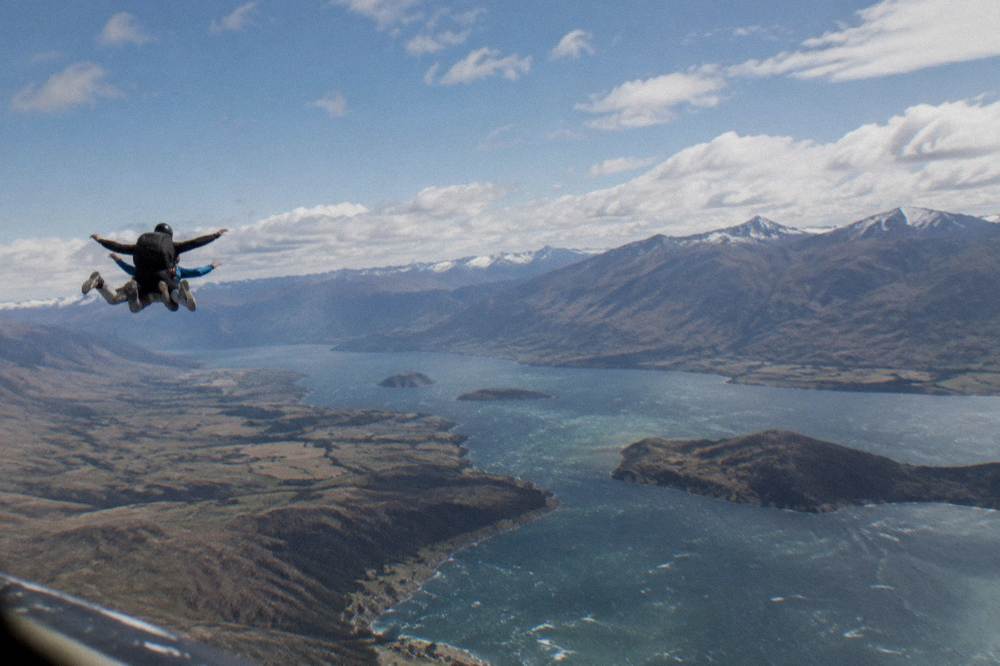
The decision logic for accessibility is the same whoever you jump with, but logistics differ. NZONE's drop zone at Drift Bay is reached by the included courtesy coach from the Skydive Centre, and self-drivers must still check in at Shotover Street first. Skydive Wanaka's base is at Wanaka Airport, about 10 minutes from Wanaka town, with landings at a private working farm nearby where there is no safe spectator viewing. Friends and family are welcome at the airport base instead. If ground logistics are part of the accessibility picture, factor them into the choice of product.
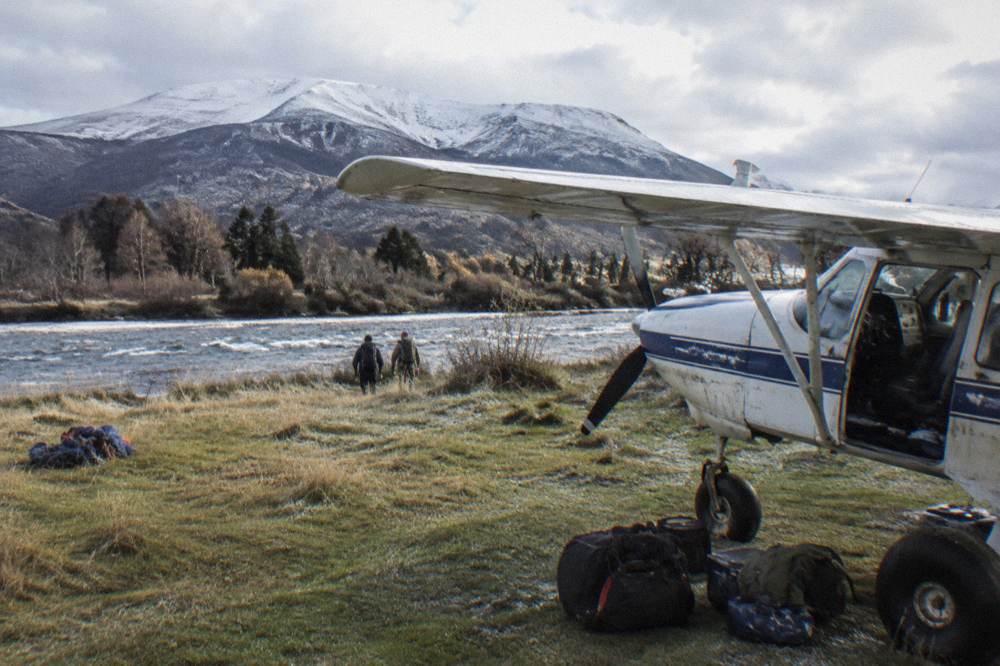
Can You Skydive After Surgery Or With A Dislocated Shoulder In Queenstown?
It depends: recent surgery is a declaration item and the operator may require a doctor's medical clearance before you jump, with only your doctor able to say what recent means for you, while a previously dislocated shoulder is treated far more leniently, since NZONE states explicitly that you can still jump provided you tell the team.
Shoulders get a specific mention because the harness carries load through the shoulders, and the exit position has arms crossed or up. A shoulder that has dislocated before is a shoulder the tandem master wants to know about, and NZONE's FAQ answers the question directly: you can jump, tell the team. That is a useful window into the operators' general posture, which is disclosure-friendly rather than exclusion-happy.
Surgery is a timing question more than a yes-or-no. A doctor who knows what was done, and when, can say whether the forces of a jump, at NZONE a freefall at up to 200 km/h followed by the opening of the canopy and a legs-up landing, are reasonable at your stage of recovery. Bring the jump's mechanics to that appointment; the what happens on the day page describes them in order if you want a script.
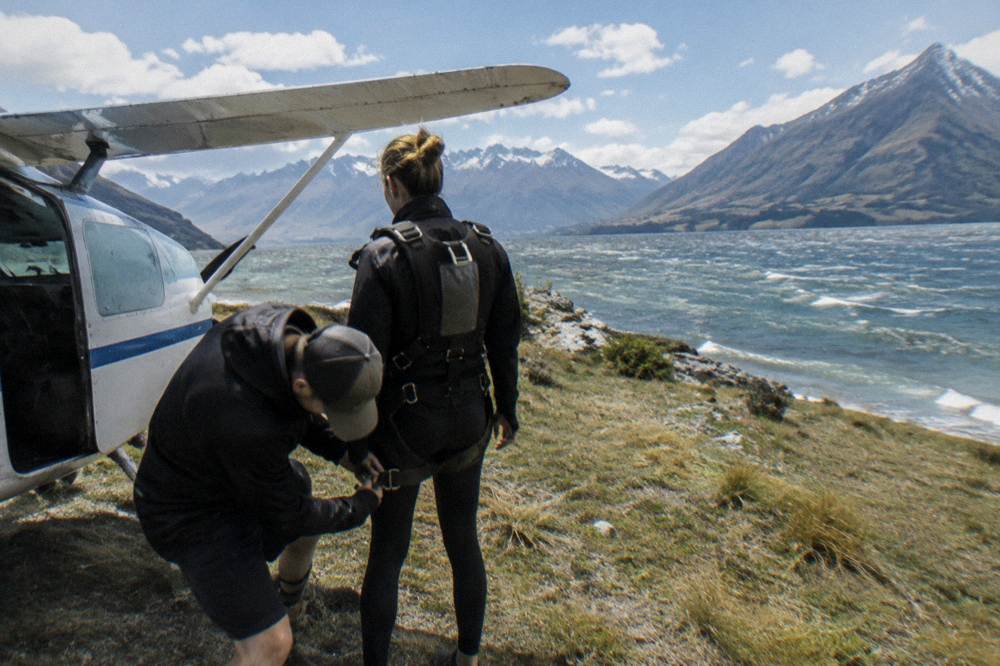
The photo and video question sometimes interacts with surgery recovery, since a Handicam package at NZONE means the tandem master wears a wrist camera and the edit includes ground, flight, freefall and landing footage, priced at NZD 220 as an add-on at check-in. Photo and video are never included in the three tour prices on this site. If reaching for a camera position or a harness strap is the concern, raise it with the crew; the packages are optional and bought on the day at NZONE, so skipping one costs nothing in advance.
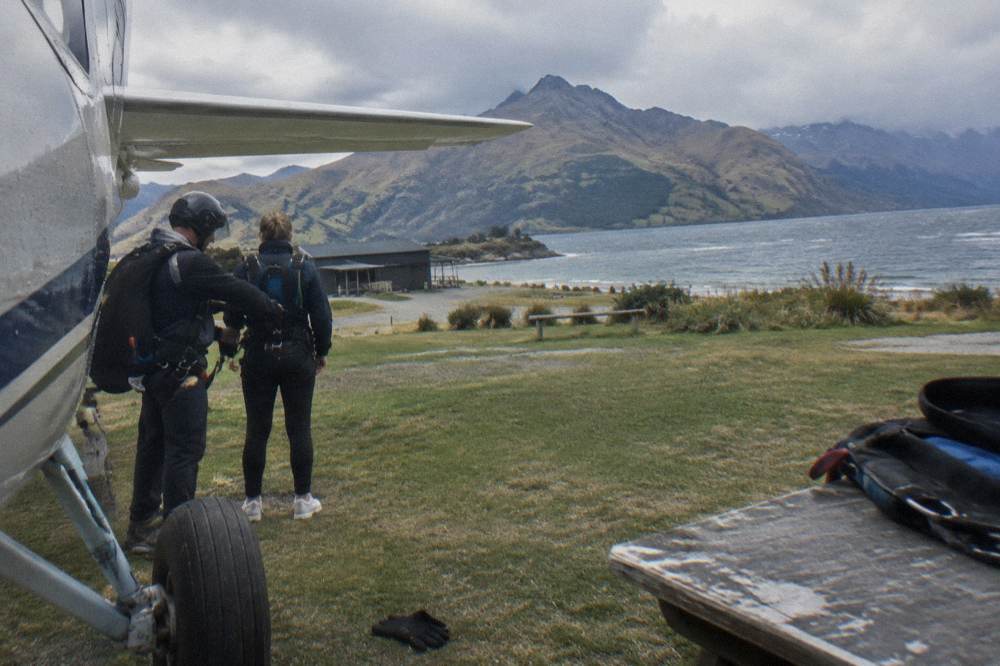
One more point that belongs here rather than anywhere else: personal cameras and smart glasses are not allowed on the jump under an NZPIA safety requirement the operators cite. If your plan was to film your own recovery milestone with a phone, it cannot happen; an operator package is the only filming route.
What Are The Alcohol And Scuba Diving Rules Before Skydiving In Queenstown?
The terms of both operators set two hard cut-offs: no alcohol or recreational drugs within 8 hours of the scheduled jump time, and no scuba diving within 24 hours. An intoxicated person may be refused with no refund. These are among the few medical-adjacent rules with numbers attached, which makes them the easiest to trip over the night before a jump, especially on a Queenstown holiday.
The scuba rule surprises people in a town better known for lake and mountain pursuits than diving, but it is written into both operators' terms. Twenty-four hours is the terms' line, and it is not negotiable at check-in. If Milford or Doubtful Sound diving is on the itinerary, sequence it after the skydive, not the night before.
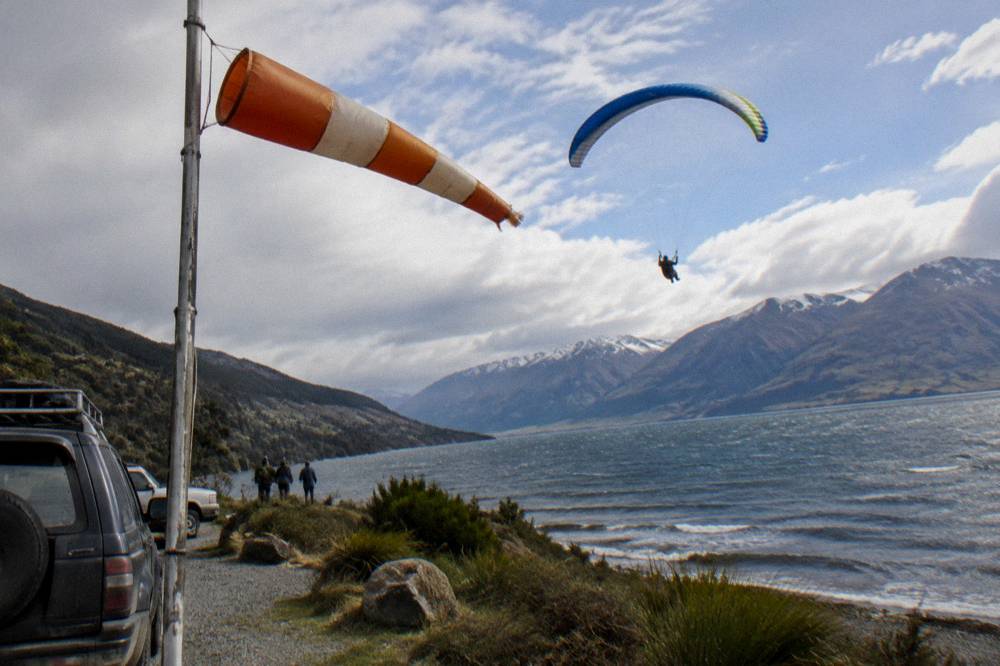
The alcohol rule is the one that bites on stag and hen trips. Eight hours means the farewell drinks at midnight are a problem for a 7 am check-in, and the terms are explicit that an intoxicated or affected person may be refused with no refund. Both operators also warn that a booking carries a check-in time, not a jump time, so the scheduled jump time you count back from may shift through the day as weather and loads move.
| Rule from the operators' terms | Cut-off before scheduled jump time | Consequence if broken |
|---|---|---|
| Alcohol and recreational drugs | 8 hours | Refusal possible, no refund |
| Scuba diving | 24 hours | Jump not permitted |
| Free customer cancellation | Up to 24 hours before departure | Inside 24 hours, 100 percent fee |
| Booking validity | 12 months from original departure | Forfeited after that |
For readers piecing the whole day together, the freefall itself is brief by design: up to 25 seconds at 9,000 ft, up to 45 seconds at 12,000 ft, and up to 60 seconds at 15,000 ft, and at NZONE the flight to altitude takes 15 to 20 minutes with a canopy ride of 3 to 4 minutes. The skydive freefall time by altitude page unpacks those numbers, and the altitude options guide covers which height to pick in the first place.
What Mistakes Trip Up Travellers With Medical Conditions Booking A Queenstown Skydive?
The recurring mistakes are declaring nothing and hoping, self-disqualifying without asking, drinking the night before, and treating the jump time as fixed. Every one of these has a cheap fix: a phone call before booking, a doctor's letter if asked for, a dry night, and a spare day in the itinerary. The operators' terms are built around disclosure, and they reward the travellers who use them that way.
NZONE's phone line exists partly for exactly these calls, and its FAQ answers the dislocated-shoulder question in a sentence, which tells you how routine these questions are. The mirror-image mistake is the traveller who reads a scary list somewhere and rules themselves out; if your condition is not one the operators name, the answer is a call, not a conclusion.
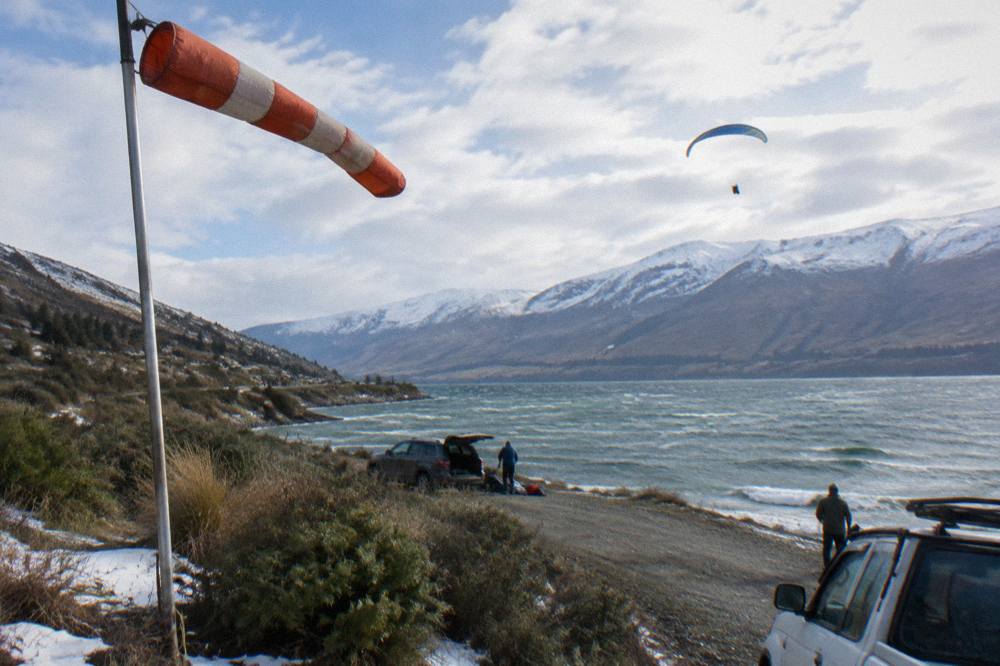
The third mistake is logistics blindness. Booking the only free afternoon of a five-day trip leaves no room for the rebook that weather or a head cold can force. The transfers-included Wanaka product runs up to 6 hours and only operates on Monday, Wednesday, Friday and Sunday from 19 October 2026, so a moved jump on that product can collide with the rest of an itinerary; the advice from Skydive Wanaka's own booking information is to book the first available day and keep a spare one free. Skydive Wanaka also asks that anyone over 95 kg tell reservations before the jump date, which is a check-in problem better solved by phone.
The fourth is paperwork laziness. Under-18s need written parental or guardian consent, and the terms add that a parent or guardian must be present at the drop zone unless consent documents were arranged with staff in advance. Government photo ID is required for everyone. None of that is medical, but it stops jumps at the same counter, so it belongs in the same pre-booking check.
Finally, remember what a declaration actually is. The tandem master is strapped to you, which is why the assessment culture here is cooperative rather than adversarial. Read the operators' terms, use the phone numbers on them, and take your doctor's word over any webpage's.
Common Questions About Queenstown Skydive Medical Conditions
What Medical Conditions Do You Have To Declare Before A Queenstown Skydive?
Recent injuries or surgery, mobility limits, epilepsy, high blood pressure, angina and heart conditions, per both operators' terms. Declare them before booking, not at check-in, because some may require a doctor's medical clearance.
Can You Skydive With A Heart Condition In Queenstown?
It is not an automatic no. The terms ask for heart conditions, angina and high blood pressure to be disclosed, and a doctor's medical clearance may be required. The decision is made by your doctor together with the operator, case by case.
Can You Skydive With A Dislocated Shoulder?
Yes, NZONE's FAQ says a previously dislocated shoulder does not stop a jump, provided you tell the team. Recent injuries and surgery are declaration items and may need a doctor's clearance.
Can You Skydive With A Cold Or Blocked Sinuses?
The operators' terms warn that a cold, flu or blocked sinuses on the day may cause complications, because pressure changes are hard on congested ears and sinuses. Call the operator before travelling to check-in.
How Long Before A Skydive Can You Drink Alcohol?
No alcohol or recreational drugs within 8 hours of the scheduled jump time, under both operators' terms. An intoxicated person may be refused with no refund.
Can You Scuba Dive And Skydive On The Same Trip?
Yes, but in that order, not the reverse. The terms prohibit scuba diving within 24 hours of the scheduled jump time, so dive after the skydive or leave a full day between them.