What Do I Need To Wear To Go Skydiving In Queenstown?
A practical clothing and gear guide for a tandem skydive in Queenstown or Wanaka: shoes, layers, what the operator provides, glasses, and what to leave behind.
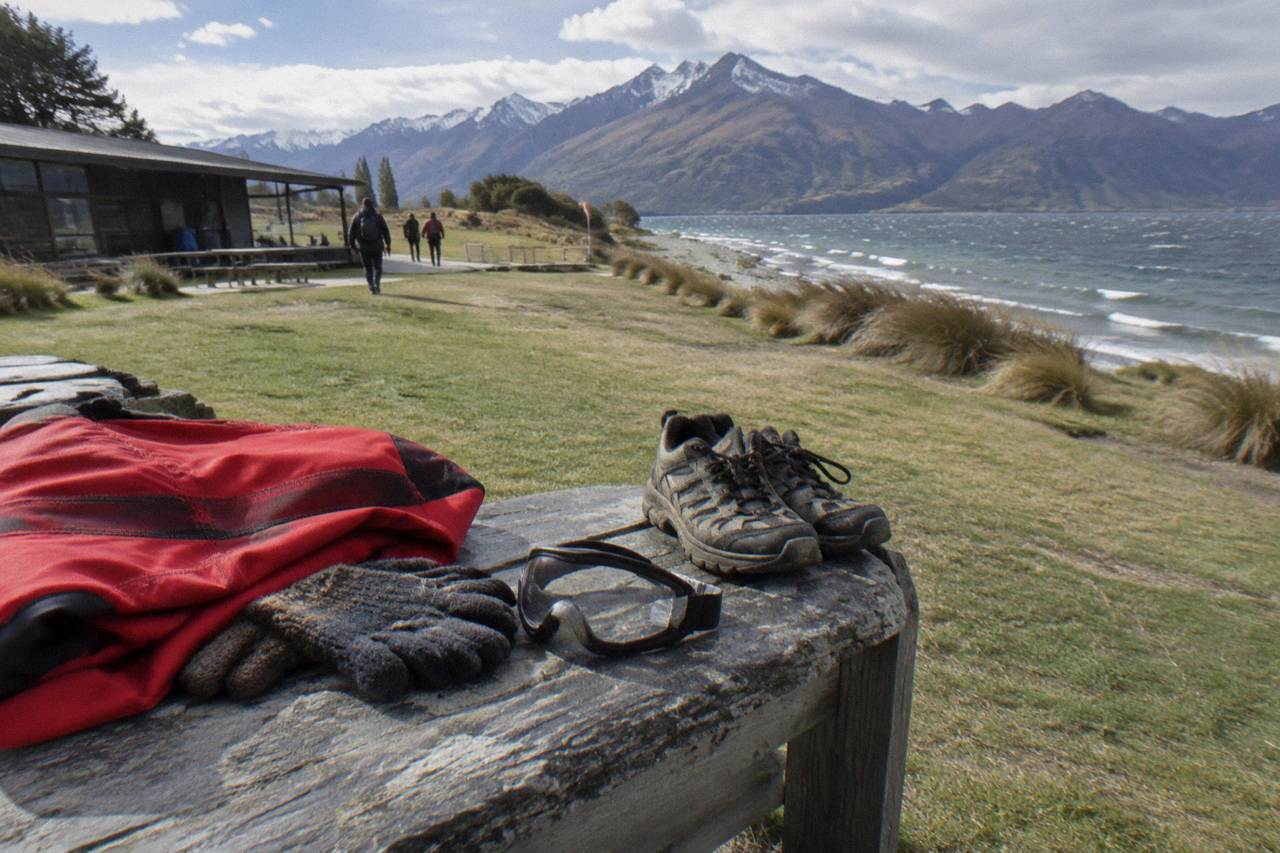
The short answer is that you need very little of your own gear. NZONE Skydive and Skydive Wanaka, the two operators behind the tandem skydives covered here, both supply a full jumpsuit, gloves, a hat and goggles for every jump, and both say the goggles fit over glasses. Your responsibilities are secure enclosed shoes that lace up, clothing that suits the season, and a government-issued photo ID carried on arrival at the drop zone. Everything else, from personal cameras to loose jewellery, stays on the ground.
The question matters more in Queenstown than in most skydiving towns because the weather decides so much of the day. Layers you can add or shed while you wait for a weather window are the single most useful thing you can pack, and the operators themselves say to plan for a whole day rather than a precise hour. Bookings carry a check-in time, not a jump time, so comfort during the wait counts almost as much as comfort during the freefall. If you want the fuller clothing walkthrough, the Queenstown skydiving clothing guide covers the same operator facts in a planning format, while this piece answers the question directly and then works through the mistakes.
What Do I Need To Wear To Go Skydiving?
For a tandem skydive with either Queenstown-region operator you need secure enclosed tie-up shoes and season-appropriate clothing, and that is genuinely the whole personal list. NZONE Skydive and Skydive Wanaka provide the jumpsuit, gloves, hat and goggles on arrival, both operators say the goggles fit over glasses, and both require government-issued photo ID at check-in. Personal cameras and smart glasses are banned on the jump under an NZPIA safety rule, so pockets, phones and loose items are all things to think about before you leave your accommodation. Getting your gear sorted is only part of the preparation, so check the guide to who is not allowed to skydive in Queenstown and Wanaka for the age, weight, health and ID rules each operator enforces.
Start with the shoes, because this is the one item both operators are strict about. NZONE asks for secure enclosed tie-up shoes, and Skydive Wanaka's page is blunter still: closed secure footwear, no jandals, no bare feet. Sneakers or light hiking shoes with proper laces are ideal. Anything that slips on, straps loosely or could depart your foot in freefall is a problem, and sandals of any kind will leave you standing in the hangar.
“It was such a breathtaking experience, amazing and terrifying at the same time. The instructors were so nice and comforting and they’ve all done thousands of jumps.”
Next, the clothing underneath. Both operators dress the season: comfortable, reasonably snug layers in summer, and warm layers in winter. You will wear a jumpsuit over the top, and NZONE puts the flight to altitude at 15 to 20 minutes. Queenstown winters are genuinely cold at 15,000 ft, and even in summer the air at altitude is far cooler than the lakefront where you checked in. A fitted t-shirt or thermal base, a fleece or mid-layer you do not mind under a suit, and trousers rather than shorts in the colder months is a solid formula.
Beyond clothes, three small items complete the kit. Bring government-issued photo ID, because both operators' terms require it for everyone on arrival at the drop zone. Bring your glasses or contacts if you wear them, since goggles are designed to fit over glasses and contacts are fine. And bring a warm layer for the wait, because weather holds are normal and the rebooking loop, first a new slot, and only a full refund if no other date works, is described plainly in both operators' terms.
What you leave behind matters as much as what you bring. Personal cameras and smart glasses are not allowed on the jump, an NZPIA safety requirement both operators state. Loose jewellery, scarves and anything that could catch on the harness should stay at your hotel. If photos and video matter to you, each operator sells add-on packages at check-in, from a wrist-camera option at NZD 220 up to a combined camera-flyer and handicam package at NZD 395, and those are the only cameras that go up in the air with you. The full package breakdown, including what each camera option actually captures, sits in the photo and video guide for Queenstown skydives.
What Shoes Can You Wear Skydiving In Queenstown?
Enclosed shoes that lace up firmly are the requirement at both operators: NZONE Skydive asks for secure enclosed tie-up shoes and Skydive Wanaka bans jandals and bare feet outright. Sneakers, runners or light trail shoes with proper laces are the standard choice.
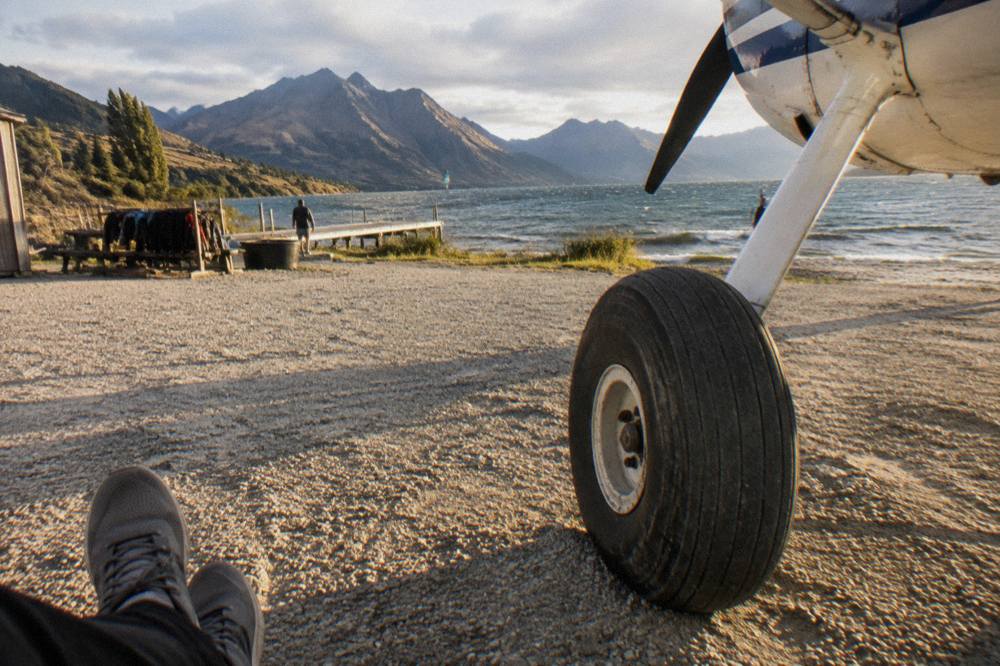
The reason is physics rather than fashion. At NZONE the freefall runs at 200 km/h, and at that airflow anything not attached to you is working to leave. A firmly laced shoe stays put through the aircraft ride, the exit, the freefall and the landing, which for most jumpers is a seated slide onto grass or a farm paddock rather than a run. A shoe that is merely snug can go one way while you go another, and Skydive Wanaka's landing spot is a private working farm near Wanaka Airport, terrain that rewards closed footwear even on a calm day.
Double-knot the laces before you board. It sounds trivial, but a lace end flapping loose at the door is a distraction nobody needs. If your shoes have large mesh panels, wear warmer socks in winter, when Skydive Wanaka calls for warm layers and NZONE for clothing to suit the season. It is also worth breaking in anything new before the day itself: a three-and-a-half-hour check-in-to-return experience at NZONE, spent mostly on your feet between gearing up and boarding, is a bad time to discover a blister.
Ready To Pick Your Jump?
Free cancellation applies up to 24 hours before departure on every skydive option here, so you can lock in a date before you have bought a single thing to wear. Check availability and sort the outfit afterwards.
How Does The Weather In Queenstown Change What You Wear?
Weather changes the wait more than the jump: both operators rebook rather than jump in poor conditions, so you may spend hours at the drop zone before your load flies, and layers you can add or shed are the answer. Winter calls for a thermal base, fleece and warm socks under the jumpsuit, while summer needs sun protection and a layer for the flight to altitude. Neither operator publishes monthly temperature figures, and none are needed: dress for the day you see outside, then add one layer for the aircraft.
The flight to altitude is the cold part. NZONE's pages put it at 15 to 20 minutes, and you will be sitting in a Cessna Grand Caravan wearing a jumpsuit over whatever you chose. At 15,000 ft above ground the air is dramatically colder than the surface, winter or summer. Skydive Wanaka notes its jump altitude is 16,100 ft above sea level at Wanaka, which tells you the aircraft is spending real time in cold air.
| Condition | What to wear under the jumpsuit | Why |
|---|---|---|
| Winter morning load | Thermal base layer, fleece, warm socks, beanie for before gearing up | Operators advise dressing for the season with warm layers in winter |
| Summer midday load | Fitted t-shirt, light long sleeves, sunscreen before you suit up | Sun on the ground, cold air at 15,000 ft |
| Windy or overcast day | Same as the season, plus a warm layer you can remove | Weather holds mean waiting; conditions decide the jump, not the clock |
| Any day | Snug rather than baggy layers | Loose fabric bunches under the harness and jumpsuit |
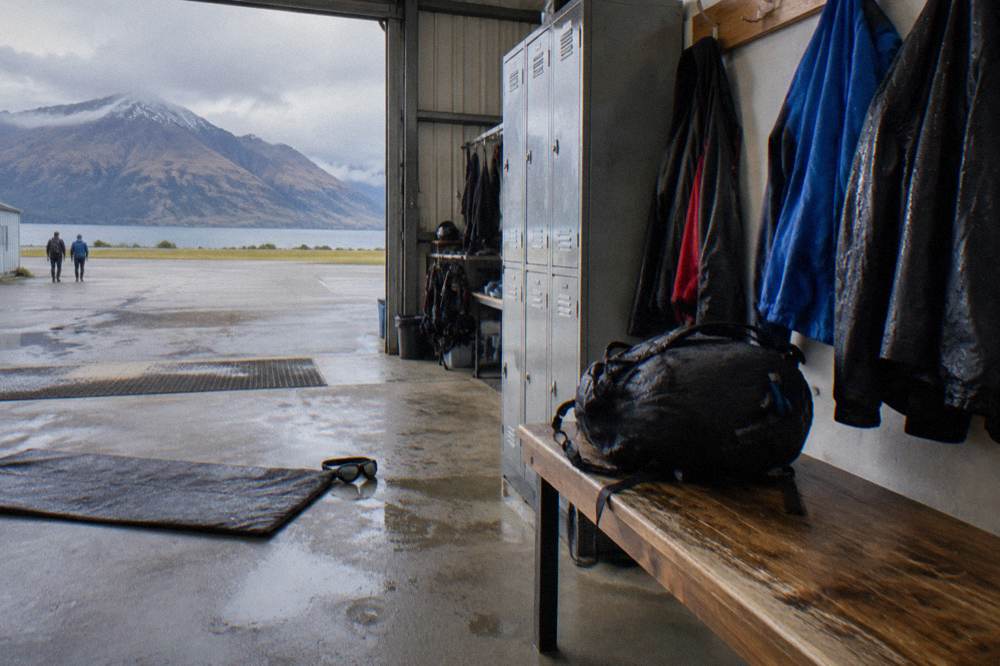
The wait is the hidden variable. Skydive Wanaka asks customers to call 30 minutes before the booking time to check weather, and both operators rebook to the next suitable slot when wind or cloud rules the day out, with a full refund only if no other date works. That means you might be standing around Drift Bay or Wanaka Airport in whatever you wore, so a jacket for the drive and the wait earns its place in the bag even when the jump itself needs nothing extra. The winter skydiving in Queenstown guide works through those seasonal details.
What Does The Operator Provide On The Day?
Both operators provide the full gear set rather than renting it out piecemeal. NZONE Skydive issues a jumpsuit, gloves, hat and goggles for every jump, and Skydive Wanaka provides a jumpsuit, hat or helmet, goggles, gloves and even spare hoodies for cold loads. Goggles at both operators fit over glasses, so you do not need to arrange prescription eyewear specially, and the gear is included in the jump price rather than sold as an extra. You bring shoes and layers; the operator brings everything that touches the airstream.
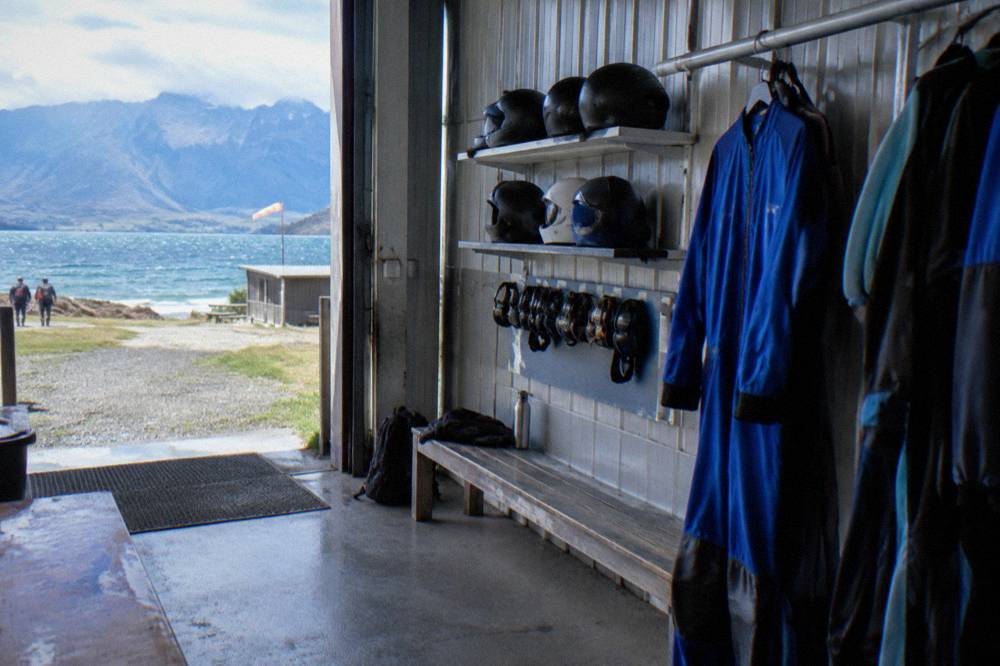
The jumpsuit is provided. It protects your clothing from the harness, the aircraft interior and the landing, and it gives the Tandem Master standard attachment points for the clips. You wear it over your own clothes, which is why snug layers matter: a thick puffer jacket under a suit makes the harness fit awkwardly, while a thermal and a fleece layer cleanly. Gloves matter more than most first-timers expect, because hands take the full airflow in freefall and cold hands are poor at operating a landing flare or grabbing the lift handles for the canopy ride. Other pages covering the same trip are gathered on Queenstown Tandem Skydive.
The goggles are the personal-fitting item, and this is where glasses wearers get good news. Both operators state their goggles fit over glasses, and contacts are fine too. If you wear strong prescription glasses, bring them; you will see the Remarkables or Lake Wanaka far better with them than squinting without. The fit check happens at gearing up, so say something early if the seal feels loose rather than waiting until you are strapped in the aircraft.
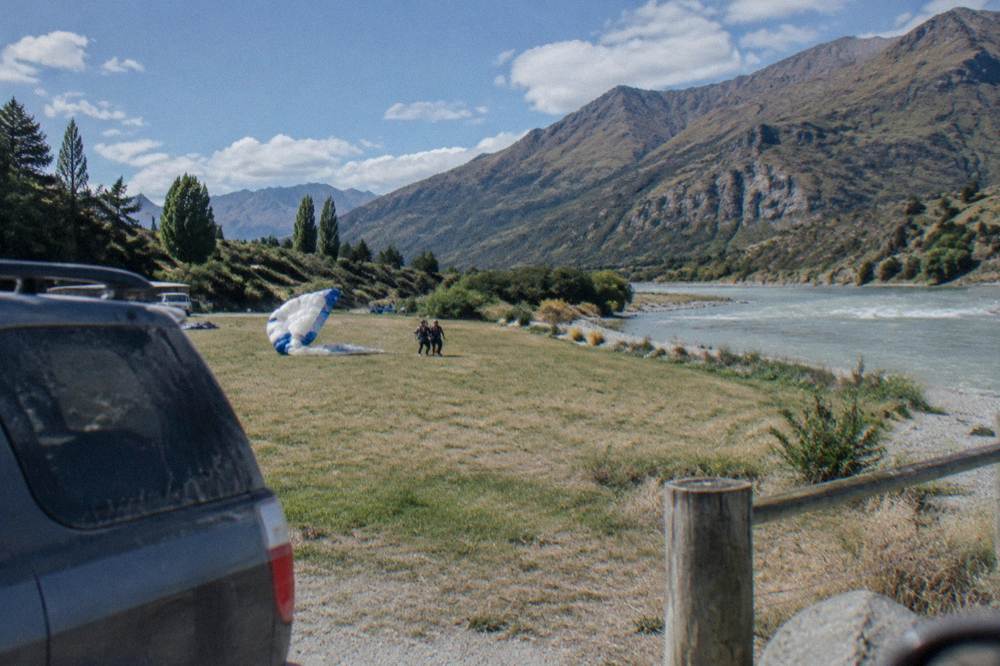
NZONE Skydive, the Queenstown option with the deepest review base at 4.7 across 1,479 reviews, checks in at its Skydive Centre at 35 Shotover Street before a courtesy coach runs everyone to the drop zone at Drift Bay on Lake Wakatipu. You gear up there. Self-driving is allowed, but even drivers check in at the Shotover Street shop first, so the clothing you pick is the clothing you wear on the bus too. For a sense of how the whole sequence runs from arrival to landing, the walkthrough of a Queenstown tandem skydive day places the gearing-up step in context.
“Well organized. First time skydive from 15000 ft. The colleague are very professional and friendly. Also there are many interactions from the coach. Great experience. If u never tried skydive, this is a must do experience.”
Can You Wear Glasses Or Contacts When You Skydive?
Yes, you can wear either glasses or contacts when you skydive, and no special arrangement is needed for either. NZONE Skydive and Skydive Wanaka both state that their goggles fit over glasses, and both companies also confirm that contact lenses are fine to jump in, so you can keep your usual eyewear on the day of your jump. Nothing extra is required: wear what you normally wear, tell the crew at gearing up so the goggles get adjusted properly, and expect the fit to be checked before you board. If your glasses are loose or wire-thin, a sport strap from home is a reasonable extra, though the operators' goggles do the holding once sealed.
The one eye-related item that is banned is the smart glasses category. Camera glasses and personal cameras of any kind are not allowed on the jump, an NZPIA safety requirement both operators publish. The filmed memory is bought instead: NZONE's Handicam package is NZD 220, its Freefall camera-flyer option NZD 333, and its Ultimate Combo NZD 395, with Skydive Wanaka's Essential, Freefall Photos And Video, and Ultimate packages at the same NZD 220, 333 and 395 price points. All are add-ons at check-in, never part of the jump price, and never included in the fares you see quoted for the jump itself.
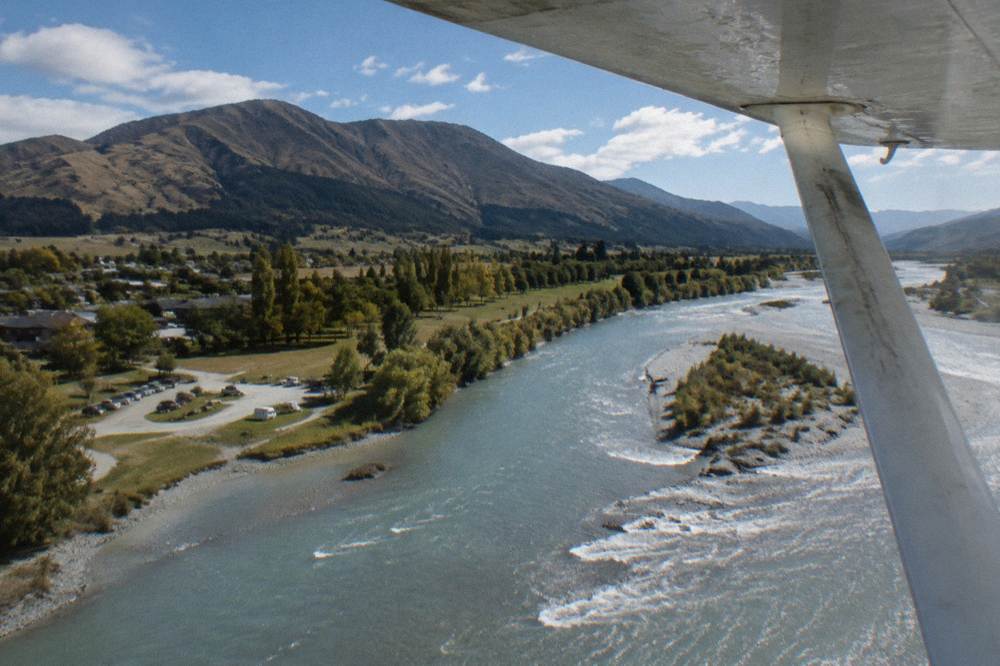
One practical note from Skydive Wanaka's page: only one person can be filmed in freefall at a time, because a camera flyer works with a single jumper. If you are jumping as a pair and both want freefall footage, tell the crew early so loads can be arranged, and decide who goes with the camera flyer first. Contact lens wearers have one small extra precaution: goggles keep the wind off almost entirely, but a dry-eye drop before gearing up is cheap insurance on a long day with a weather hold in the middle.
What Should You Not Wear Skydiving?
Do not wear personal cameras or smart glasses, which are banned under an NZPIA safety rule that both operators enforce. You should also leave behind loose jewellery, scarves, dangling straps, and anything else that could catch on the harness or come loose in the airflow during your jump. Do not wear sandals, jandals, slip-ons or heels: NZONE requires secure enclosed tie-up shoes, and Skydive Wanaka requires closed secure footwear. Do not arrive without a government-issued photo ID, since both operators' terms require it from everyone at the drop zone before gearing up. And do not dress baggy: loose layers bunch under the jumpsuit and harness.
| Leave it behind | Why it is a problem |
|---|---|
| Phones, action cams, smart glasses | Banned on the jump by the NZPIA safety rule both operators publish |
| Loose jewellery, scarves, dangling drawcords | Can catch on the harness |
| Sandals, jandals, slip-ons, heels | Fails the footwear requirement; no loaner shoes are offered |
| Baggy hoodies or thick puffer jackets | Bunch under the jumpsuit and upset the harness fit |
| Just a t-shirt in winter | Operators advise warm layers in winter; gloves are provided but are not a substitute for proper clothing |
The mistakes that trip people up tend to cluster. Arriving in flip-flops because it was a warm morning. Wearing a brand-new thick jacket that will not sit under a jumpsuit. Assuming the phone can ride in a pocket, which it cannot. Forgetting ID, which the terms require. And dressing for the check-in weather rather than for the altitude, which is the most common regret on a summer morning load when the aircraft door opens at 15,000 ft. None of these are expensive fixes, which is what makes them frustrating: every item on the list is solved by something already in your suitcase, decided the night before rather than at the gear rack.
A note on the day's shape, because clothing plans should follow it. NZONE Skydive runs about 3.5 hours from check-in to return, while the 3-Hour Wanaka Skydive is around 3 hours, and the Wanaka option that adds a Queenstown return transfer from 35 Shotover Street, about 1.5 hours each way on Monday, Wednesday, Friday and Sunday, can run up to 6 hours door to door. The longer the day, the more the warm layer for the wait matters. Planning around that longer day, including what to do with the hours either side, is covered in the Queenstown skydive day plan.
Common Questions About Skydiving Clothing
What Do I Need To Wear To Go Skydiving?
Secure enclosed tie-up shoes and season-appropriate clothing: comfortable layers in summer, warm layers in winter. The operator provides the jumpsuit, gloves, hat and goggles. Bring government-issued photo ID, and bring your glasses or contacts if you wear them.
Do You Wear Your Own Clothes Under The Skydiving Jumpsuit?
Yes. You dress in your own layers and the jumpsuit goes over the top at the drop zone. Snug layers work best, because baggy clothing bunches under the harness. In winter a thermal base and fleece under the suit is the standard combination at both operators.
Can You Wear Glasses Or Contact Lenses On A Tandem Skydive?
Both. NZONE Skydive and Skydive Wanaka both state their goggles fit over glasses, and both confirm contact lenses are fine. Mention your eyewear at gearing up so the goggle fit is adjusted before you board.
Can You Bring A Phone Or Camera On The Jump?
No. Personal cameras and smart glasses are not allowed on the jump, an NZPIA safety requirement stated by both operators. Photo and video packages, from NZD 220 for a wrist-camera option to NZD 395 for a combined package, are bought as add-ons at check-in.
What Shoes Should You Avoid For Skydiving?
Sandals, jandals, slip-ons, heels and anything open-toed. Skydive Wanaka's page names jandals and bare feet explicitly, and NZONE asks for secure enclosed tie-up shoes. Neither operator supplies loaner footwear, so the wrong shoes can end your jump day before it starts.
Is It Cold At 15,000 Feet Even In Summer?
Yes, noticeably colder than the ground. At NZONE, the aircraft climb takes 15 to 20 minutes, and Skydive Wanaka notes its highest jump is 16,100 ft above sea level. A layer you can keep on under the jumpsuit is worth having in any season.