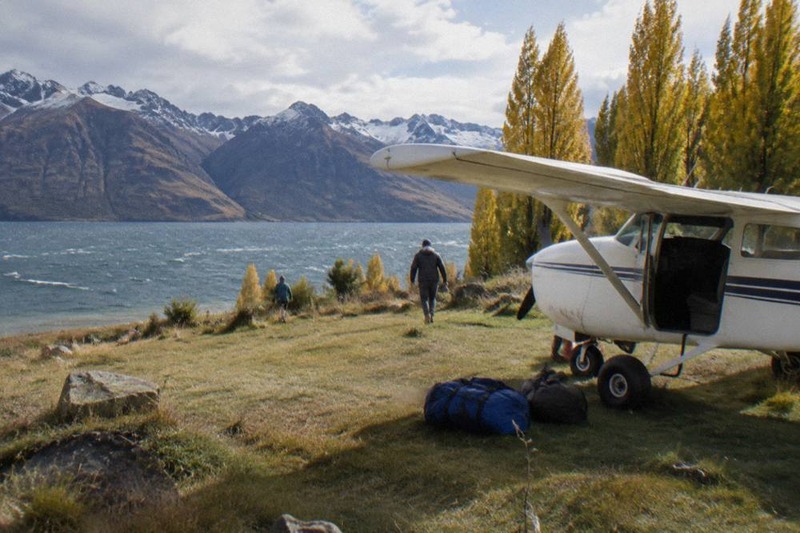
Is 40 Too Old To Skydive In Queenstown?
No maximum age applies at the Queenstown and Wanaka drop zones, and 40 is not a limit anywhere on the operator pages. Here is what actually decides eligibility, and which tandem jump suits an older first-timer.
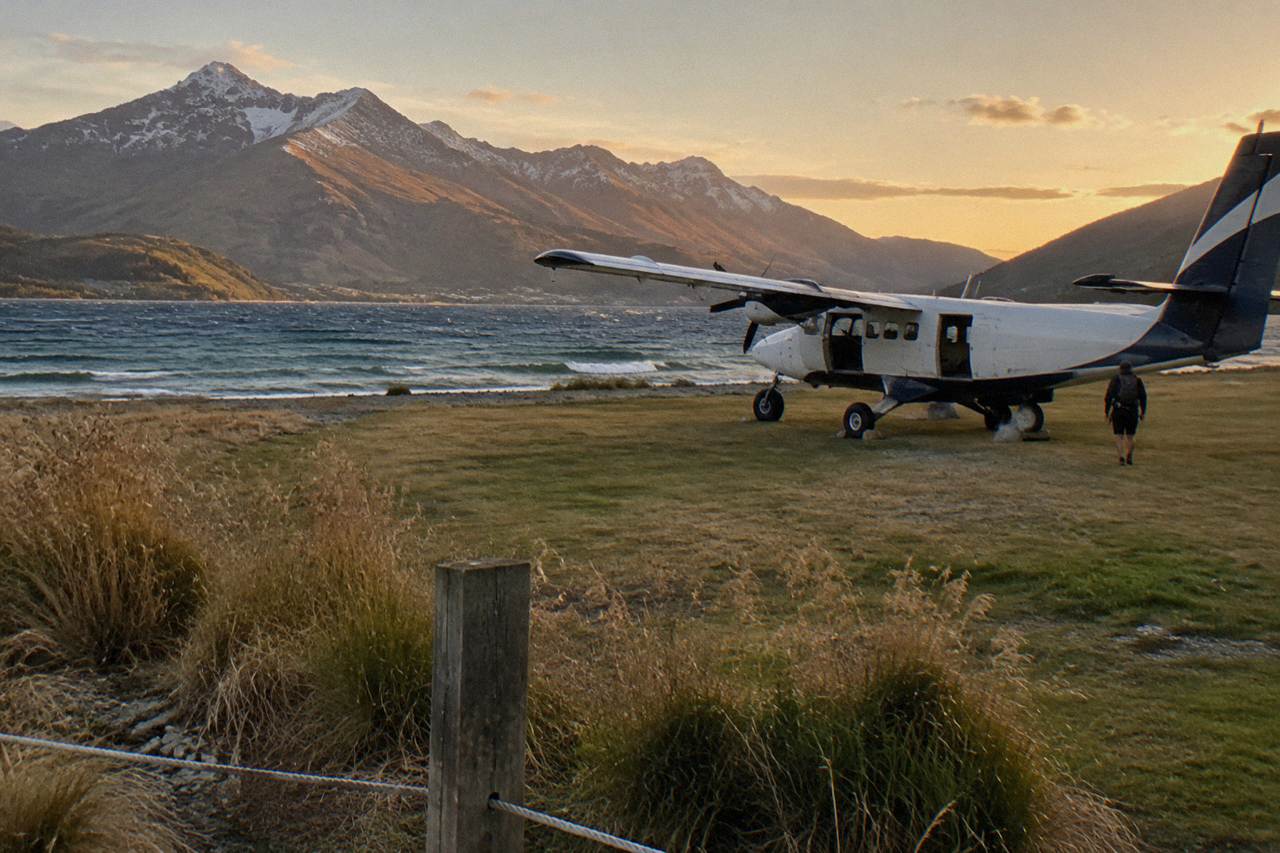
In short: No. Forty is not too old to skydive, and neither operator serving Queenstown states a maximum age at all. NZONE reports passengers up to 94 years old, and Skydive Wanaka notes its oldest passenger was 92. What decides whether you jump is your weight, your health on the day, and whether the harness fits, and every one of those is assessed individually at the drop zone. Once age is off the table, the next decision is how high to jump, and the guide to Queenstown's lowest skydive altitude covers what to expect before you book.
This question sits inside the broader age and eligibility picture: see the Queenstown skydive age limit guide for the full rules, or read on for what matters at 40 specifically.
| Quick fact | NZONE Skydive (Queenstown drop zone) | Skydive Wanaka (Wanaka Airport drop zone) |
|---|---|---|
| Maximum age | Not stated; passengers up to 94 years | Not stated; oldest passenger 92 |
| Minimum age | 6, by law in New Zealand | 6, by law in New Zealand |
| Children 12 and under | Maximum height 9,000 ft | Maximum height 9,000 ft |
| Minimum weight | 40 kg | 30 kg |
| Under 18 | Written parental or guardian consent | Written parental or guardian consent |
| Photo ID | Government-issued, required at the drop zone | Government-issued, required at the drop zone |
Is 40 Too Old To Skydive?
No, and by a wide margin. Both operators state no maximum age for a tandem skydive, and 40 is not mentioned as a limit anywhere on their pages. NZONE reports it has flown passengers up to 94 years old; Skydive Wanaka records its oldest passenger at 92. At 40 you are roughly half the age of the oldest people these operators have taken up, which puts the question firmly to rest.
The reason a tandem jump works for older first-timers is structural. You are not flying the parachute or managing the exit: you are harnessed to a tandem master who handles every step, from the aircraft door through freefall to the landing. A tandem master jumps with every customer at both operators, and the passenger's job is mostly to lift their legs at the right moments and enjoy the ride. That division of labour is exactly why the age range at these drop zones runs from 6 to the mid-nineties.
Age still matters in one indirect way: the operators say ability to jump depends on age, weight, body size and harness fit combined, and every passenger is assessed on the day. A fit 40-year-old with no relevant medical history will sail through. Someone with uncontrolled high blood pressure or a recent shoulder injury at any age may be asked for a doctor's clearance. The number 40 itself triggers nothing.
“It was really awesome. We enjoyed every bit of the experience and it was well worth the money. Also, the photos and videos we got afterwards were amazing. I went with my 13-year-old son and we both had a blast. I would highly recommend it, and would definitely do it again!”
It also helps to remember that neither operator sets an upper age limit: NZONE has taken passengers up to 94 years, and Skydive Wanaka's oldest passenger was 92. Fitness demands are assessed case by case, and any child or passenger the tandem master assesses on the day. For pairing the jump with sightseeing, the skydive and scenic flight guide explains what to expect.
What Do The Queenstown Operators Say About Age?
Neither operator sets an upper age limit. NZONE's frequently asked questions page reports passengers up to 94 years old, and Skydive Wanaka's own questions page records a 92-year-old as its oldest jumper. The only age figure either operator publishes as a limit is the minimum: 6 years, which both describe as the legal minimum in New Zealand. Everything between 6 and the mid-nineties is assessed individually.
The operators' own pages are the place to read this in their words. NZONE's questions page states there is no maximum age and cites its 94-year-old passengers, alongside the rule that children 12 and under jump from a maximum of 9,000 ft. Skydive Wanaka's questions page carries the matching wording, including its oldest passenger at 92 and the same children's altitude cap.
Both operators also describe themselves as long-running businesses, which matters to a nervous first-timer deciding who to trust. NZONE calls itself New Zealand's first skydive operation and the birthplace of tandem skydiving in New Zealand, with over 350,000 jumps behind it. Skydive Wanaka says it has operated for more than 30 years.
One age-related rule does exist, and it applies below 40 rather than above it: anyone under 18 needs written parental or guardian consent, and a parent or guardian must be present at the drop zone unless consent documents are arranged with staff in advance. At 40 you are a long way from needing any of that paperwork.
What Actually Decides Whether You Can Jump At 40?
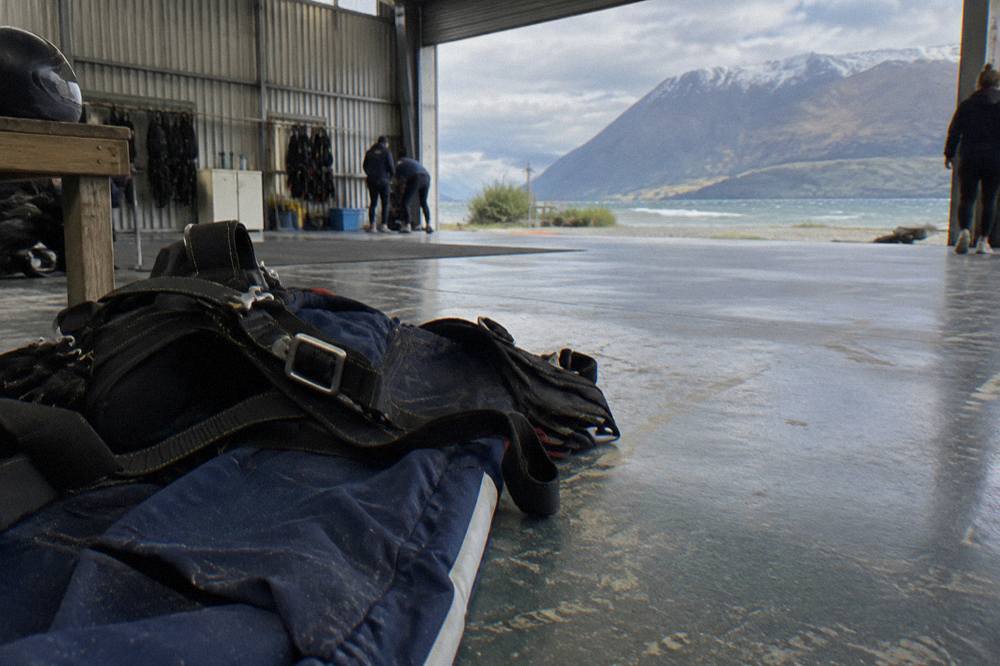
Three things decide, and none of them is your birth decade: your weight, your health and medication situation, and whether the harness fits your body. NZONE sets a minimum weight of 40 kg and Skydive Wanaka 30 kg, both with a minimum height of 1.2 m. From 95 kg every jumper at both operators needs a Tandem Master assessment on the day, and over 110 kg there is a further assessment.
Weight is where the operators genuinely differ, so check the numbers for the operator you book rather than a general rule. NZONE's minimum is 40 kg; Skydive Wanaka's is 30 kg. Above the minimums, both operators say that at most drop zones the maximum limit sits between 110 and 115 kg, and NZONE adds that its limits can vary by day and that jumpers over 110 kg are subject to the availability of qualified tandem masters. An exact NZONE maximum is not stated on its pages.
Skydive Wanaka also charges heavier jumpers a surcharge, payable at check-in: NZD 50 for 95 to 104.9 kg, NZD 75 for 105 to 114.9 kg, and NZD 100 at 115 kg and over. NZONE states no surcharge amounts on its own pages; if that applies to your booking, ask the operator directly before you arrive.
| Eligibility factor | NZONE Skydive | Skydive Wanaka |
|---|---|---|
| Minimum weight | 40 kg | 30 kg |
| Minimum height | 1.2 m | 1.2 m |
| 95 kg and over | Tandem Master assessment at the drop zone | Tandem Master assessment; tell Reservations before the jump date |
| Over 110 kg | Further assessment; subject to tandem master availability | Further assessment; subject to tandem master availability |
| Stated surcharge amounts | Not stated on the operator's pages | NZD 50 / 75 / 100 by weight band, payable at check-in |
| Harness fit | Assessed on the day | Assessed on the day |
Harness fit is the quiet third factor. The tandem harness must fit safely around your body, and the operators' terms say size and fit form part of the on-the-day assessment. If you have a body shape or mobility consideration you are unsure about, phone ahead. NZONE's reservations line is published on its terms page, and its staff can also advise on accessibility needs, which may involve a doctor's certificate and a Drop Zone Safety Officer assessment.
How Fit Do You Need To Be For A Tandem Skydive In Queenstown?
Ordinary everyday fitness is enough. You will need to walk to the aircraft, adopt a stable body position in the door, hold an arched position in freefall, and lift your legs for landing. The tandem master controls the exit, the fall, the parachute and the touchdown. Neither operator publishes a fitness test, and neither asks for training or prior experience.
“SO MUCH FUN!! The views were incredible - from the plane and on the way down! The entire experience was professionally handled. We felt safe, informed and prepared. The staff was fun too!! The photo/video package was so worth it for the amazing memories. My cousin's first jump ever and now he's ready for more! Just do it!”
The physical sequence is short. At NZONE, after check-in and a safety briefing, you board the aircraft for a 15 to 20 minute climb to altitude, sitting harnessed beside your tandem master. At the door you lean forward into the position you practised. At NZONE, freefall at 9,000 ft lasts up to 25 seconds, at 12,000 ft up to 45 seconds and at 15,000 ft up to 60 seconds, at speeds of about 200 km/h, followed by 3 to 4 minutes under canopy. None of it requires strength so much as the ability to follow simple instructions. The full index of guides sits on Queenstown Tandem Skydive.
Skydive Wanaka's briefing advice is refreshingly mundane: eat normally before your jump. Being hungry and lightheaded helps nobody, and a normal breakfast is a better preparation than any gym program. Wear secure enclosed shoes, dress for the season, and let the provided jumpsuit, gloves, hat and goggles do the rest. Goggles fit over glasses, and contact lenses are fine.
“Nothing short of amazing! If you are unsure about skydiving or scared because it you have never done it before I highly recommend this company. They were organized, professional, and guided you through step by step the entire process and what to expect. We dove at 15,000 feet and it was spectacular! The adrenaline rush, the views, the spins, and the amazing photos/ video you get at the end was great.”
If your fitness concern is stamina rather than strength, the day itself is manageable. NZONE says the whole experience runs about 3.5 hours from check-in to return, and the Wanaka jump runs about 3 hours, or up to 6 hours for the version with the Queenstown return transfer, because the coach ride adds about 1.5 hours each way. Most of that time is sitting, briefing and waiting for your load.
The one point worth naming honestly is mobility. If you have a recent injury, surgery, epilepsy, high blood pressure, angina or a heart condition, tell the operator before booking; NZONE says a doctor's clearance may be needed, and accessibility needs are assessed by the Drop Zone Safety Officer, whose decision is final. For more on the day itself, the what happens on a skydive day walkthrough sets out every stage.
What Health Conditions Do You Need To Tell The Operator About?
Both operators ask you to disclose medical facts before booking: recent injuries or surgery, mobility limits, epilepsy, high blood pressure, angina and heart conditions are the ones NZONE names. A doctor's medical clearance may be required. On the day, a cold, flu or blocked sinuses can cause complications, and alcohol is banned within 8 hours and scuba diving within 24 hours of your jump time.
“Nzone are really well organised: it was a very smooth check-in in their office in town, and at the airstrip. All the staff that helped us were really friendly, and my tandem instructor was really calm, friendly and respectful.”
None of this is aimed at 40-year-olds specifically; it is the same list for every passenger at both operators, and the terms are worded almost identically because the two businesses are siblings under the same group. The point of disclosure is not to catch you out, it is to let the drop zone decide, with you, whether anything needs a doctor's sign-off first. NZONE's page even notes that a previously dislocated shoulder does not stop you jumping, provided you tell the team.
The time-sensitive rules catch more people than the condition list does. No alcohol or recreational drugs within 8 hours of your scheduled jump time, and intoxicated passengers can be refused with no refund. No scuba diving within 24 hours. And everyone, of every age, must bring government-issued photo ID to the drop zone, which catches out travellers who leave passports at the hotel.
One more rule that surprises people, at any age: personal cameras and smart glasses are not allowed on the jump. Both operators point to the New Zealand Parachute Industry Association safety requirement. If you want footage, buy the photo and video add-on at check-in instead. NZONE's packages run from Handicam at NZD 220 to the Ultimate Combo at NZD 395, and Skydive Wanaka's run from Essential at NZD 220 to Ultimate at NZD 395. The photo and video pricing guide covers what each package includes.
“It was such a breathtaking experience, amazing and terrifying at the same time. The instructors were so nice and comforting and they’ve all done thousands of jumps.”
For a fuller run through who may be asked not to jump, the who is not allowed to skydive overview lists the conditions and rules in one place.
Which Queenstown Skydive Should A 40-Plus First-Timer Book?
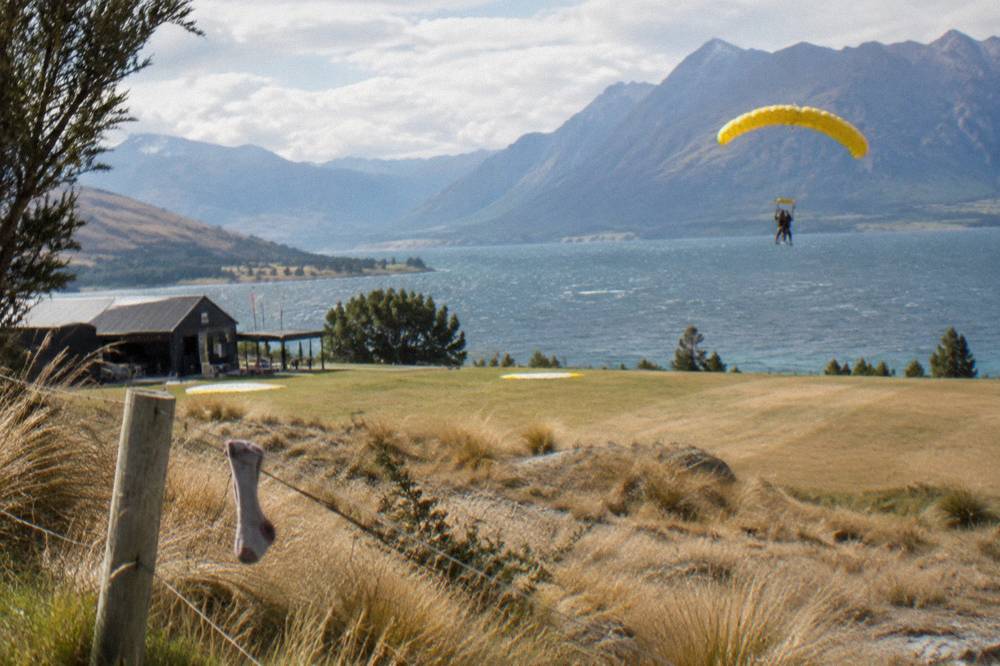
NZONE Skydive, from USD 215.27 for the 9,000 ft jump, is rated 4.7 from 1,479 reviews. It checks in at 35 Shotover Street and includes the courtesy coach out to the drop zone at Drift Bay on Lake Wakatipu. The Wanaka alternatives suit travellers who want Mount Aspiring and Lake Wanaka views instead, from USD 210.16.
The choice is really a choice of scenery and logistics, because the jump mechanics are identical: same altitudes, same freefall times, same minimum age of 6. NZONE jumps over Lake Wakatipu from its drop zone at 786 Kingston Road, Drift Bay, roughly 3.5 hours door to door from check-in, with the shuttle to the drop zone included in the price. You can check availability for NZONE Skydive alongside the detailed NZONE guide if you want the full picture first.
| Tour | Drop zone | Entry price (9,000 ft) | Duration | Rating |
|---|---|---|---|---|
| NZONE Skydive | Drift Bay, Lake Wakatipu | from USD 215.27 | about 3.5 hours | 4.7 from 1,479 reviews |
| 3-Hour Wanaka Skydive | Wanaka Airport | from USD 210.16 | about 3 hours | 4.8 from 295 reviews |
| Wanaka Skydive, Transfers Included | Wanaka Airport | from USD 221.25 | up to 6 hours | 4.7 from 3 reviews |
The 3-Hour Wanaka Skydive suits anyone already based in Wanaka. Pickup is the Wanaka i-SITE shuttle point at 103 Ardmore Street, selected when you book; there is no Queenstown transfer, so it is a genuinely local option. Higher altitudes cost more at both operators: the operator's own prices are NZD 379, 469 and 575 for 9,000, 12,000 and 15,000 ft, with the 9,000 ft entry at USD 210.16 on the booking page.
The third option, Wanaka Skydive, Transfers Included, stitches the two towns together: a return coach from 35 Shotover Street in Queenstown, about 1.5 hours each way, running Monday, Wednesday, Friday and Sunday only, from 19 October 2026. The operator's price with the transfer is NZD 399 at 9,000 ft, about USD 221.25, and the whole day can run to 6 hours. Its rating of 4.7 comes from just 3 reviews, so treat that number as an early signal rather than a verdict.
All three carry free cancellation up to 24 hours before departure, and a booking stays valid for 12 months if you need to move it. Weather still decides the day: both operators rebook weather-cancelled jumps and refund in full only when no other date works. The Queenstown skydive weather guide explains how to build a spare day into your plans.
“Friendly staff, able to reschedule jump after weather conditions changed, great experience, great video and pictures!”
What Mistakes Trip Up Older First-Time Skydivers?
The common errors are administrative, not physical: drinking the night before within the 8-hour alcohol window, going scuba diving the day before, leaving photo ID at the hotel, and booking a tight schedule with no spare day for weather. Jumpers over 95 kg who do not tell the operator in advance also hit avoidable friction at check-in. None of these has anything to do with being 40.
The alcohol rule deserves a second read on holiday. Eight hours before your scheduled jump time means the wine with dinner the evening before a morning load can breach the window, and an intoxicated passenger can be refused with no refund. Scuba divers face the same trap with the 24-hour rule. Both are in the operators' terms, and both are entirely within your control.
Photo ID is the silliest way to lose a jump. Government-issued identification is required for everyone arriving at the drop zone, at both operators, no exceptions stated for any age. Bring the passport out of the hotel safe.
Weight disclosure saves stress. If you are over 95 kg, Skydive Wanaka's terms ask you to tell Reservations before the jump date, not at the counter. Every jumper over 95 kg needs a Tandem Master assessment regardless, and the Skydive Wanaka surcharge bands are payable at check-in, so arriving with them already budgeted makes the morning smoother.
“Amazing experience. Had our first ever skydiving and it was one of a lifetime experience. Wish i could do it again.”
Finally, schedule. Bookings carry a check-in time, not a guaranteed jump time, and NZONE advises planning for the better part of a day even though the experience runs about 3.5 hours. The Queenstown transfer listing for Skydive Wanaka recommends booking your first available day and keeping a spare day free.
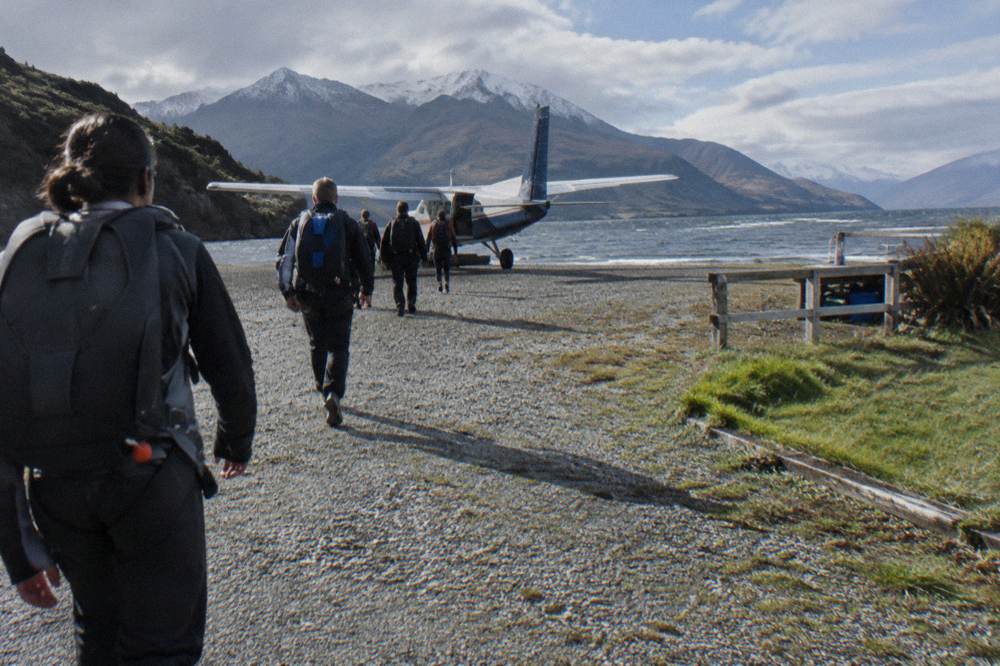
If the nerves are the real obstacle rather than the birthday, the honest comparisons help: is skydiving in Queenstown scary works through the fear, and skydive vs bungy in Queenstown compares the two head to head.
Common Questions About Skydiving At 40
Is 40 Too Old To Skydive?
No. Neither NZONE nor Skydive Wanaka states a maximum age, and 40 appears as a limit nowhere on their pages. NZONE has flown passengers up to 94 years old and Skydive Wanaka an oldest passenger of 92. Eligibility is decided by weight, health and harness fit, all assessed individually on the day.
Is There A Maximum Age For A Tandem Skydive In Queenstown?
No maximum age is stated by either operator. The only published age limit is the minimum of 6, which both operators describe as the legal minimum in New Zealand. Passengers under 18 need written parental or guardian consent, which does not apply at 40.
Do You Need To Be Fit To Do A Tandem Skydive At 40?
Ordinary everyday fitness is enough. You walk to the aircraft, hold the briefed body position, and lift your legs for landing while the tandem master handles the exit, freefall, canopy and touchdown. Skydive Wanaka's own advice is simply to eat normally before your jump.
What Weight Do You Have To Be Under To Skydive?
NZONE's minimum weight is 40 kg and Skydive Wanaka's is 30 kg, both with a minimum height of 1.2 m. From 95 kg every jumper needs a Tandem Master assessment at the drop zone, and both operators say that at most drop zones the maximum limit is 110 to 115 kg. Skydive Wanaka charges NZD 50, 75 and 100 by weight band, payable at check-in; NZONE states no amounts, so ask the operator.
Can You Skydive With High Blood Pressure Or A Heart Condition?
Only with the operator's knowledge, and possibly a doctor's medical clearance. Both operators ask you to tell them before booking about high blood pressure, angina, heart conditions, epilepsy, mobility limits and recent injuries or surgery. A cold, flu or blocked sinuses on the day can also cause complications, so call ahead if you are unwell.
What Happens If Weather Cancels Your Skydive?
Both operators rebook you to the next suitable slot, and if no other date works you receive a full refund. A booking also stays valid for 12 months, and free customer cancellation applies up to 24 hours before departure. The Wanaka booking advice is to book your first available day and keep a spare day free.